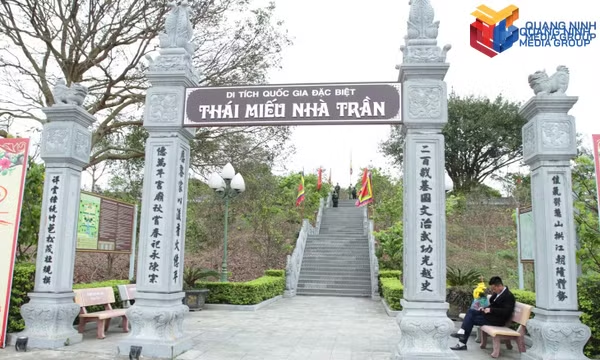
On July 12, 2025, the Yen Tu – Vinh Nghiem – Con Son, Kiep Bạc Complex of Monuments and Landscapes was inscribed by UNESCO as a World Cultural Heritage Site. Quang Ninh has five monuments/sites within the complex, spread across three heritage sites: Yen Tu, Bach Đang and the Tran Dynasty. Alongside the honour and pride it brings, the new status also carries new responsibilities that require Quang Ninh to step up efforts to preserve and promote the heritage’s values while strengthening inter-regional links as part of its approach to developing the local heritage economy.
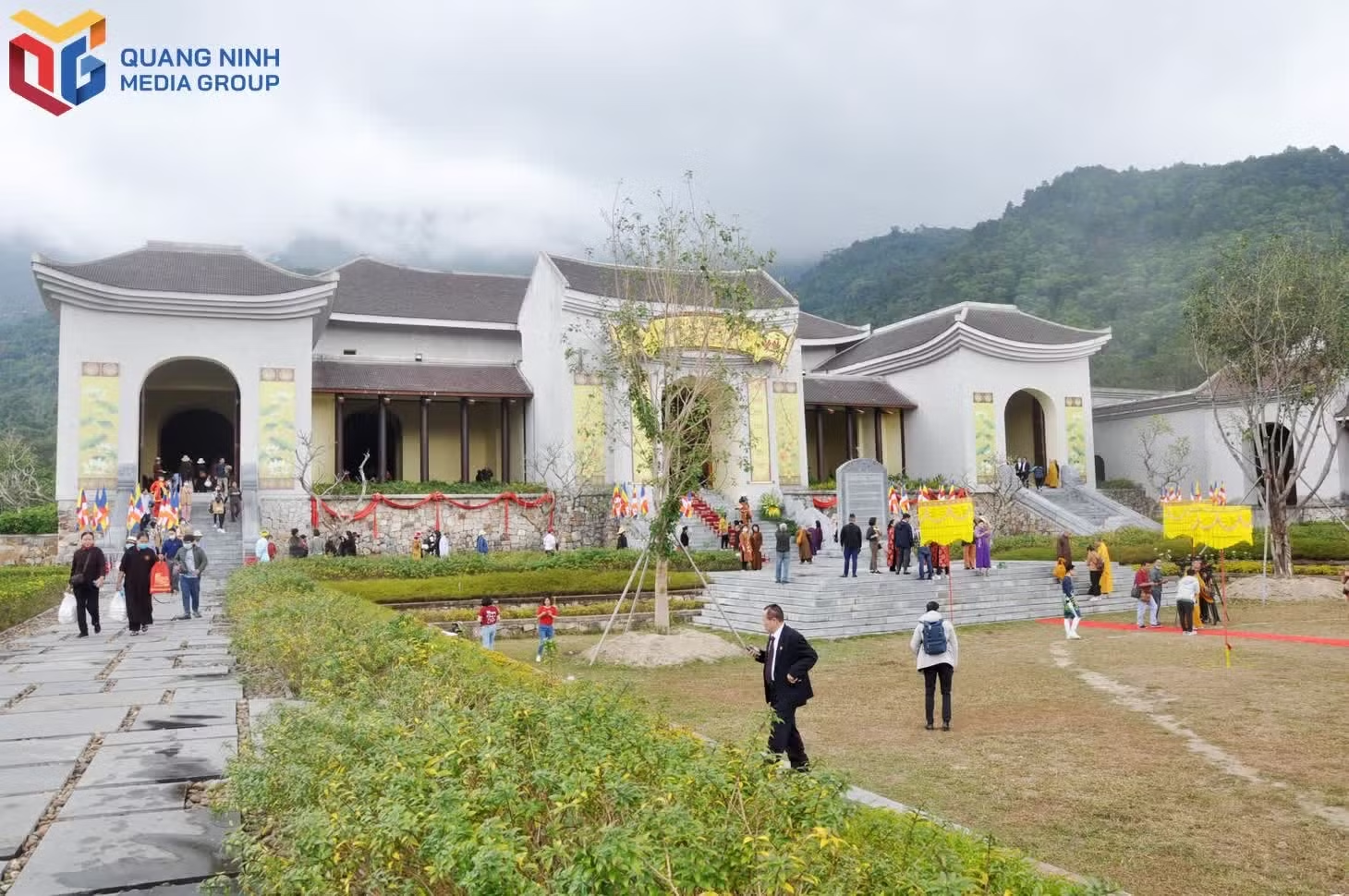
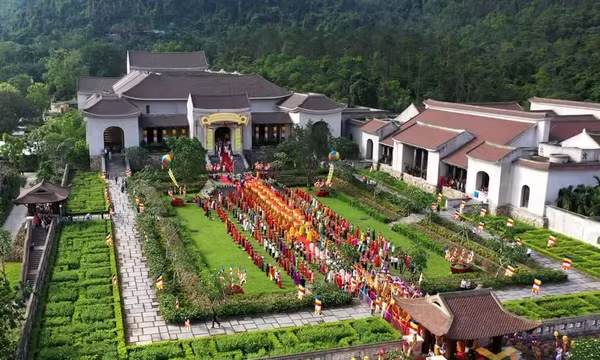
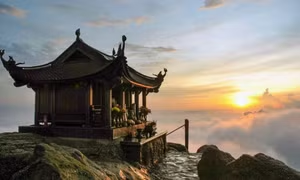
The Trúc Lâm Palace, funded through socialised investment by the Quang Ninh Buddhist Sangha Executive Board, at Yen Tu.
Long-term planning
According to statistics, since 2012, around VND3.15 trillion has been invested in the Yên Tử heritage area from business capital and socialised funding for the restoration and embellishment of monuments and the promotion of heritage values. The Ha Long Bay – Yên Tử World Heritage Management Board will carry out regular conservation, minor repairs and urgent restoration of monuments under annual plans.
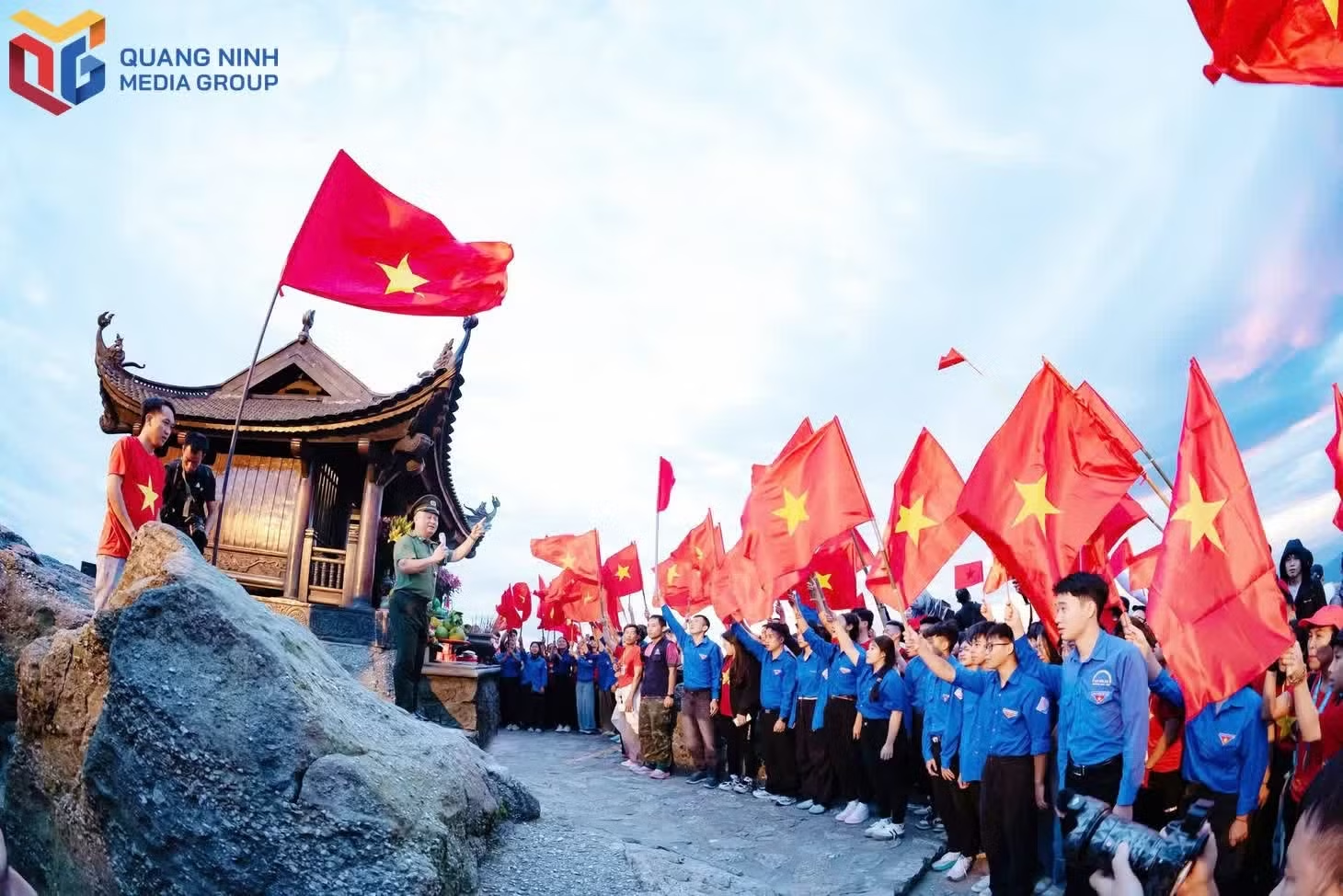
A flag-salute ceremony at Đong Pagoda to celebrate National Day, held as part of the 2026 “Yen Tu – Meditative Autumn Colours” programme
A unified brand identity
Following the World Heritage inscription, the Ha Long Bay – Yên Tử World Heritage Management Board has placed greater emphasis on heritage communication and education by organising training courses and professional development programmes to improve guiding and interpretation skills at heritage sites and along heritage routes.
Notably, Hai Phong, Quang Ninh and Bắc Ninh have recently agreed on a unified brand identity for the Yên Tử – Vĩnh Nghiêm – Côn Sơn, Kiếp Bạc World Heritage Site across the three cities. Following its official launch at the 2026 Côn Sơn – Kiếp Bạc Autumn Festival, the brand identity is expected to be used consistently on signage, maps, publications, websites, digital platforms, tourism promotion campaigns, heritage education programmes and cultural events across the heritage region.
Attracting more visitors
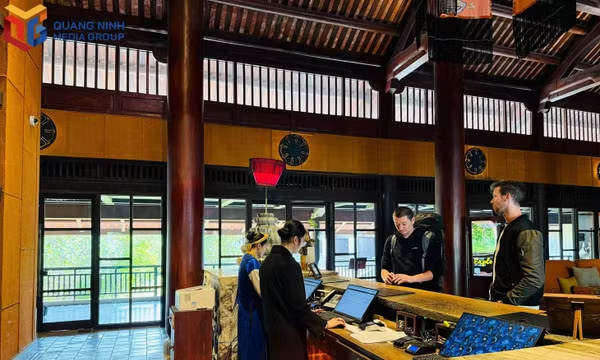
Following years of investment and driven by the natural appeal of the complex’s cultural and historical values, the Yen Tu, Bach Đang and Tran Dynasty heritage areas have been gradually developing into year-round destinations, offering a diverse range of sightseeing, accommodation, leisure, meditation and experiential activities for both domestic and international visitors.
Over the past two autumn-winter seasons, the “Yen Tu – Meditative Autumn Colours” programme has been held with a series of cultural, artistic, tourism, meditation and experiential activities. The programme has helped promote and enhance the heritage’s values while creating distinctive tourism products to attract visitors to Yen Tu during the autumn-winter season.
Among the highlights, the two Yen Tu Ultra Trail races, themed “Exploring Heritage - Spreading Quintessence” and the Yen Tu Heritage Marathon, themed “Touching Heritage”, have become signature events, attracting thousands of runners. In addition, the “Yen Tu – Meditative Autumn Colours” programme, which runs through the end of the year, features a wide range of other activities, including the “Best Presenter of the Yên Tử World Heritage Site” contest, an exhibition of artworks inspired by Yen Tu, Mid-Autumn Festival activities featuring traditional cultural experiences, and the “ Yen Tu Chess King” Chinese chess tournament.
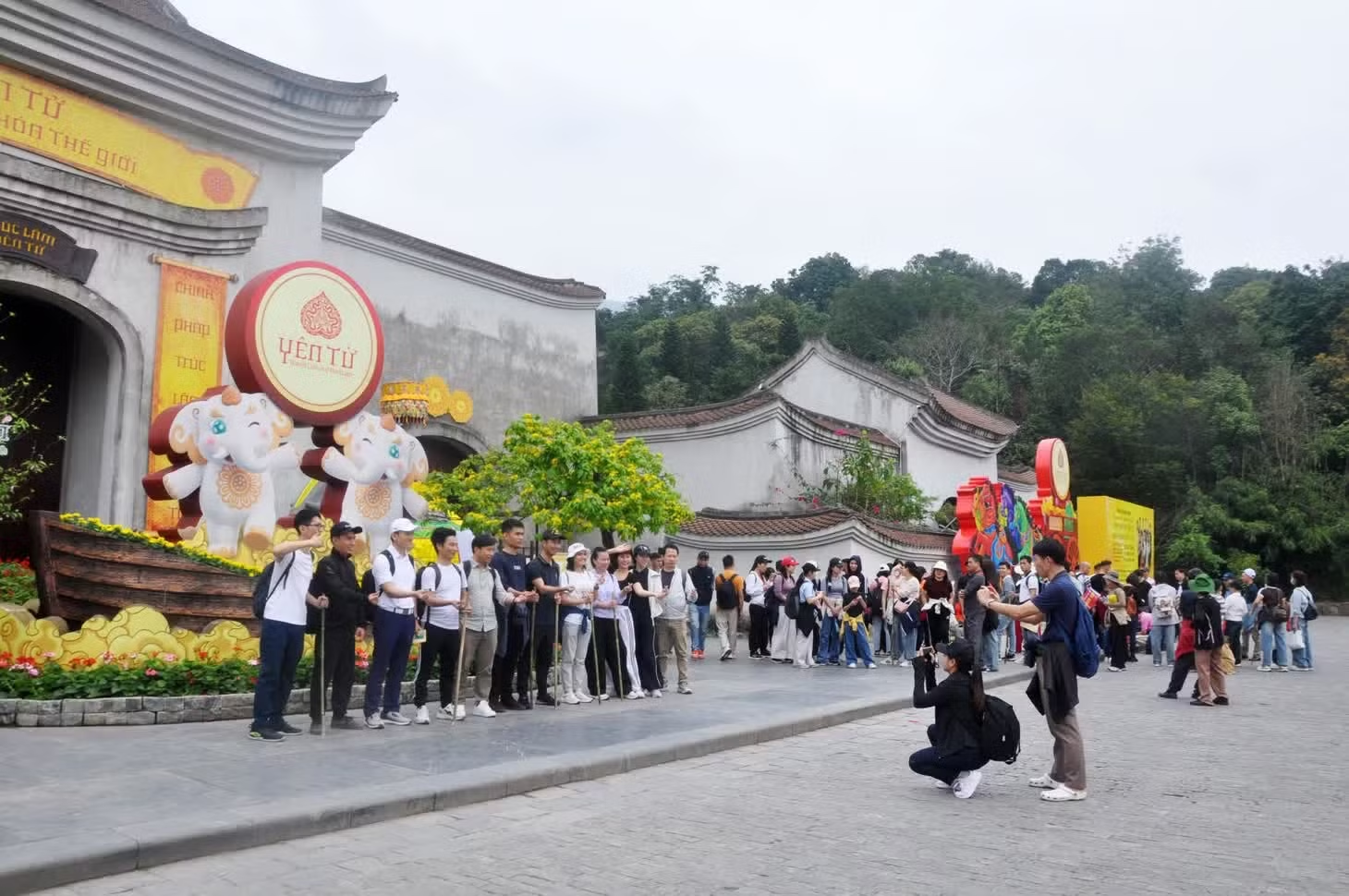
Yen Tu attracts a growing number of visitors following its inscription as a World Heritage Site.
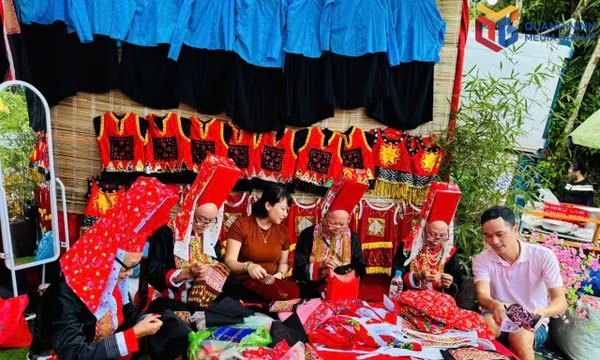
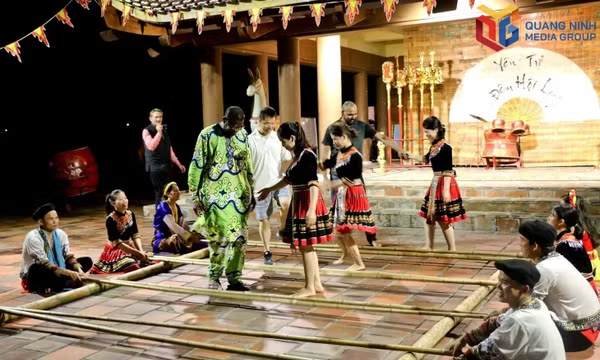
At the foot of the mountain, visitors can take part in folk cultural activities and discover distinctive aspects of Yen Tu traditional cultural life, including horse riding, archery, wearing traditional costumes and folk games. They can also experience the “Yen Tu Village Night Show”, combined with lantern processions and floating lanterns, explore a traditional rural market and Yen Tu vegetarian cuisine, and discover local speciality products.
These activities all aim to preserve, honour and promote the outstanding universal value of the Yen Tu World Cultural Heritage Site; promote the ideological, historical and cultural values of the Truc Lam Zen tradition founded by King-Monk Tran Nhan Tong; and promote the image of Yen Tu land, people and cultural identity to communities and visitors from Vietnam and abroad.
By Ngoc Mai