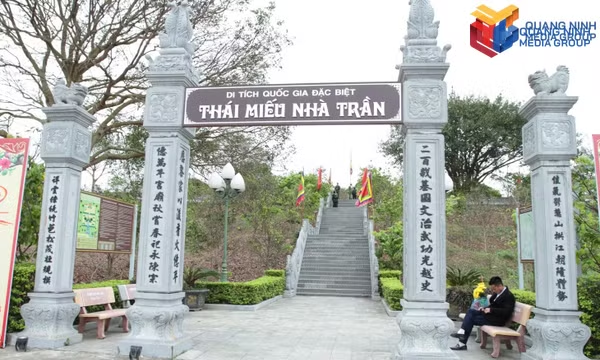
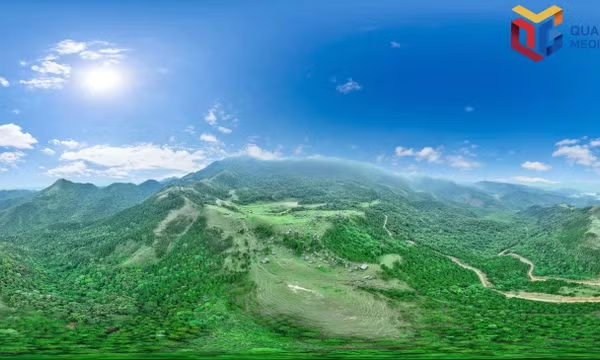
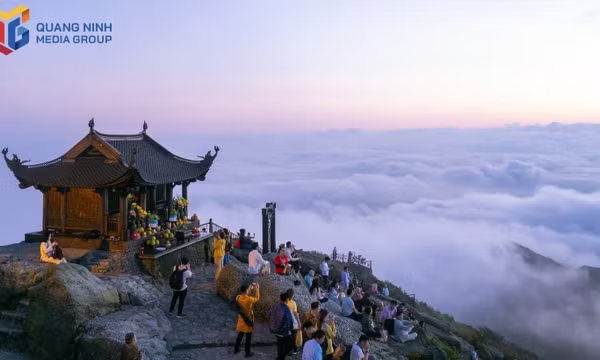
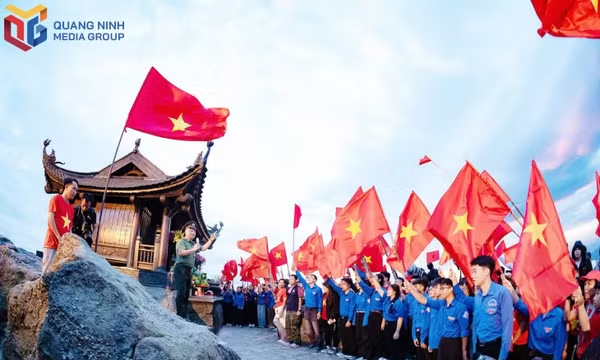
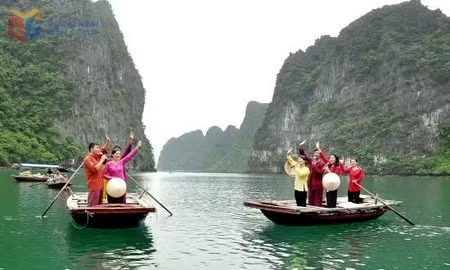
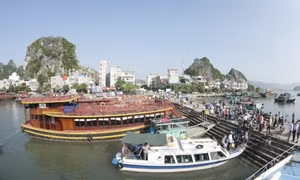
Ha Long Bay – Cat Ba Archipelago possesses the magnificent beauty of rock and water, while the Yen Tu – Vinh Nghiem – Con Son, Kiep Bac Complex of Monuments and Landscapes embodies the historical and cultural depth of the nation, associated with the Tran Dynasty and a Buddhist tradition that upholds reconciliation, harmony and peace, with a profound power to inspire in a world still marked by many uncertainties. Proud to be home to both of these inter-provincial World Heritage Sites, Quang Ninh has been harnessing their values in line with a green and sustainable development orientation.
Majestic mountains, beautiful waters
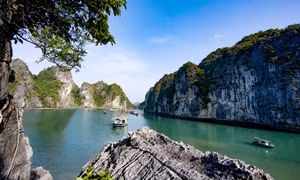
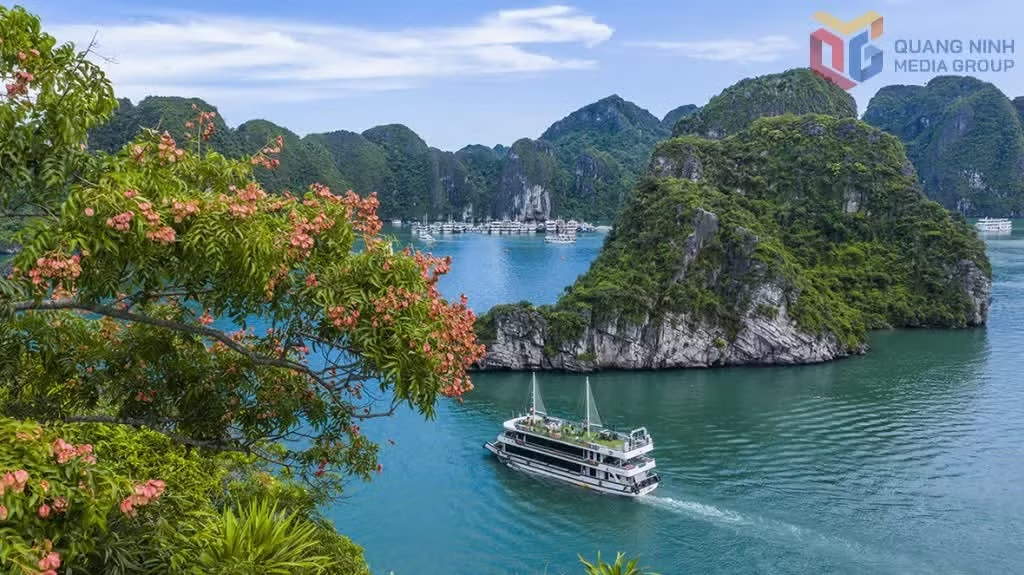
Ha Long Bay has twice been inscribed as a World Natural Heritage Site for its aesthetic and geological and geomorphological values, and was more recently recognised by UNESCO following the extension of the heritage site to include Cat Ba Archipelago in Hai Phong. The site is highly regarded for the exceptional value of its natural landscape, rarely found elsewhere in the world.
Beyond this, Ha Long Bay also possesses valuable biodiversity and historical-cultural values. The heritage site features typical tropical marine ecosystems and hundreds of rare animal and plant species of global or regional value, including 17 extremely rare endemic plant species. According to historical researchers, Ha Long Bay is also one of the cradles of ancient Vietnamese people, with three successive cultures dating from 18,000 to 3,500 years ago: Soi Nhu, Cai Beo and Ha Long cultures.
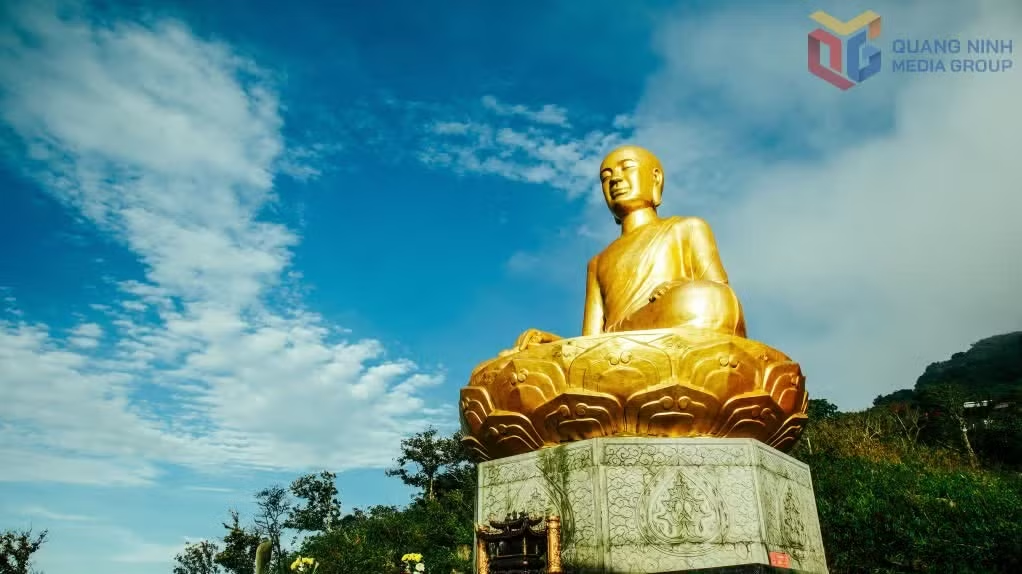
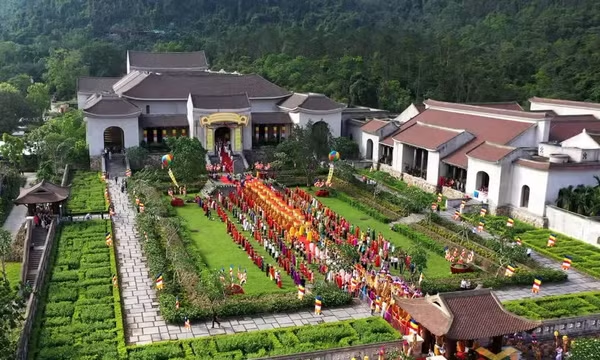
In the northern mountainous area associated with the majestic Yen Tu range lies the story of the Yen Tu - Vinh Nghiem - Con Son, Kiep Bac Complex of Monuments and Landscapes. This special land witnessed many geological and geomorphological transformations and was also a strategically important geopolitical area of ancient Dai Viet. In the 13th century, it was the homeland of the Tran family, which established one of the most illustrious dynasties in Vietnam’s feudal history, distinguished by both military achievements and civil governance.
It was also in this land that the early Tran kings, particularly King-Buddha Tran Nhan Tong, together with many other Zen masters and lay Buddhists, founded the Truc Lam Zen Buddhist school. It became an ideological foundation for uniting and mobilising the strength of the entire population in moral cultivation, resisting foreign invaders and building a strong nation.
Towards a sustainable future
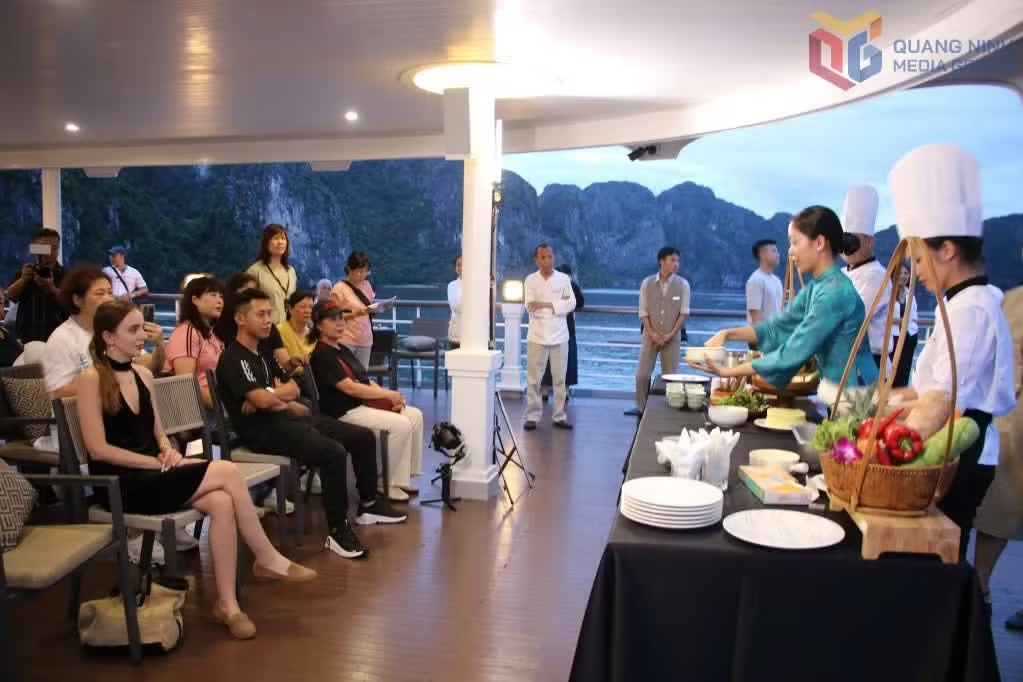
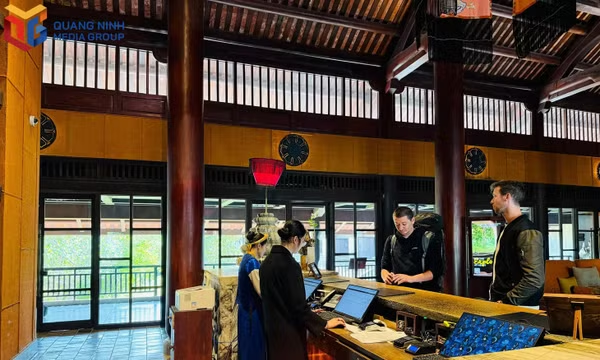
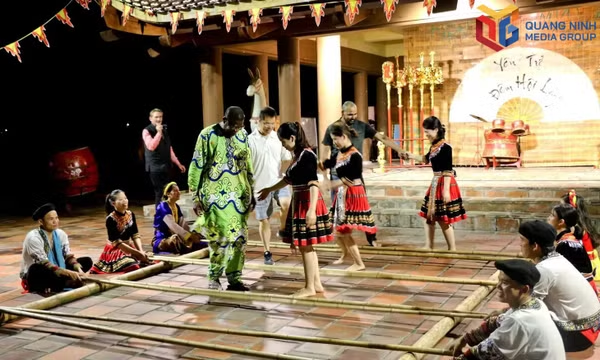
Inscribed by UNESCO as early as 1994, Ha Long Bay has long held immense appeal and remains one of the world’s best-known heritage sites. In addition to receiving numerous accolades from travel magazines and international organisations, Ha Long Bay is regarded by international tourists as a destination to visit at least once in a lifetime. The Yen Tu, Bach Dang and Tran Dynasty heritage areas are also sacred destinations for visitors travelling to the Buddhist land, particularly during the spring festival season and the autumn-winter period, to commemorate the merits of the King-Monk and the patriarchs of the Truc Lam Zen Buddhist school.
Quang Ninh has paid close attention to researching, investing in the conservation and restoration of these heritage sites, while attracting businesses to develop them for tourism. They have become key tourism areas under the city’s objective of developing a heritage economy and cultural industries in line with its green and sustainable development orientation in recent years.
Most recently, Quang Ninh approved a project on the protection, exploitation and promotion of the values of the Ha Long Bay - Yen Tu World Heritage Sites in connection with Bai Tu Long Bay, further affirming its approach to the sustainable management, conservation and exploitation of heritage values through regional, inter-regional and international linkages.
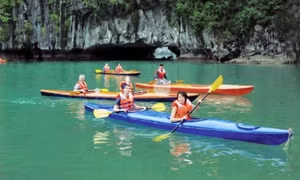
Accordingly, Quang Ninh will maximise the potential and advantages of its sea and islands to establish a high-quality marine and island ecotourism centre of regional and international stature, while ensuring a harmonious relationship between conservation, exploitation and development.
The city will study the application of new and outstanding mechanisms and policies to develop Quang Ninh into a distinctive destination of Vietnam, associated with beautiful, majestic and unspoilt natural landscapes, rich history and culture, and modern experiences; as well as a modern marine economic centre of international stature and a leading one in Southeast Asia, serving as a gateway and development driver for the region.
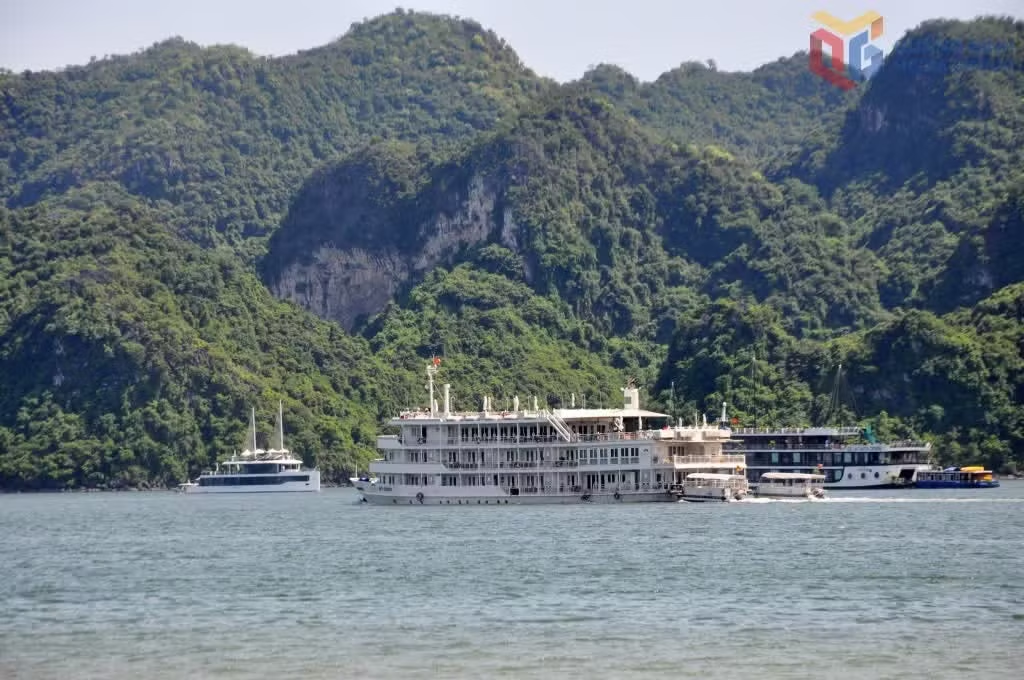
The overall objective is for the exploitation and promotion of the values of the Ha Long Bay - Yen Tu World Heritage Sites to make a significant contribution to Quang Ninh’s GRDP, generate broad spillover effects, and contribute importantly to the city’s and the country’s double-digit economic growth targets for the 2026–2030 period.
The goal is also to ensure comprehensive and sustainable development, in which development is measured not only by scale but also by the level of benefits enjoyed by communities, their quality of life and environmental standards, with Quang Ninh becoming an international-class centre for the heritage, cultural and tourism economy.
By Ngoc Mai