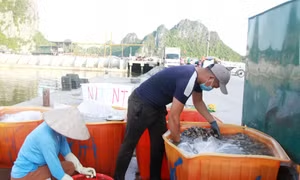
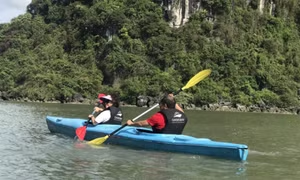
Often described as a miniature Vietnam, with 43 ethnic groups living together, Quang Ninh possesses a diverse range of intangible cultural heritage. Among them, traditional coastal dual love song singing is a distinctive folk performance art that has been recognised as national intangible cultural heritage.
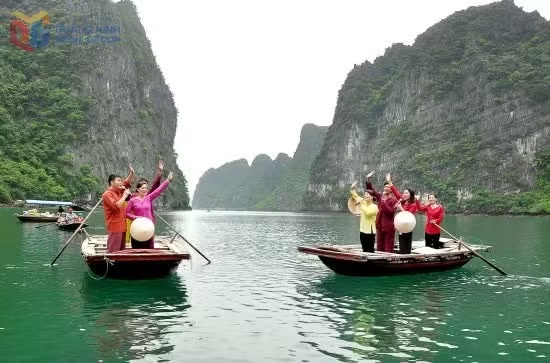
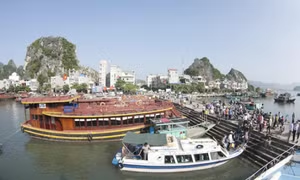
When this form of coastal dual love song singing first emerged and where it originated remain unclear, as no study has yet established these points. What is known is that the practice has existed for generations and has been passed down and widely performed along much of Quang Ninh’s coastline, in ancient Vietnamese coastal villages, island communities and fishing villages on Ha Long Bay. Whether reclaiming land from the sea, casting nets and drying fishing gear, rowing boats to catch fish and shrimp, or enjoying festivals, communal celebrations and weddings, young men and women would raise their voices in song, helping them forget the hardships of labour, work with greater enthusiasm and bring more poetry into everyday life. In this way, the songs continued to be created, enriched, practised and passed down from one generation to the next.
The songs express sincere emotions, intelligent and witty exchanges, and rich lyricism. Their themes often revolve around romantic love, praise for the homeland, seas and islands, the working life of fishermen, and moral values in daily life. Singers mainly rely on their natural voices and improvisational ability, without depending on elaborate musical accompaniment. This is a familiar form of spiritual and cultural activity among fishing communities after hours of work at sea. Quang Ninh’s traditional coastal dual love song singing was officially inscribed on the National Intangible Cultural Heritage List in mid-2025.
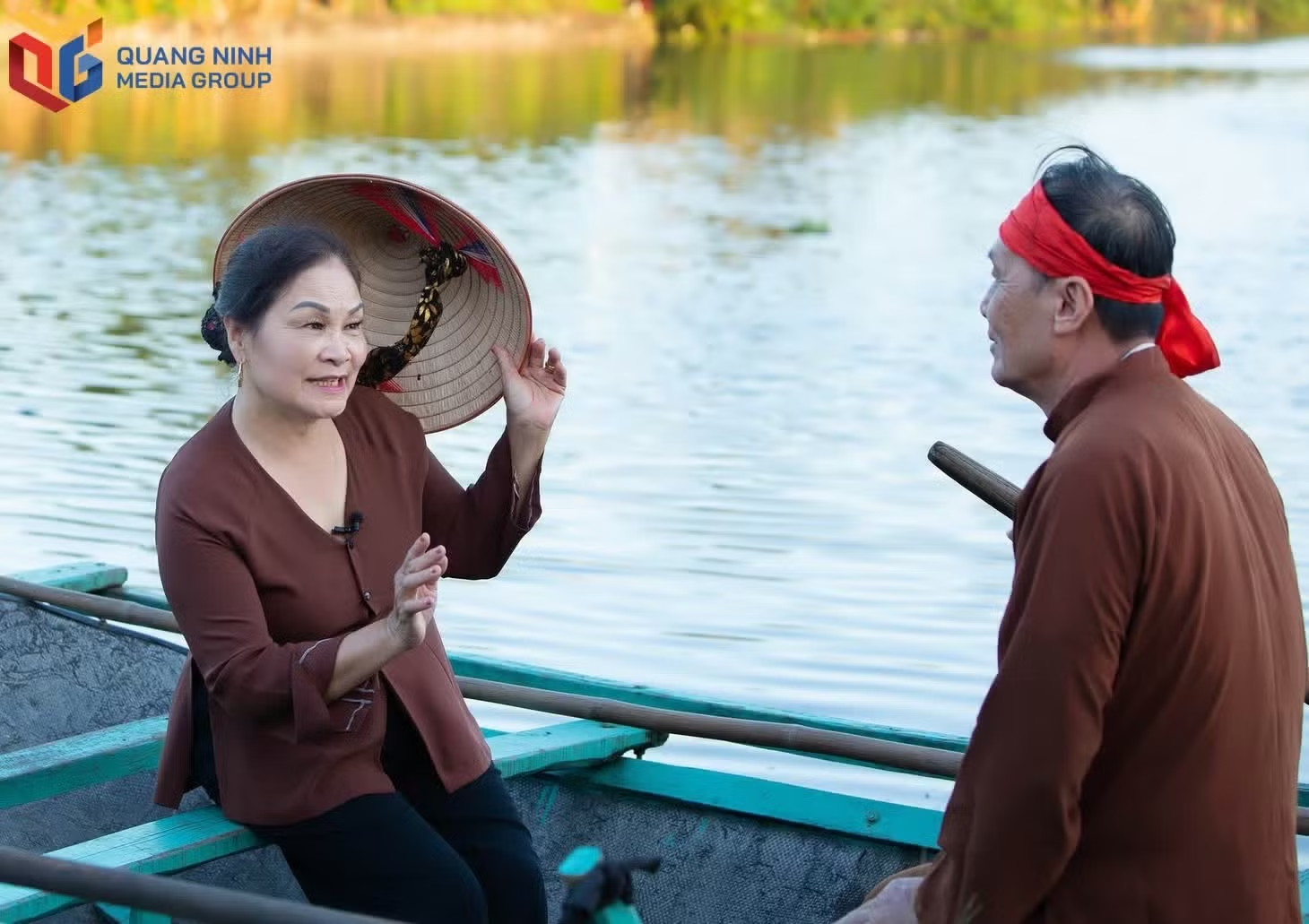
Preserving Quang Ninh’s coastal dual love song singing plays an essential role in safeguarding the cultural identity of coastal, bay and island communities. Recognising the risk of the practice fading away, the cultural sector, the Quang Ninh City Folk Arts Association, coastal communes, wards and special zones, the Ha Long Bay - Yen Tu World Heritage Management Board, and local clubs have in recent years been implementing a range of coordinated and practical measures.
Professor Le Hong Ly, Chairman of the Vietnam Folk Arts Association, said Quang Ninh’s coastal dual love song singing is a distinctive folk performance art that exists and has developed in several communes, wards and special zones across the city, particularly Dam Ha commune. To preserve this form of heritage, he said inventories and assessments should be carried out, while research topics, studies and projects should be developed to promote its values in connection with marine tourism, community-based tourism and experiential ecotourism.
According to Deputy Head of the Research, Cooperation and Communications Division at Quang Ninh Museum and Library Phan Thuy Van, preserving, safeguarding and promoting the value of Quang Ninh’s coastal dual love song singing requires surveys and the collection of old songs still preserved among local communities; compiling and publishing books on the singing tradition; expanding classes to teach old songs to younger generations and school students during music lessons or extracurricular programmes; encouraging clubs to have members collect and record old songs; and digitising all records and materials related to this intangible cultural heritage for communication and promotion on digital platforms.