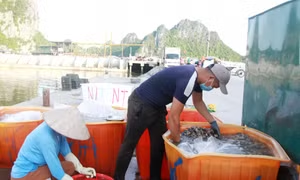
Covering nearly 15,800ha, Bai Tu Long National Park is home to nearly 2,500 species across six representative terrestrial and marine ecosystems, including 106 species listed in the Red Data Book of Vietnam and international conservation lists. A range of biodiversity conservation measures are being implemented in a coordinated manner, with conservation identified as a central and ongoing task.

In late August 2026, the Department of Agriculture and Environment coordinated with the Ha Long Bay - Yen Tu World Heritage Management Board to hold an appraisal meeting on the proposal to establish the Bai Tu Long Marine Protected Area, focusing on the scientific and practical basis for the proposal and the need to carry it out. The establishment of the protected area is intended to conserve and restore ecosystems, habitats, rare genetic resources and endemic species, while also creating space for scientific research, environmental education and ecotourism development. In doing so, it will contribute to maintaining natural resources, ensuring long-term livelihoods for local communities and promoting green growth.
In practice, biodiversity conservation at Bai Tu Long National Park has received sustained attention for many years, with a number of new advances. One notable example is the cooperation agreement for the 2026-2030 period recently signed between the Ha Long Bay - Yen Tu World Heritage Management Board and the Vietnam-Russia Tropical Centre. In the first year of the new cooperation period, the two sides have already carried out research programmes on biodiversity, plant resources and marine ecosystems.
In May 2026, experts from the two sides jointly surveyed bird fauna at Bai Tu Long National Park, focusing on identifying species composition and habitats, supplementing photographic records for database development and proposing conservation measures. The activity built on research conducted in 2025, when scientists recorded the broad-billed sandpiper (Calidris falcinellus), a rare migratory bird, for the first time in the Bai Tu Long National Park area.
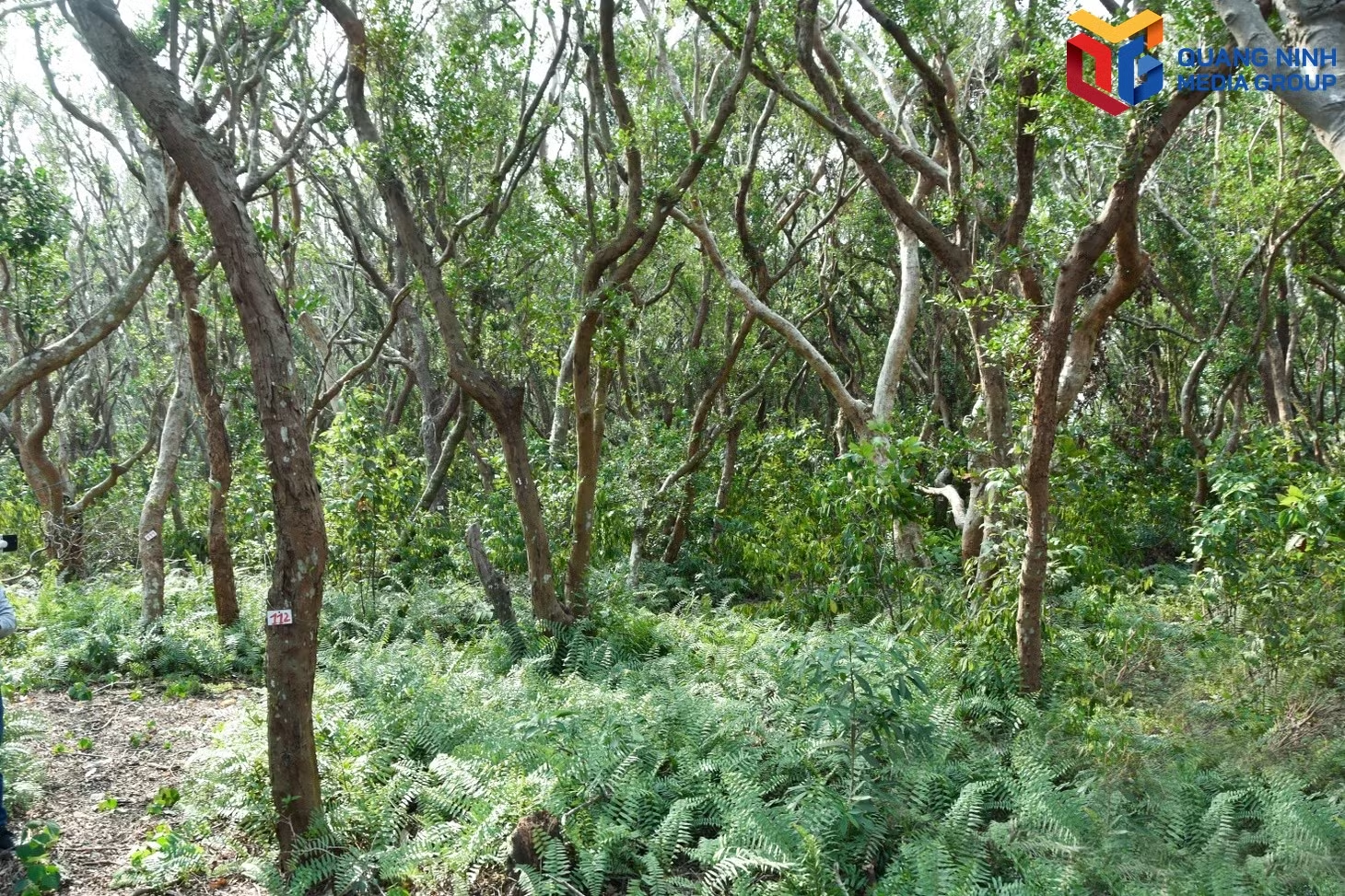
Particular attention should also be given to the increasing application of scientific and technological advances and digital transformation in the management of Bai Tu Long National Park. One example is cooperation with Viettel Quang Ninh to upgrade 4G and 5G technology at Viettel telecommunications stations in the Bai Tu Long Bay area, improving signal quality and bandwidth both in forested and marine areas with complex terrain.
This not only supports tourism development but also assists management and monitoring. Specific applications include the use of handheld GPS devices and specialised software in patrols and wildlife monitoring, as well as in the protection of large timber trees and heritage trees. Specialist units are also stepping up digital transformation in professional activities through software such as MapInfo, Global Mapper, Google Earth, VTool and other specialised applications.