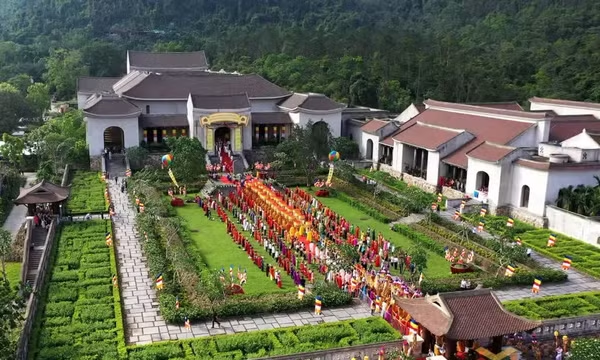
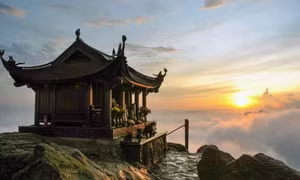
Thai Mieu (Imperial Ancestral Shrine), located in An Sinh ward in the ancestral homeland of the Tran Dynasty, has long been regarded as the dynasty’s second capital in the east. It is one of the important relics within the Tran Dynasty Historic Relic Area in Dong Trieu.
Honouring the nation’s tradition of ancestor worship
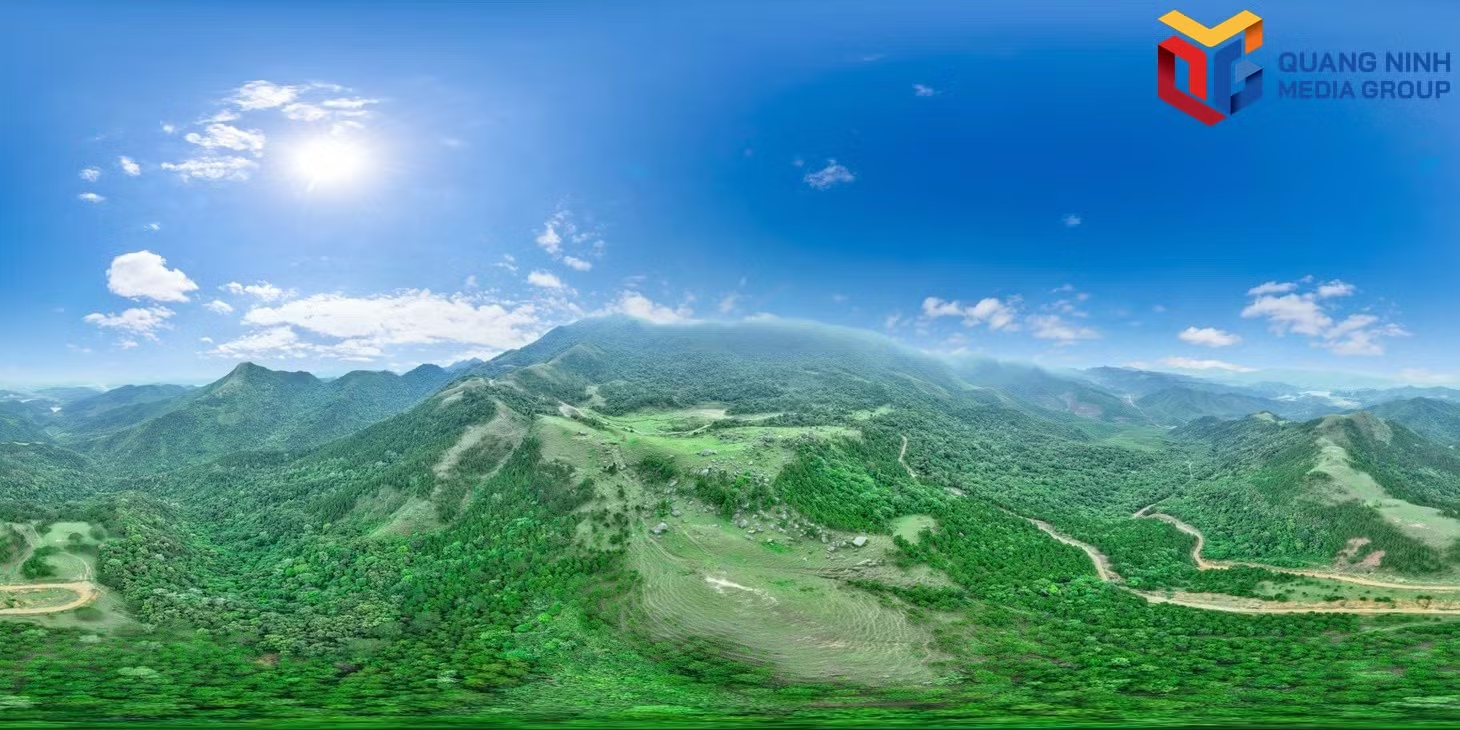
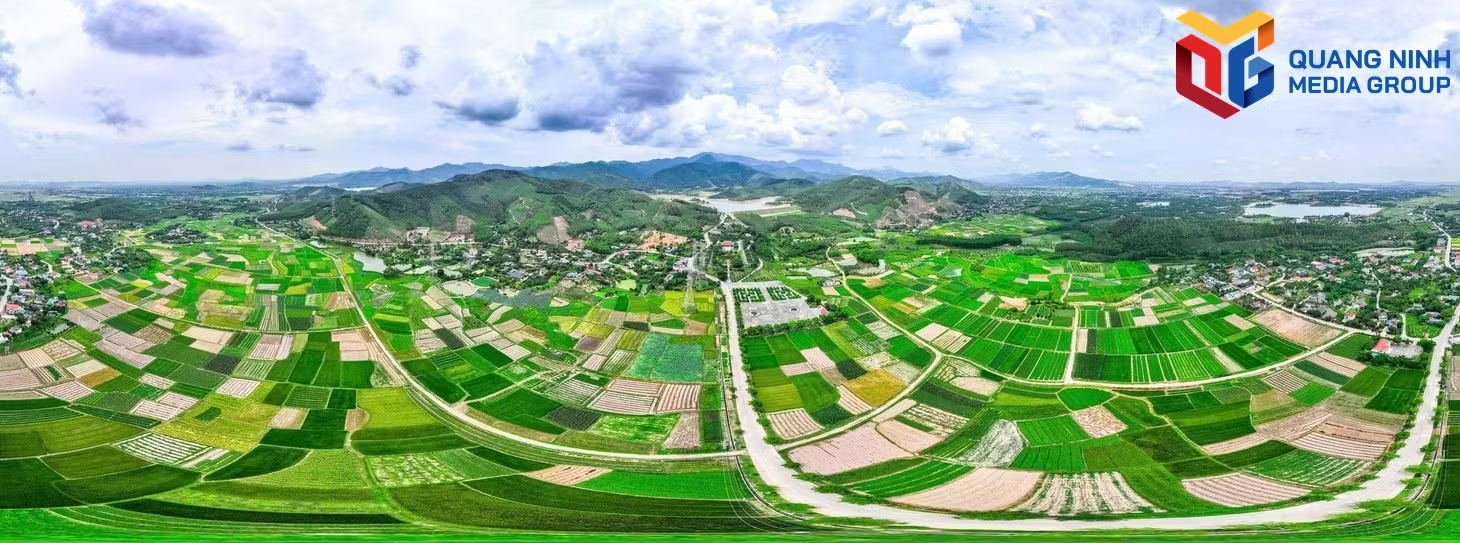
An Sinh is the ancestral homeland of the Tran Dynasty, where the Tran family first settled and established themselves. They later moved to Long Hung in Thai Binh, now part of Hung Yen, and Tuc Mac in Nam Dinh, now part of Ninh Binh.
After ascending the throne, in 1237 King Tran Thai Tong conferred on his elder brother Tran Lieu the title of Prince An Sinh and granted him the land of Ngu Yen, also known as Ngu An, as his fief. Ngu Yen comprised Yen Bang, Yen Duong, Yen Hung, Yen Phu and Yen Sinh. As the eldest son, Prince An Sinh Tran Lieu had an ancestral shrine built to worship the Tran ancestors and his father, Tran Thua. After Prince An Sinh died, the Tran Dynasty continued to expand the area and relocate more royal tombs there, and the ancestral shrine subsequently became the Imperial Ancestral Shrine.
Based on archaeological excavation results and findings from a scientific workshop on the Thai Mieu Shrine relic, the site was originally an ancestral shrine built by Prince An Sinh Tran Lieu around the first half of the 13th century, when he was granted a fief in An Sinh. Initially, the shrine was dedicated only to the ancestors of the Tran family and Tran Thua, father of Tran Lieu and King Tran Thai Tong. Later, as An Sinh was the ancestral homeland of the Tran Dynasty, memorial tablets of Tran kings continued to be worshipped there after their deaths, and the ancestral shrine became the Imperial Ancestral Shrine.
Layers of cultural heritage
In 2009-2010, to clarify the value, scale and characteristics of Thai Mieu Shrine as a basis for the restoration, conservation and promotion of the Tran Dynasty temple and royal tomb complex in general and Thai Mieu Shrine in particular, the Quang Ninh Key Relics Management Board coordinated with the Institute of Archaeology to conduct a comprehensive excavation of the site over an area of 3,000 m2.
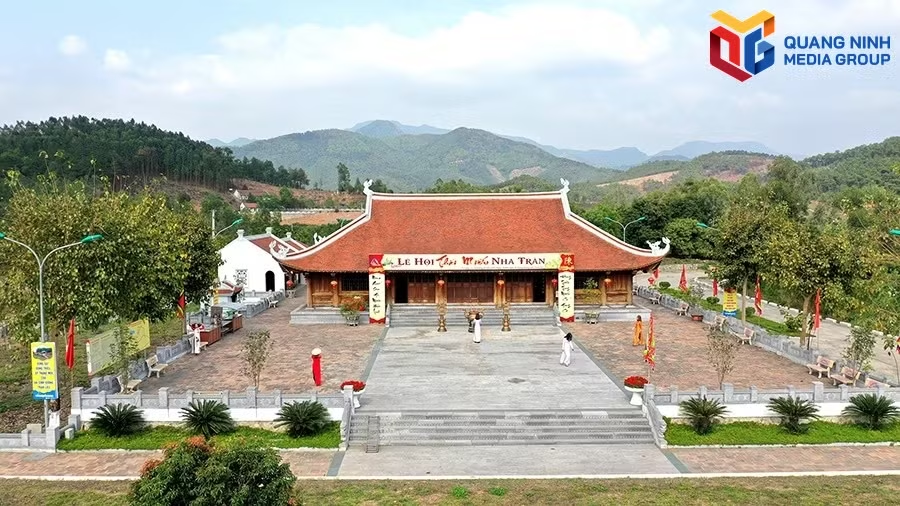
The excavation revealed a complex of remains, including systems reinforcing column foundations, building foundations, courtyards, gardens, flower beds and pathways, together with a large quantity of artefacts, mainly architectural materials.
The findings show that Thai Mieu Shrine underwent numerous rounds of restoration and renovation during different historical periods. Thai Mieu was recognised as a national historical relic in the first round of recognition in 1962 and as a Special National Relic in 2013.
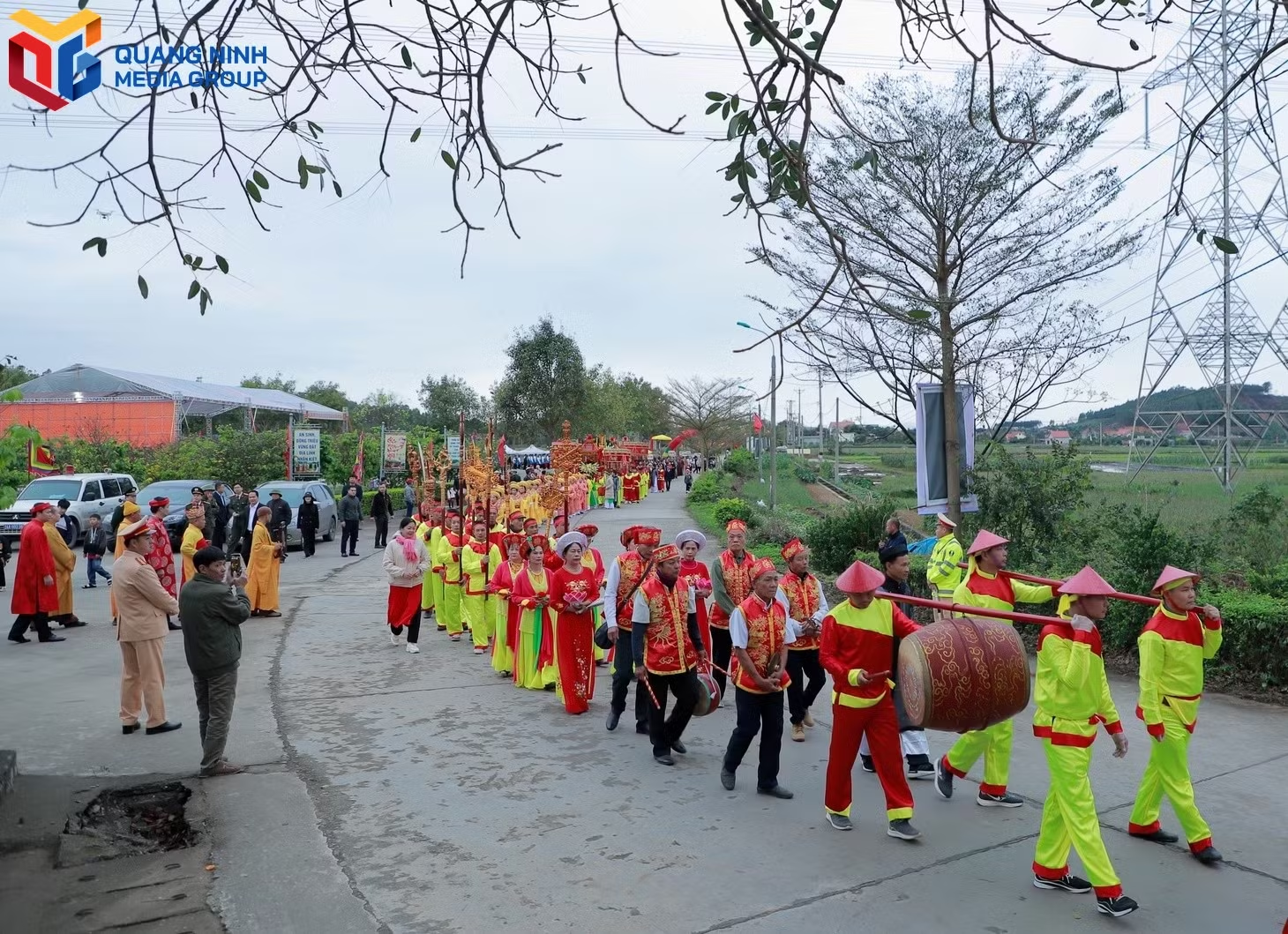
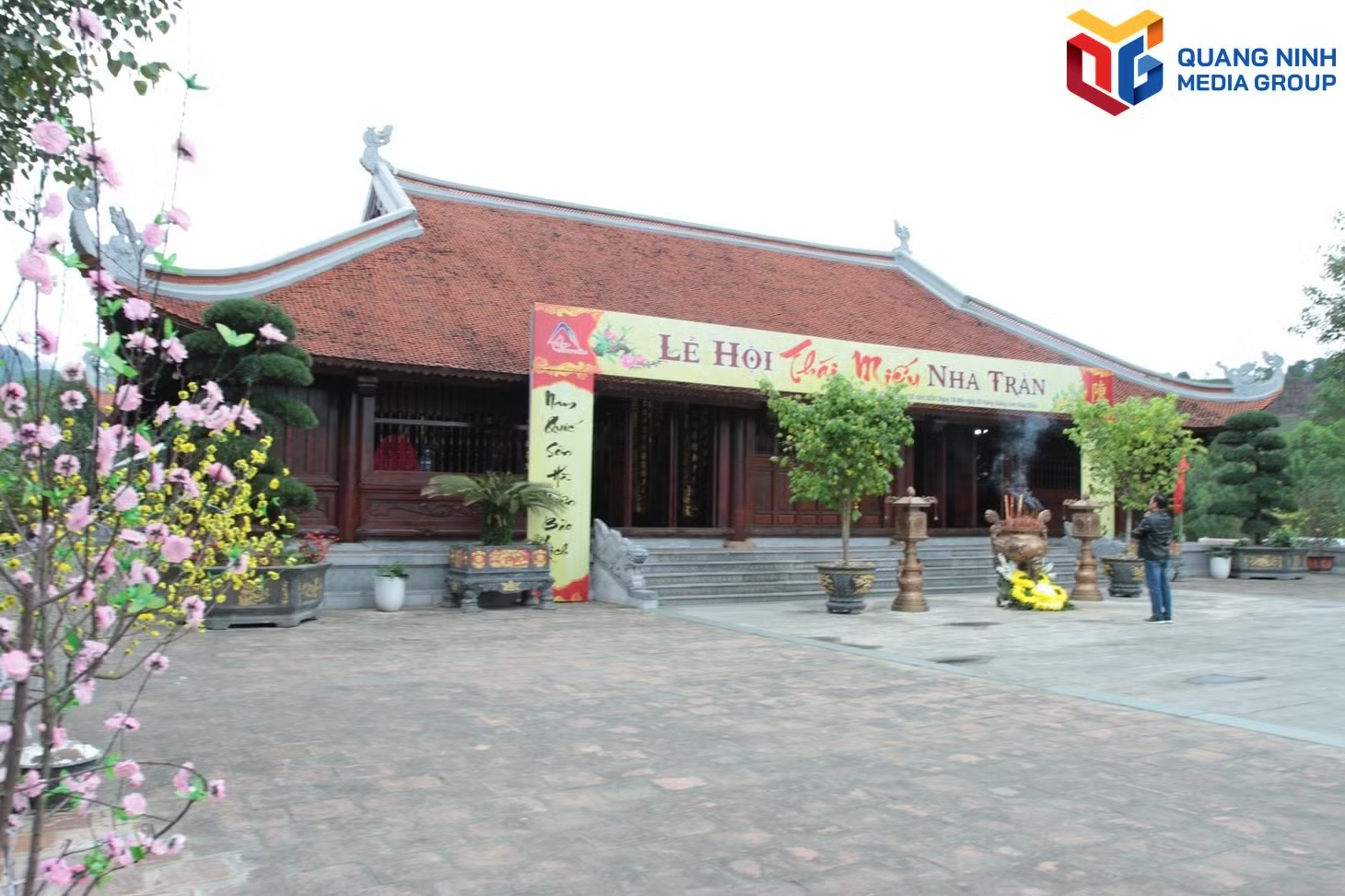
In recent years, Quang Ninh City has been gradually restoring and reviving the values of this Special National Relic Site, including the revival of the Thai Mieu Festival since 2019. In 2025, Thai Mieu Shrine, together with Chua Lan Pagoda, Hoa Yen Pagoda, Yen Giang Stake-yard and the Ngoa Van Hermitage-Pagoda, became the five component parts in Quang Ninh included in the UNESCO-recognised Yen Tu-Vinh Nghiem-Con Son, Kiep Bac Complex of Monuments and Landscapes, a World Cultural Heritage Site.
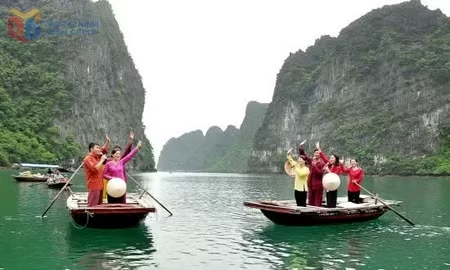
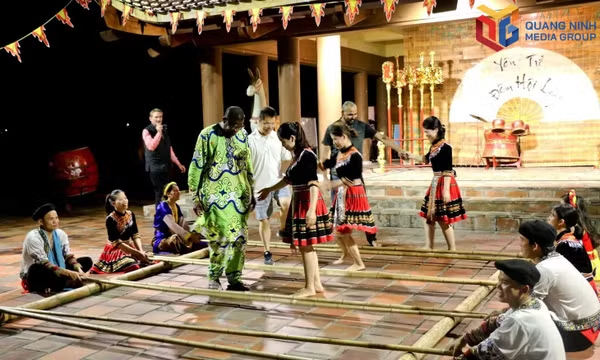
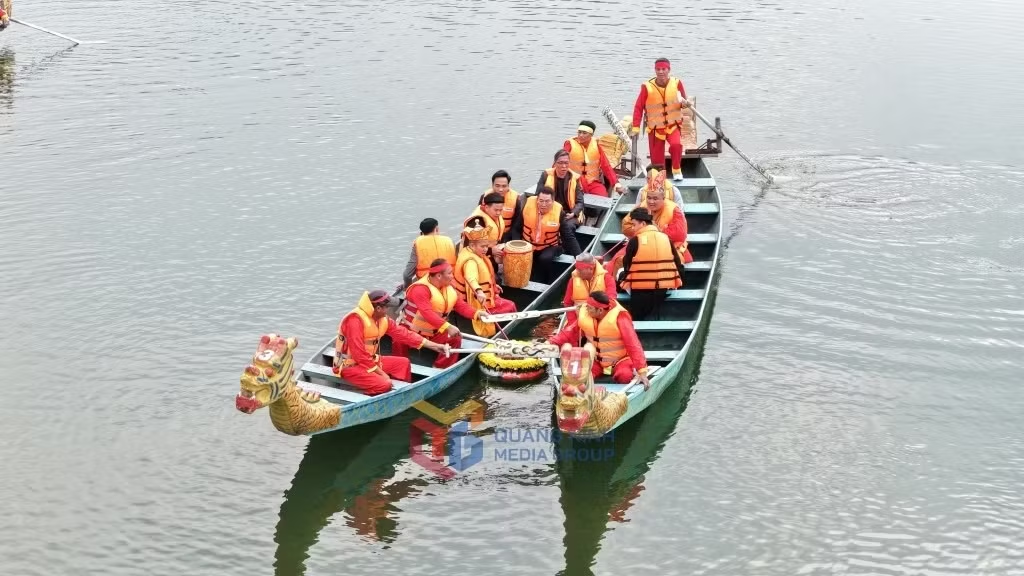
The Thai Mieu Festival is held annually from the 18th to the 20th day of the first lunar month, with the opening ceremony taking place on the 18th, the death anniversary of Tran Thua. Before the festival opens, a water procession is held - an important ritual recreating the lives of the Tran ancestors, who were associated with fishing on rivers and waterways.
The ritual carries historical significance associated with the Tran Dynasty, which created a glorious chapter in the nation’s history. Participants in the water procession pray for favourable weather, peace for the country, and prosperity and happiness for the people.
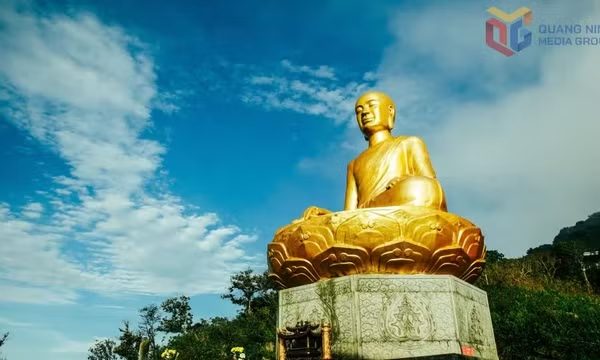
Former Director of the Buddhist Affairs Department under the Government Committee for Religious Affairs, now under the Ministry of Ethnic and Religious Affairs, Dr Bui Huu Duoc said: “Quang Ninh today is where King- Buddha Tran Nhan Tong spent the final years of his life, but it was in fact a core area of the Tran Dynasty, home to Thai Mieu Shrine. This was where the Tran Dynasty’s legacy began in a beautiful land. Quang Ninh should take pride in being such a place, a land where a king renounced the throne to practise Buddhism, attained enlightenment and left behind the highest spiritual and cultural values of an enlightened ruler.”
Each relic has its own location and distinct value, and these sites need to be connected in the conservation and promotion of heritage values. According to Head of the Yen Tu Heritage Conservation Division under the Ha Long Bay - Yen Tu World Heritage Management Board Le Tien Dung, linking An Sinh Temple with Thai Mieu Shrine, An Sinh Temple, Ngoa Van, Yen Tu and the Bach Dang relic site will create a continuous heritage journey, thereby helping educate younger generations about history while also providing a lever for local socio-economic development.