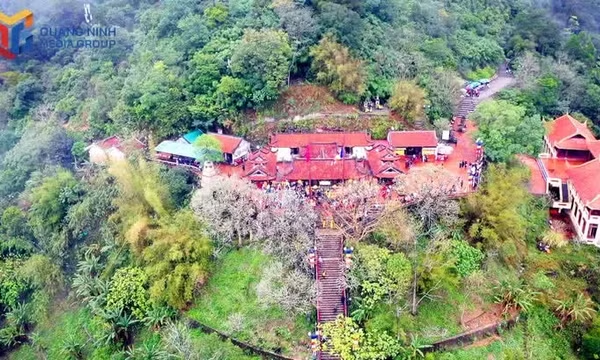
Old apricot trees with gnarled, twisted trunks still stand quietly in Yen Tu. They cannot speak, yet their rough bark and slender, weathered branches seem to tell stories spanning nearly eight centuries of history.
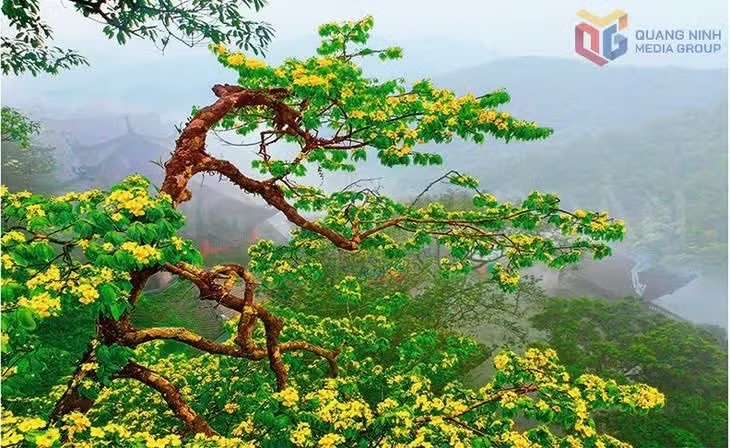
According to local folklore, King-Buddha Tran Nhan Tong and his disciples planted the first apricot trees around Hoa Yen Pagoda, along the mountain slopes and in front of hermitages. No historical record can confirm with absolute certainty that every tree was planted by Dieu Ngu Giac Hoang himself, but for hundreds of years, that belief has never faded.
Yen Tu yellow apricot has a rare indigenous genetic resource and grows at altitudes from several hundred to nearly 1,000 metres above sea level. Yen Tu apricot trees can take root in rocky crevices, which is why people in the past called them mai ky da (or apricot trees rooted in stone), where temperatures can fall very low. A tree that appears so delicate can withstand cold weather, mountain winds and drizzle for hundreds of years. Perhaps for that reason, local people call them “ancient yellow apricot trees”. The word “ancient” refers not only to their age, but also conveys reverence for these silent witnesses standing amid the sacred mountains.
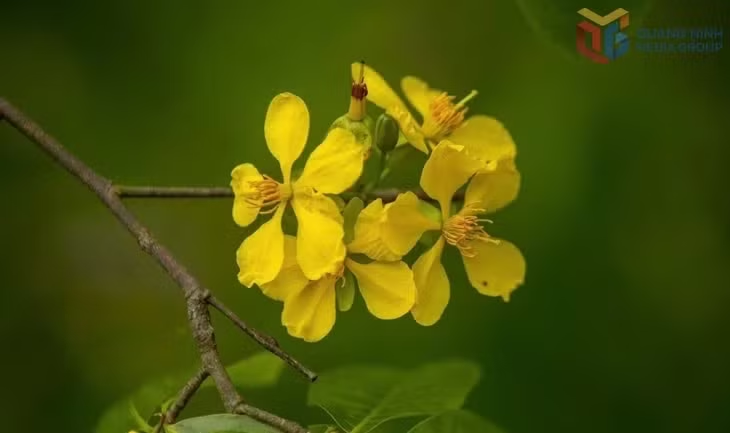
Because the trees must conserve their vitality to withstand the cold, Yen Tu apricot flowers bloom later than those in southern Vietnam. Each flower has five petals and the blossoms appear in clusters rather than sparsely. The flowers also remain fresh for a long time. When they fall from the branches, their delicate petals are carried by the wind across the solemn mountain forests.
Yen Tu yellow apricot has a pure fragrance that people call lanh huong, or “cold fragrance”. It is said that the colder the weather, the larger the flowers and the farther their scent travels, giving people a sense of entering the sacred realm of the Buddhist land. Its young leaves are always lush green, rather than tinged purple or yellow like those of other apricot varieties.
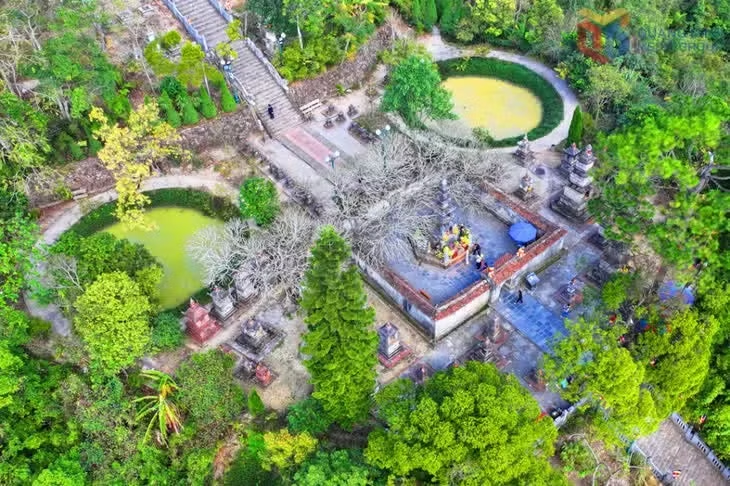
If the lotus symbolises Buddhism in general, Yen Tu yellow apricot is inextricably linked tothe Truc Lam spirit, a form of engaged Zen tradition that finds spiritual cultivation not in withdrawal, but in living a life of clarity and purity amidst the world. Like the apricot tree, which takes root among harsh mountain rocks yet still produces pristine flowers, humanity can maintain its inherent virtues through the turbulence of life.
When Quang Ninh and related localities prepared the nomination dossier for the Yen Tu - Vinh Nghiem - Con Son, Kiep Bac Complex of Monuments and Landscapes for World Heritage status, the yellow apricot trees were also recognized as vital to the integrity of the cultural landscape. It reflects the harmony between people, nature and spiritual life, one of the core values of the Truc Lam cultural space. Though Yen Tu has now become a World Cultural Heritage Site, the stories of this sacred mountain continue to unfold. As long as temple bells continue to echo through the vast forests and pilgrims continue to return to this Buddhist land, the ancient yellow apricot trees will keep telling their timeless tales through each flowering season.
By Pham Hoc