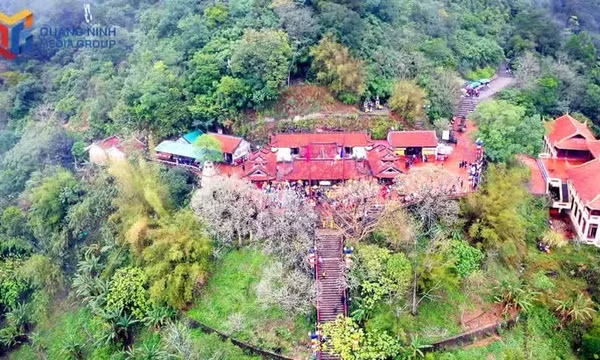
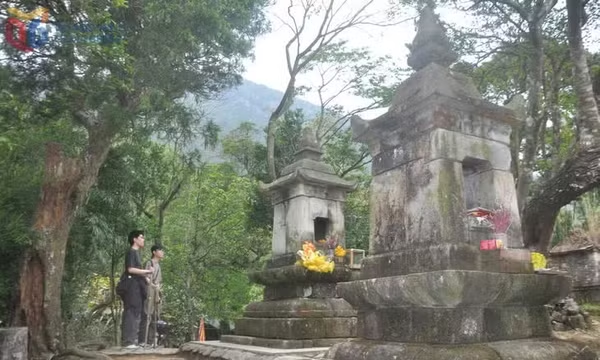
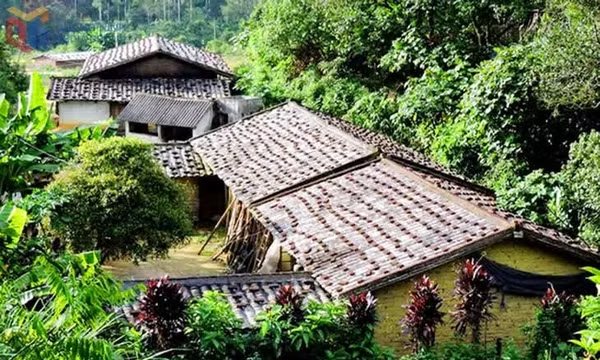
The Hua Mountain heritage site in Dam Ha commune is regarded as a “three-in-one” site as it brings together archaeological, historical and natural landscape values.
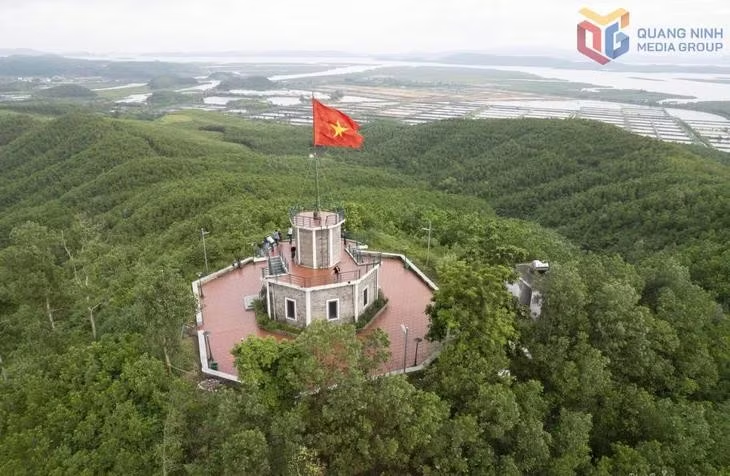
Located in Lang Ruong village, Dam Ha commune, Hua Mountain is a low earthen mountain stretching more than 2km and rising about 90 metres, offering easy access via a 559-step stone path.
Discovered in May 1999, the Hua Mountain archaeological site was surveyed that in that July by Professor Hoang Xuan Chinh, former Deputy Director of the Vietnam Institute of Archaeology. Findings reveal it was a Middle Neolithic settlement, contemporary with the Son Nhu and Nho Tro sites in Van Don and the Tien Ong site in Ha Long, dating back around 5,000 - 6,000 years. Spanning over10,000m2 with its original elements features almost intact, it is one of the rare prehistoric sites in Vietnam with a cultural layer lying below the tidal water level.
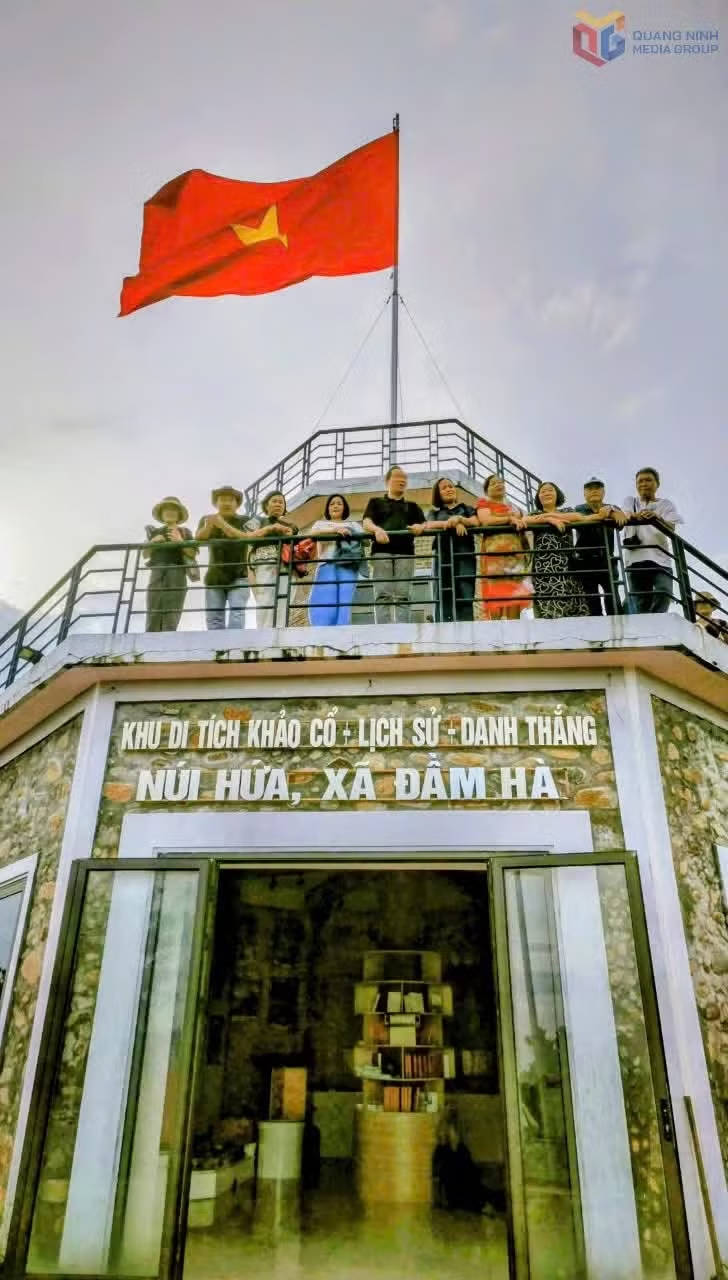
Hua Mountain was also a revolutionary base and the place where the first Communist Party cell of the former Dam Ha district was established in 1948. From 1948 to 1954, the base continuously recorded historical achievements. The spirit of relying on the people support and combining armed struggle with political resistance enabled the base to sustain operations for seven to eight years behind enemy lines, making it a valuable example in the former Hai Ninh province. In 2012, the Hua Mountain archaeological, historical and scenic site was recognised as a provincial-level relic.
At the foot of the Hua Mountain flagpole is also a stork forest, home to tens of thousands of storks, adding to the natural appeal of the area. Today, the Hua Mountain flagpole and Don Den relic have become popular weekend and holiday getaways for locals and travelers alike..
By Pham Hoc