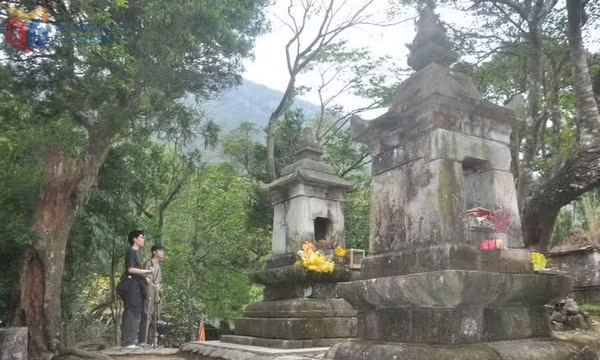
Beyond their rustic appearance and harmony with the surrounding mountains and forests, traditional Tay houses embody a rich and living system of cultural values.
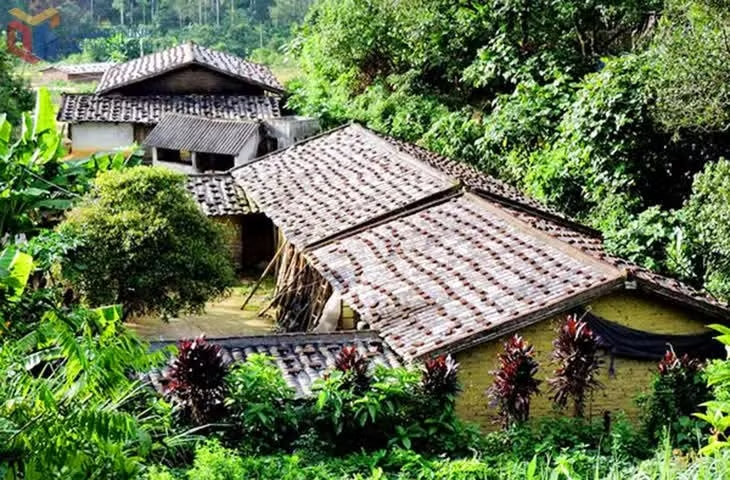
From a research perspective, MA. To Dinh Hieu, Director of the Binh Lieu Commune Service Supply Centre and a researcher on ethnic cultures, said the value of Tay houses lies not only in their external architecture but also in the customs, family relationships and folk knowledge nurtured within these spaces. Together, these elements create the distinctive character of Tay family life.
According to Hieu’s surveys in Tay villages in Binh Lieu such as Pac Lieng, Ban Ngay, Na Lang and Chang Na, as well as several other villages and hamlets, traditional houses can still be found amid rice fields, mountains and streams. They are usually built at the foot of mountains, close to water sources and facing south or southeast, using locally available materials such as earth, stone, bamboo and wood, reflecting generations of experience in adapting to the mountainous environment.
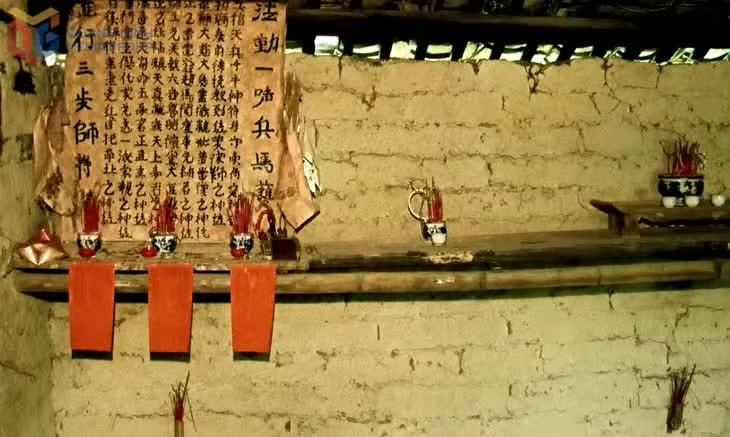
The beauty of Tay houses lies not in elaborate design, but in balanced proportions, familiar materials and a sense of harmony with both the land and the people. To speak of the home is also to speak of village life. Once inside, deeper layers of culture become more visible. A traditional house usually has three main compartments and two side wings. The central compartment is the most solemn space, where the ancestral altar is placed. It is also used to receive guests and hold important rituals. The altar reminds descendants of their roots, family rules and responsibilities to the clan.
If the altar preserves the “roots” of the house, the cooking fire keeps its “warmth”. For the Tay, the cooking fire is the “soul of the home”, where family members gather over meals, talk after a day’s work and where elders pass knowledge and traditions on to younger generations. When moving into a new house, many families still maintain the custom of carrying fire from the old home to the new one, symbolising the continuation of warmth, good fortune and memories.
Even the arrangement of bedrooms, doors and staircases reflects family conventions, forming a kind of “miniature social map” of relationships between generations. In the past, building a house was a collective effort involving relatives and neighbours, from preparing materials to erecting the frame and roofing the house. Each completed home was also an occasion to strengthen bonds within the community.
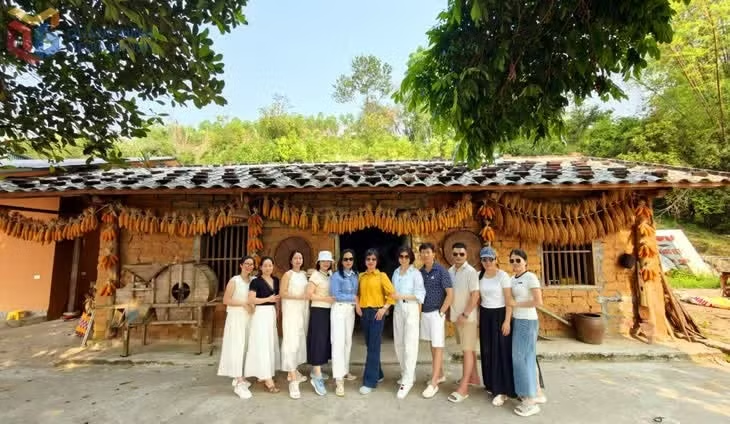
As villages continue to change, what needs to be preserved is not only tiled roofs or walls, but also the cooking fire, the ancestral altar, family traditions and stories passed down through generations. As long as these values endure, Tay homes will retain their cultural essence amid the rhythms of modern life.
By Ha Phong