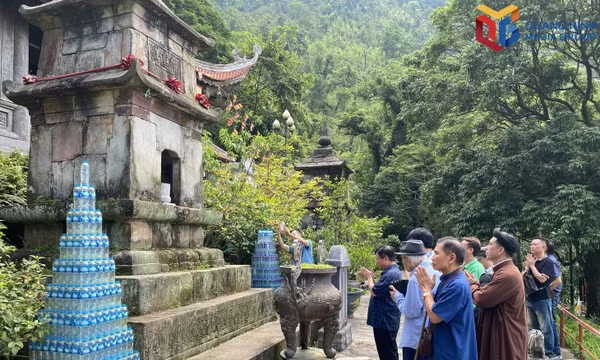
King Tran Nhan Tong determined to retreat to Yen Tu to practise Buddhism in 1299. Over 700 years have passed, his footsteps can still be traced along pilgrimage routes.
A wide range of large-scale cultural, artistic, sporting and tourism activities will take place from late August as Quang Ninh marks the establishment of the new city.
From August 28 to September 2, Quang Ninh will organise a special art programme and a series of attractive events to celebrate the establishment of Quang Ninh City
The Tran Dynasty was a monarchy that governed Dai Viet from 1225 to 1400. It played an especially important role in the history of the nation construction and defense. After 175 years of development and prosperity under 13 kings, the Tran Dynasty performed wonderful miracles and established a cultural life based on a deep national spiritual life and a strong feeling of self-reliance, propelling Dai Viet culture to new heights.
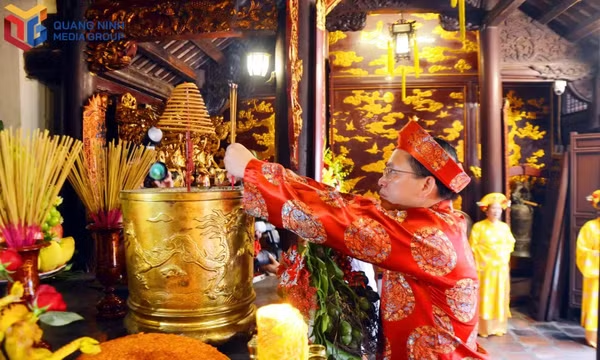
In the autumn of the year of the Pig (1299), King Tran Nhan Tong went to Yen Tu mountain to practice the Dharma and establish the Truc Lam Yen Tu Zen sect. His contemporaries respectfully called him the First Patriarch of Truc Lam Buddhism. Followed by two successors of Phap Loa and Huyen Quang, all three known as Truc Lam Tam To (Three Patriarchs of Truc Lam Zen Buddhism) made great efforts to propagate Buddhism, and develop Truc Lam Buddhism into the national religion.
The story of Truc Lam Buddhism, the well-known pure Vietnamese Zen sect, is associated with the story of the Three Patriarchs of Truc Lam, namely first Patriarch Tran Nhan Tong, second Patriarch Phap Loa, and third Patriarch Huyen Quang, as well as many records and studies about the lives and contributions of the three in founding and bringing the Truc Lam Zen sect to its peak in Dai Viet's Buddhist life.
Yen Tu is the sacred mountain range in the minds of generations of Vietnamese, the ancestral land of Vietnamese Buddhism, a cultural and historical space containing multifaceted core values, and a spiritual support for Vietnamese.
In history, Yen Tu has always been one of the Buddhist centers of the country, associated with many ancient architectures which were built through different historical periods from the Ly to the Tran, Le and Nguyen dynasties.
On May 10, at the Yen Tu relic site, the Quang Ninh Department of Culture and Sports in coordination with the Departments of Culture, Sports and Tourism of Bac Giang and Hai Duong provinces and the consulting unit making dossiers held a conference to prepare for welcoming the delegation of UNESCO experts to Yen Tu.