Located in the coastal area of Duong Hoa, Cai To Communal House preserves the history and traditions of an ancient fishing village, where generations have placed their faith in their ancestors and sea deities, praying for safe voyages and bountiful fishing seasons.
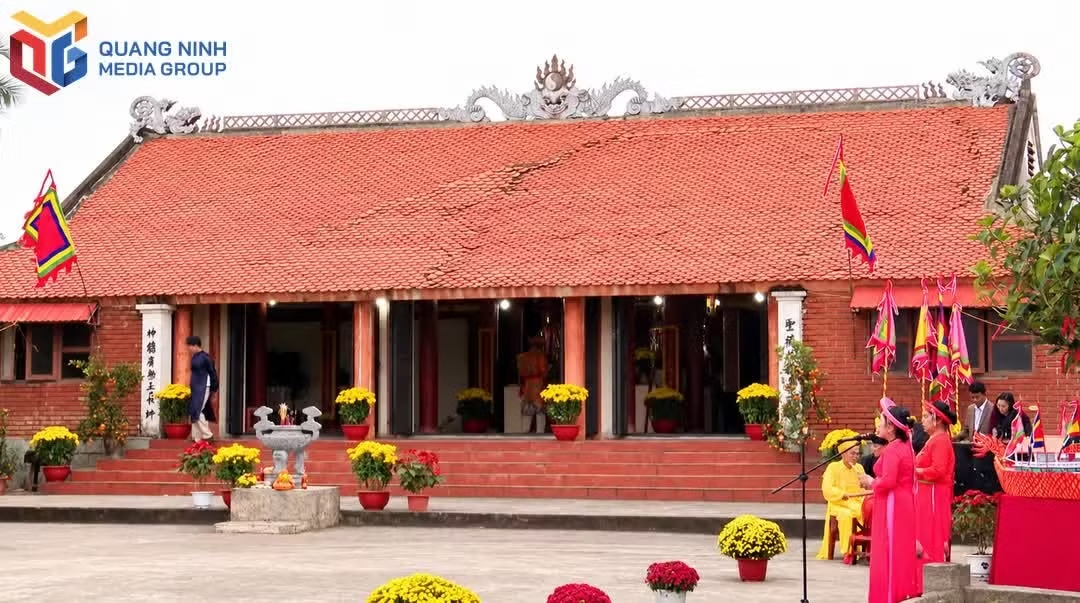
Cai To Communal House, commonly known as To Communal House, is located in Cai To Hamlet, Duong Hoa Commune. Its name is associated with an area featuring a large, deep and sheltered inlet, which provides favourable conditions for boats to head out to sea, return to shore and take shelters from strong winds. Before 1945, Cai To belonged to Dam Ha Area, Ha Coi District, Hai Ninh Province. For generations, To Communal House has been closely connected with the lives of communities along the northeastern coast.
To Communal House is dedicated to national hero Ngo Quyen and local tutelary deities. Folk stories tell of members of the Hoang family who brought incense from Ngo Quyen’s altar to the northeastern region, where they settled and established a communal house for worship. Local historical records also mention 12 tutelary deities, known as the Hoang Hai Dai Vuong, who are believed to guard river mouths and coastal estuaries.
After being relocated several times, To Communal House was rebuilt at its current location in 2012–2013, on a site covering more than 7,500 square metres. The main building covers more than 200 square metres and follows traditional Vietnamese communal-house architecture, with a layout shaped like the Vietnamese character Đinh, comprising a front hall and an inner sanctuary. Its roof is covered with traditional curved tiles, while the ridge features decorative ho phu motifs. Dragon figures adorn both ends of the ridge, and the four corners of the roof curve upwards like swirling clouds.
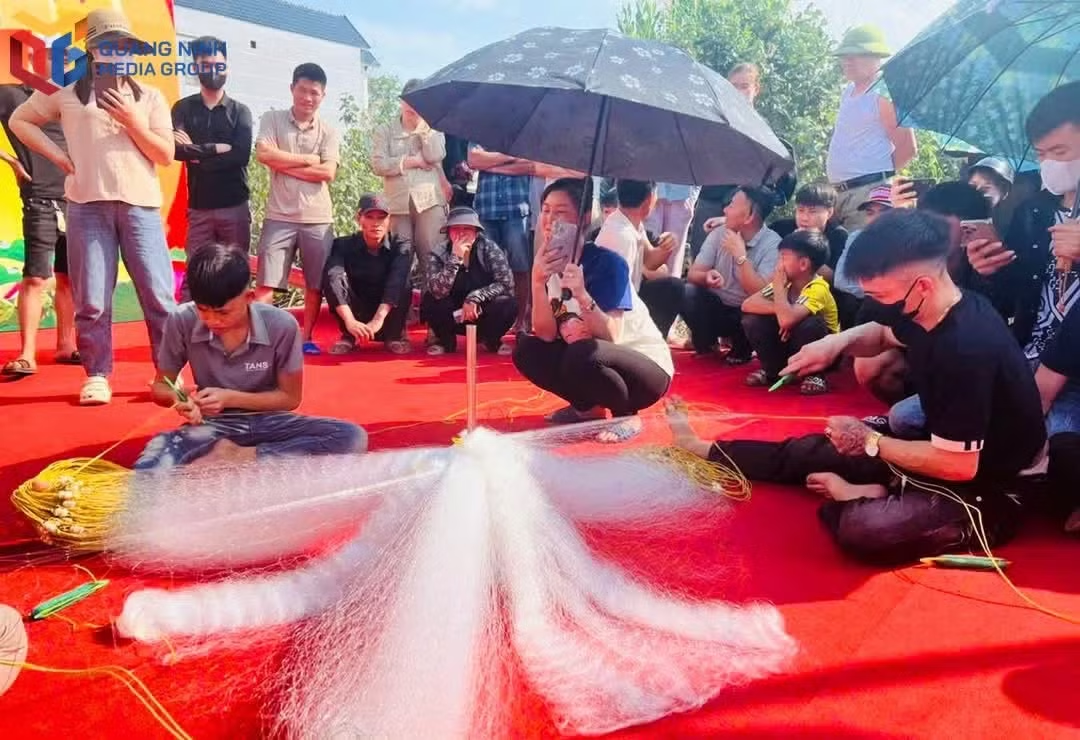
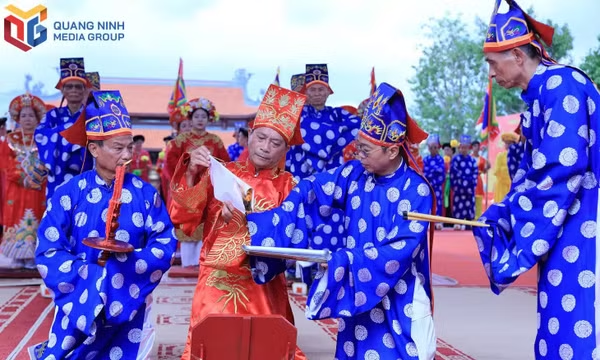
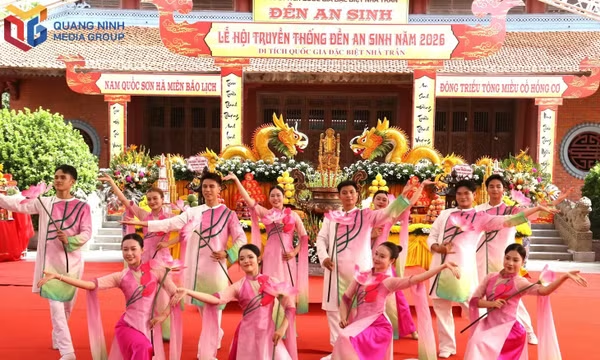
The distinctive culture of the sea is most vividly expressed in the early-spring festival. In the past, the festival lasted five days, from the 16th to the 20th day of the first lunar month, and featured a series of rituals and folk performances, including water processions, ceremonies inviting the Mother Goddess, rites to send off deities and pray for a bountiful fishing season, ritual singing at the shrine to invite the deities, post-ceremony singing, singing and dancing at the communal house, and xướng đào performances. Today, the festival takes place from the 14th to the 16th day of the first lunar month. Although some rituals have been simplified, the procession carrying water from the sea to the communal house remains a highlight, expressing the community’s hopes for calm seas, gentle waves and abundant catches.
Building on these values, Duong Hoa can link To Communal House with Cua Song Shrine, Duong Hoa Pagoda, local fishing villages, the tea-growing area of Quang Long and Truc Bai Son Lake to develop cultural, spiritual and ecotourism experiences while preserving its heritage.
By Ha Phong