In the mountains of Binh Lieu, the melodies of Then singing and the gentle sounds of the Tính lute have been part of Tay life for generations. Sometimes slow and soothing, sometimes lively and expressive, the music drifts through homes and villages, accompanying traditional festivals, ceremonies and everyday moments of joy and sorrow.

In Na Pha village, Binh Lieu commune, the familiar sound of the Tính lute still fills the small home of Luong Thiem Phu. People who share a love of Then singing gather here to play music, sing and celebrate a tradition passed down through generations. Their gatherings also keep alive the story of an old craft: making the traditional Tính lute.
No one knows exactly when the instrument first appeared. According to a Tay legend, the Tính lute originally had 12 strings. Its music was so enchanting that plants, animals, people and even heavenly beings fell under its spell. The Jade Emperor eventually ordered 10 strings removed, leaving just the two strings played today.
The story may be rooted in folklore, but the Tay people's attachment to the instrument remains strong. Then singing and the Tính lute have long been inseparable. For generations, the instrument has carried the melodies of Then across the mountains and into the hearts of the Tay community.
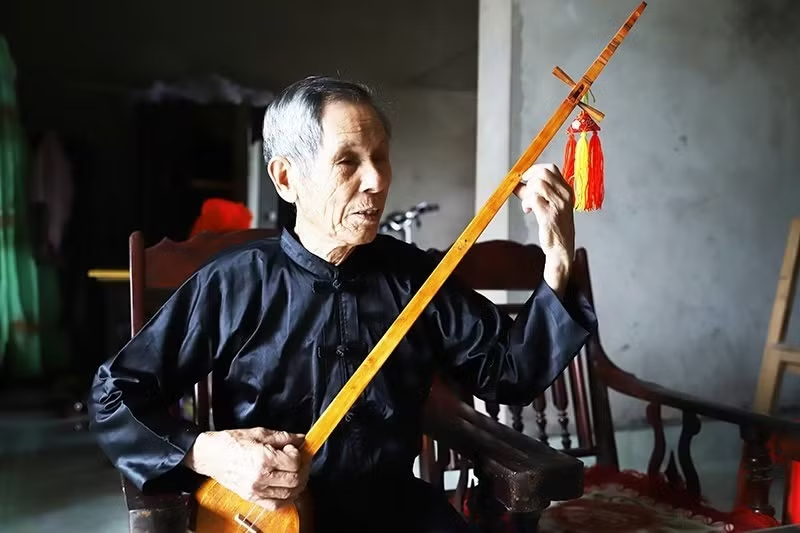
Artisan Phu grew up listening to the Then songs of his grandmother and mother and watching traditional instruments accompany Lau Then ceremonies. Those childhood experiences inspired his love of the music and eventually led him to teach himself how to make Tính lutes.
The hands that keep the craft alive
In Na Pha, Phu is known both as a Then singer and a skilled Tính lute maker. He shares his craft with Hoang Thiem Thanh, another traditional musician and craftsman from Binh Lieu.
Their workshop occupies a small corner of Phu's home. There are no modern machines or complicated production lines, only simple tools, carefully chosen materials and the practiced hands of two men who have spent decades perfecting their skills.
Through years of trial and error, the two craftsmen have produced thousands of instruments. Their Tính lutes have found their way from Na Pha to villages across the region, reaching Then singers, musicians and traditional performers in neighboring communities.
Although the instrument appears simple, making one requires patience, precision and years of experience.
The process begins with selecting wood for the neck. It must be light enough to handle comfortably but strong enough to resist bending or warping over time. The craftsmen carefully saw, plane, sand and shape the wood, making small adjustments at every stage. They have also modified the length of the neck from older designs to make the instrument easier for today's musicians to play.
Born in 1939 and 1940, artisan Phu and artisan Thanh are now both in their 80s. Their eyesight has weakened, and the physical demands of the work have become harder to manage. In his younger years, artisan Phu could make two instruments a day. Today, each craftsman produces about one.
Yet their dedication remains unchanged. Their hands still move with the confidence and patience developed over decades of work.
Many tasks have become so familiar that the craftsmen rarely need precise measurements. Their eyes, hands and experience guide them through each cut, stroke and adjustment, reflecting skills refined through thousands of repetitions.
From a gourd in the fields to the sound of music
While the wooden neck gives the Tính lute its shape, the gourd serves as its resonating chamber, producing the instrument's distinctive sound.
The craft therefore begins long before the materials reach the workshop, in the fields where Thanh grows and selects the gourds.
Not every gourd is suitable. Artisan Thanh looks for those with a rounded shape, the right size and a smooth surface free of visible defects.
Once selected, the gourds are cleaned and soaked in limewater to strengthen their shells and help protect them from insects. Only then are they ready for the next stage of production.
Back in the workshop, artisan Phu carefully cuts, trims and shapes each gourd, gradually transforming it into the body of an instrument.
Every step is done by hand. Years of practice have given him the precision needed to achieve the right shape and proportions.
He also carves floral patterns around the gourd. The decorative openings add to the instrument's appearance while allowing sound to escape and resonate.
The soundboard is made from thin, soft and flexible wood. Artisan Phu cuts each piece to fit the opening of the gourd and attaches it securely.
Without modern measuring equipment, he relies on experience and an instinctive understanding of the instrument's dimensions.
Each finished Tính lute reflects the individual craftsmanship behind it. No two instruments are exactly alike, but every one carries the care, knowledge and skills accumulated over years of practice.
When wood, gourd and strings become music
To protect the instrument from Binh Lieu's hot, humid climate, the craftsmen coat its components with copper-brown paint. The finish helps preserve the wood and gourd while giving the lute its warm, traditional appearance.
They then join the neck and gourd, bringing the instrument's familiar shape together. But completing the body is only part of the process. For the craftsmen, the true measure of a Tính lute is its sound.
The gourd must be properly sized, the sound holes carefully positioned and the strings adjusted to the correct tension. The final step is to play the instrument and listen.
Decades of experience allow artisan Phu to recognize the subtle differences in tone, resonance and clarity.
As an experienced Then singer, he knows the sound he wants to achieve. Tuning the strings is one of his favorite parts of the process.
When the first notes ring out with the right balance of clarity and resonance, another handmade Tính lute is ready to accompany the melodies of Then.
An instrument at the heart of Tay life
For the Tay people, the Tính lute is more than a traditional musical instrument. It is a companion through moments of happiness and sadness, a familiar sound that connects people to their families, villages and cultural traditions.
A few notes can bring back memories of festivals, evenings of Then singing and stories shared by grandparents with younger generations.
As fingers gently pluck the strings, the melodies of the Tính lute blend with Then singing and the rhythms of traditional percussion rattles. The music moves between lively passages and softer, more reflective moments.
Against the peaceful mountain landscape of Binh Lieu, these sounds tell stories of everyday life, work, customs and the Tay people's attachment to their homeland.
Each instrument carries more than the materials used to make it. Its wooden neck, gourd body and strings reflect generations of traditional knowledge, craftsmanship and cultural expression.
For the Tay community, preserving the Tính lute also means keeping alive an important part of its spiritual and cultural identity.
Keeping the music alive
Despite the familiar melodies that continue to fill Phu's home, the future of the craft remains uncertain.
The remaining craftsmen in Binh Lieu who possess the essential skills of traditional Tính lute making are now in their 80s. As they grow older, the need to pass their knowledge to younger generations becomes increasingly urgent.
For artisan Phu and artisan Thanh, preserving the craft is about more than producing additional instruments.
They hope younger people who love Then singing and the Tính lute will take an interest in learning how to make them.
That means understanding how to choose the right gourd, shape the wooden neck, carve decorative patterns and, above all, recognize the sound that gives each instrument its character.
Their hope reflects a broader challenge facing traditional crafts: preserving knowledge not simply as a record of the past but as a living practice that future generations can continue.
The skills of Tính lute making have survived through the patience and dedication of craftsmen who learned by doing, refining their techniques over decades.
Passing those skills on will require the same commitment from a new generation.
One day, the hands that have made thousands of instruments will no longer be able to continue their work. But if younger craftsmen take their place, if Then singers continue performing and if the two strings of the Tính lute keep sounding across Binh Lieu's mountains, the tradition will endure.
And through those familiar melodies, the Tay people of Binh Lieu will continue to share their cultural heritage with future generations in Vietnam's northeastern border region.