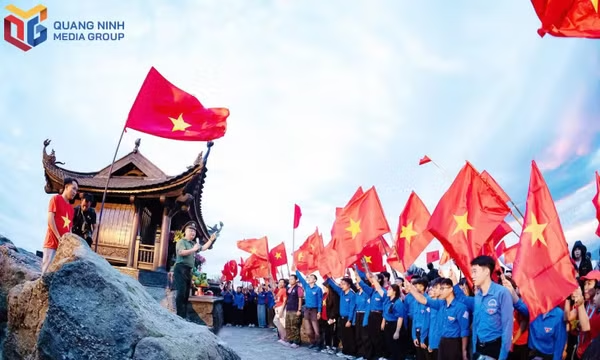
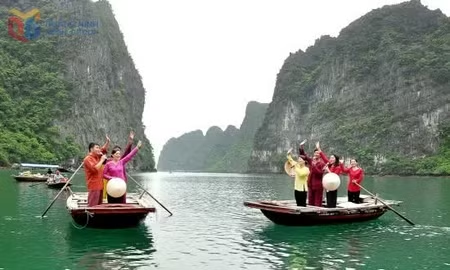
On July 12, 2025, at the 47th session of the World Heritage Committee held in Paris, France, UNESCO officially inscribed the Yen Tu – Vinh Nghiem – Con Son, Kiep Bac Complex of Monuments and Landscapes as a World Cultural Heritage Site. This milestone not only affirmed the outstanding universal value of the Truc Lam Buddhist cultural space, but also represented the fruition of years of meticulous preparation, dedication and sustained efforts by Vietnam, with Quang Ninh taking the lead in preparing the heritage nomination dossier, thereby helping to promote Vietnamese cultural identity more widely to the international community.
54 kg of documents and an unprecedented journey
Following the Prime Minister’s direction, on June 5, 2020, Quang Ninh took the lead in coordinating with Bac Giang and Hai Duong provinces, now part of Bac Ninh Province and Hai Phong City respectively, to prepare the scientific dossier for the Yen Tu – Vinh Nghiem – Con Son, Kiep Bac Complex of Monuments and Landscapes for submission to UNESCO for recognition as a World Heritage Site. This was Vietnam’s first inter-provincial heritage nomination dossier of such a large scale, spanning three provinces and seven districts and comprising 214 relic sites within six Special National Relic Sites.
From the outset, the parties involved identified the task as particularly challenging. Many traces within the heritage complex have a history of more than 700 years, while numerous structures survive only as foundations or archaeological remains buried deep underground. The difficulties were compounded by the fact that research and surveys were carried out during the COVID-19 pandemic, which lasted from 2020 until mid-2022.
From July 2020 until the dossier was submitted, Quang Ninh issued nearly 650 documents related to its preparation, organised eight international workshops and more than 100 professional meetings, and invited five international experts and more than 100 domestic scientists to contribute to completing the dossier.
On January 26, 2024, the nomination dossier for the Yen Tu – Vinh Nghiem – Con Son, Kiep Bac Complex of Monuments and Landscapes was officially submitted to UNESCO. The dossier weighed 54 kg and contained more than 5,000 pages of documents, accompanied by hundreds of maps, archival photographs and survey videos.
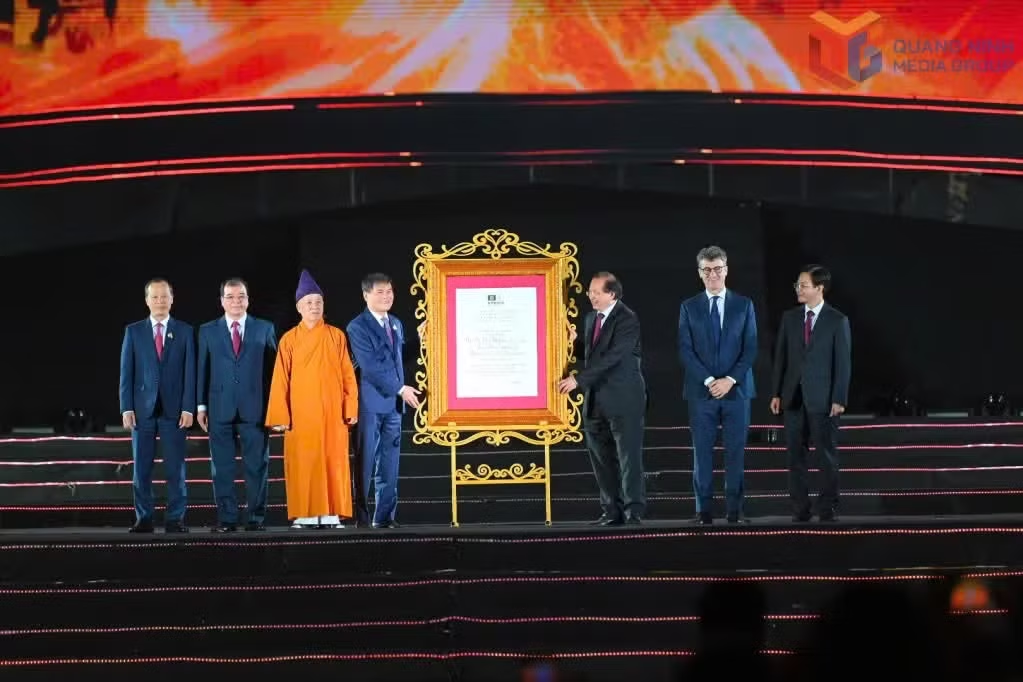
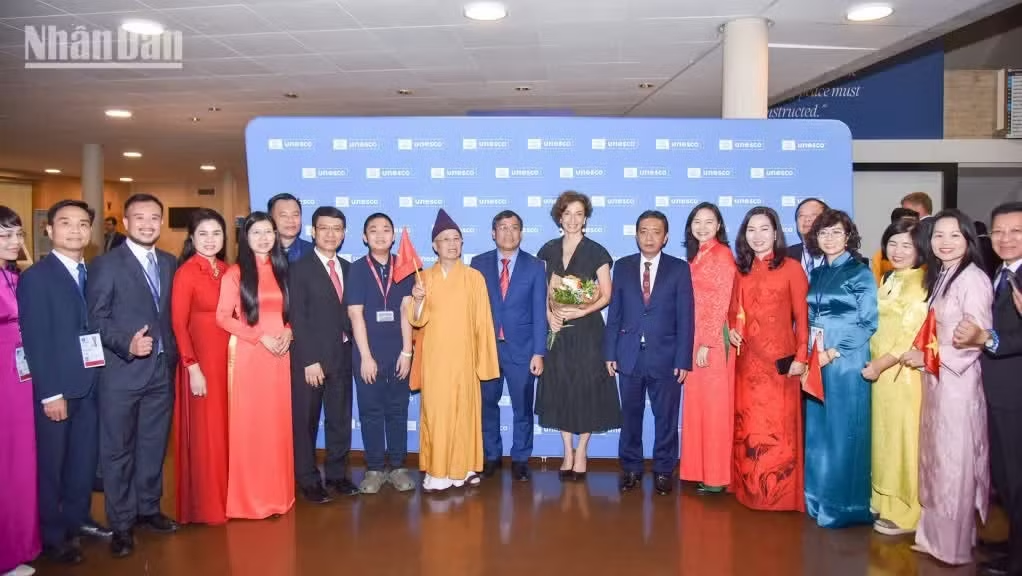
Following a rigorous appraisal process by ICOMOS, along with extensive diplomatic and academic advocacy and international efforts to defend the dossier, UNESCO officially inscribed the Yen Tu – Vinh Nghiem – Con Son, Kiep Bac Complex of Monuments and Landscapes as a World Cultural Heritage Site on July 12, 2025, at the 47th session of the World Heritage Committee in Paris, France. The Yen Tu – Vinh Nghiem – Con Son, Kiep Bac dossier became one of the rare nominations to receive the consensus of all 21 member states of the Committee.
Affirming outstanding universal value
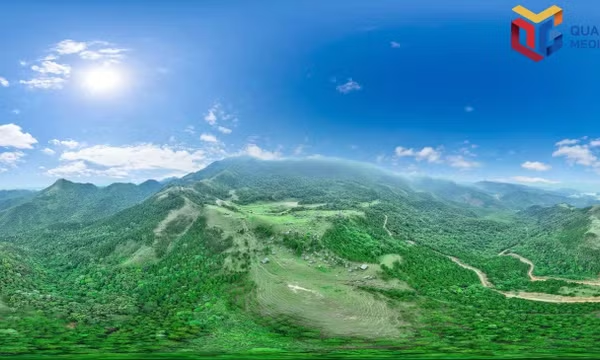
The Yen Tu – Vinh Nghiem – Con Son, Kiep Bac World Cultural Heritage Site comprises 12 representative monuments and clusters of monuments selected from hundreds of relics and scenic sites within six Special National Relic Sites across Quang Ninh, Bac Ninh and Hai Phong. All components of the heritage site lie within the landscape of the Dong Trieu arc, centred on the Yen Tu mountain range and connected with the surrounding plains, river systems and sea.
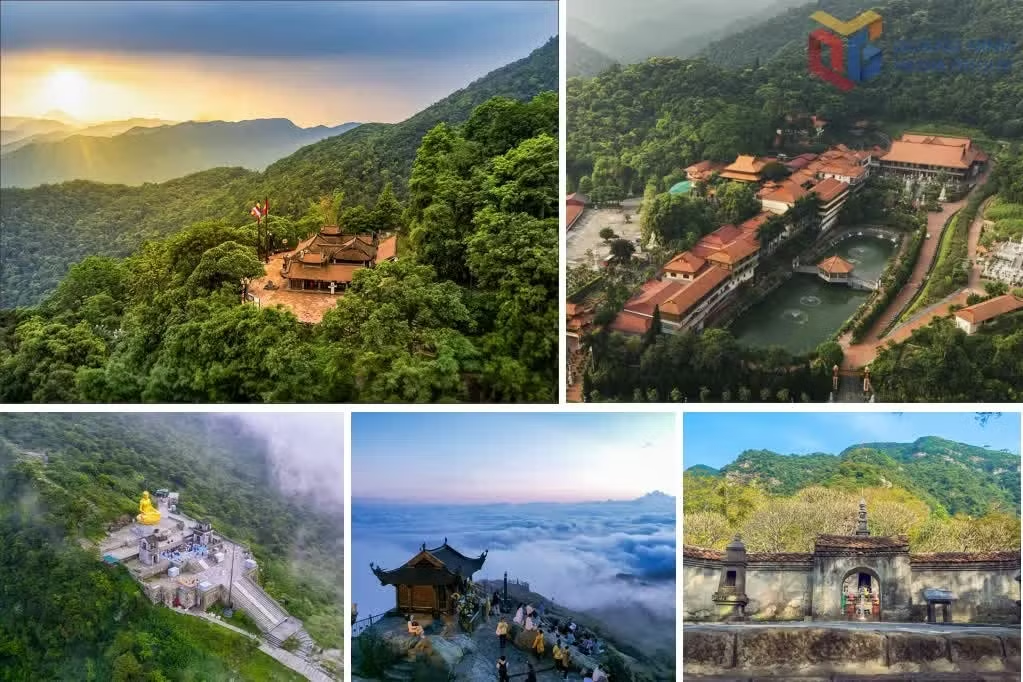
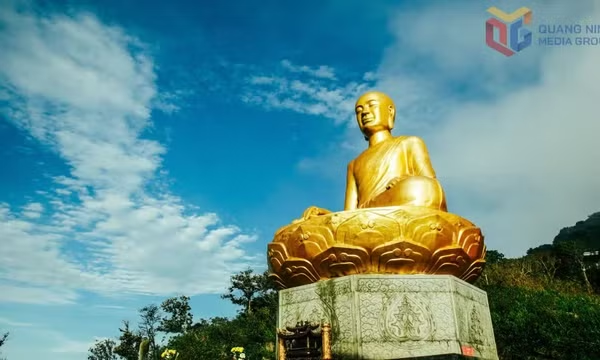
Since ancient times, this area has been regarded as one of the four “blessed lands” of Giao Chau and was also the ancestral homeland of the Tran clan, which established one of the most prosperous dynasties in Dai Viet history during the 13th and 14th centuries. It was on the sacred land of Yen Tu that King-Buddha Tran Nhan Tong, after completing his mission of defending the country, chose the path of religious practice and founded the Truc Lam Zen Buddhist school.
Yen Tu’s outstanding value is also reflected in the rare harmony between nature and human-made structures. Along the sacred mountain range is a system of pagodas, hermitages, stupas, stone steles and pilgrimage routes built in harmony with the natural terrain, forming a landscape that is both majestic and serene. This space reflects many aspects of life in ancient Dai Viet, from beliefs, spirituality and cultural exchanges to trade and community connections.
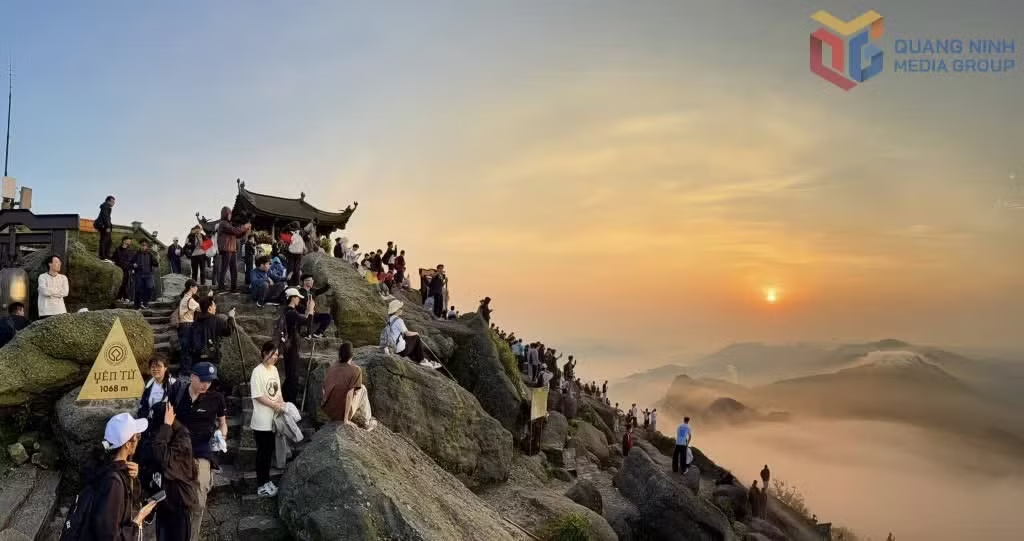
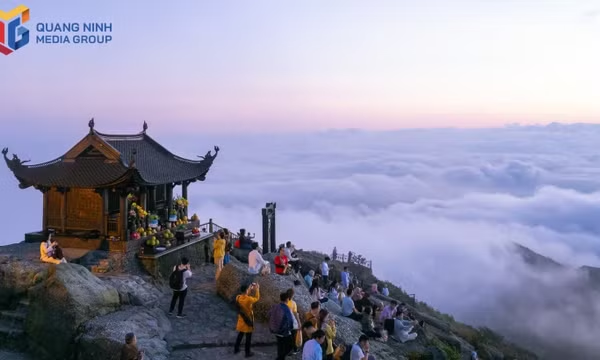
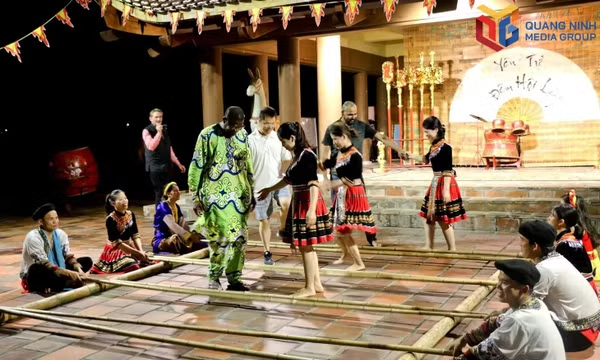
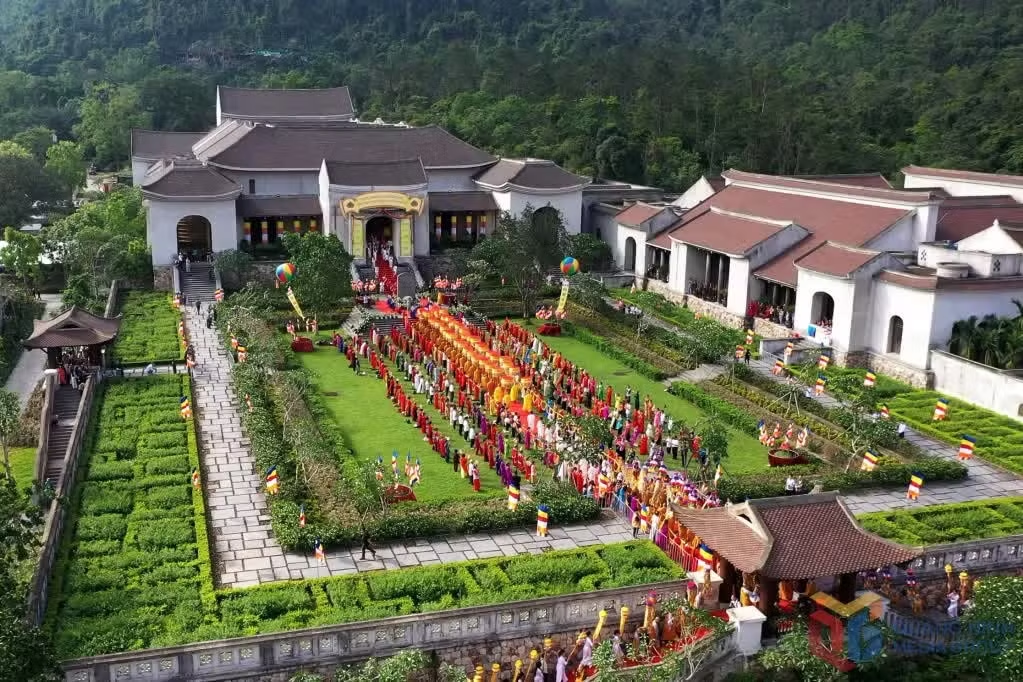
Today, Yen Tu is regarded not only as a heritage of the past, but also as a “living heritage” that continues to be present in contemporary life through regular cultural and religious activities. Millions of tourist arrivals and Buddhist pilgrims come here each year to attend festivals, national and international Buddhist events, retreats, Dharma talks, meditation sessions and yoga activities. These activities not only help preserve traditions, but also demonstrate the enduring vitality of the Truc Lam Zen Buddhist school in modern society, continuing to spread the values of compassion, wisdom and a way of life in harmony with nature throughout the community.
By Hoang Quynh