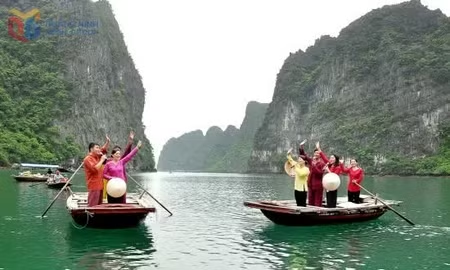
The amended Law on Cultural Heritage, adopted by the National Assembly on November 23, 2024 and effective from July 1, 2025, introduces a number of new provisions to further strengthen the legal framework for protecting and promoting heritage values. For Quang Ninh, a land rich in natural, historical, cultural and spiritual values, the implementation of the Law not only contributes to heritage preservation, but also opens up opportunities to turn those values into resources for sustainable socio-economic development.
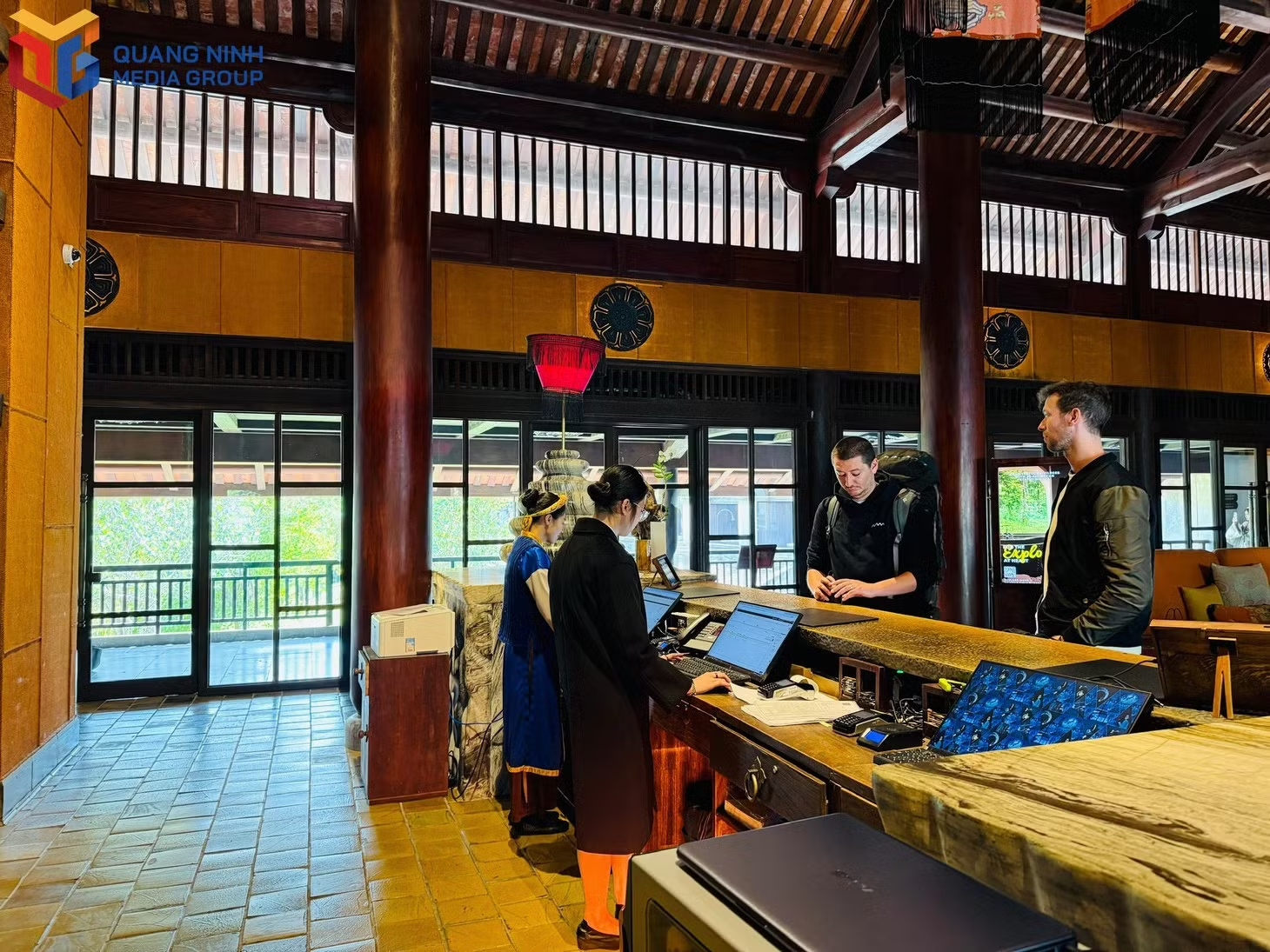
For Quang Ninh, the new provisions are particularly significant as the city possesses a rich heritage system, including many relics and scenic sites of outstanding value. In particular, UNESCO’s inscription of the Yen Tu - Vinh Nghiem - Con Son, Kiep Bac Complex of Monuments and Landscapes as a World Heritage Site has created further momentum to enhance heritage management, conservation and promotion.
The Yen Tu Heritage Conservation Centre under the Ha Long Bay - Yen Tu World Heritage Management Board is tasked with managing and conserving Yen Tu’s cultural values. In recent years, the centre has coordinated with specialised agencies to make rubbings and translate 101 stone inscriptions, and to research, collect and preserve 803 valuable artefacts, of which 770 have been documented. A number of archaeological research and excavation programmes have also been carried out, helping shed further light on the historical and cultural values of an area with nearly 1,000 years of cultural layers.
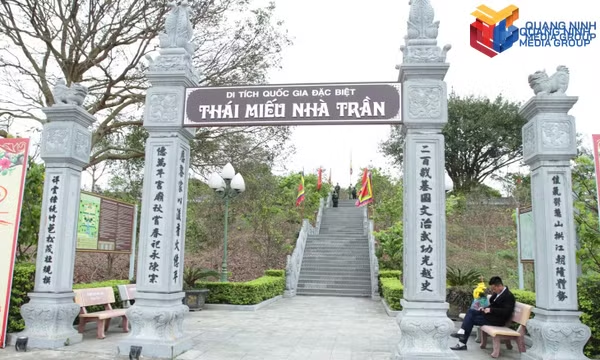
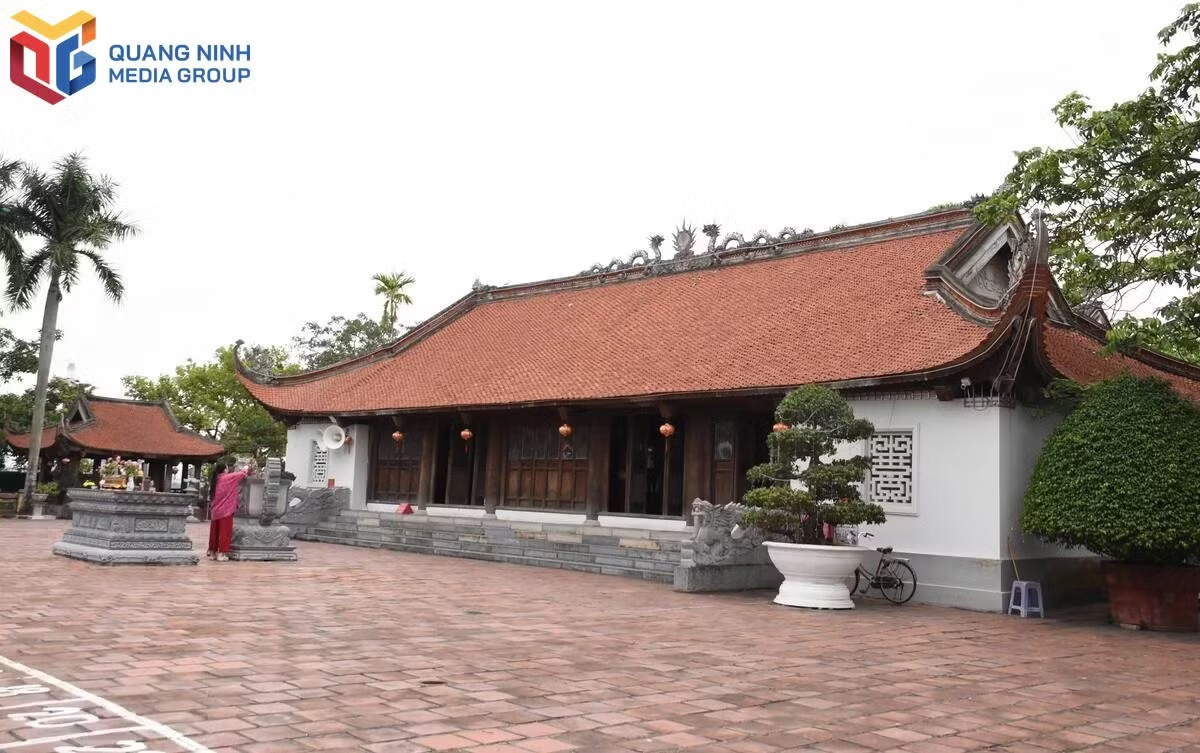
Alongside Yen Tu, conservation of the Tran Dynasty Special National Relic Site has also been carried out with a focused approach. As most of the original relics survive only as ruins, requiring substantial funding and a long period for restoration, the locality has selected key structures for priority investment. Sinh Temple, Quynh Lam Pagoda, Ngoa Van Hermitage and many other relic sites have gradually been restored and renovated. Archaeological investigation and excavation have also been given attention, contributing additional scientific evidence to the conservation process.
Deputy General Director of Tung Lam Development Joint Stock Company Le Trong Thanh said that over the past decade, the company has invested around VND 3 trillion in infrastructure, transport links and service facilities, contributing to a more integrated appearance for the heritage area. He noted that the clearer public-private partnership mechanism provided for in the amended Law on Cultural Heritage has created further opportunities for businesses to work alongside the State in heritage conservation and promotion. This also provides conditions to combine investment resources with conservation requirements, towards professionalising cultural and spiritual tourism activities and promoting heritage values commensurately.
However, stronger decentralisation to local authorities under the spirit of the Law also creates new requirements for implementation. Vice Chairman of the Yen Tu Ward People’s Committee Pham Xuan Thanh said that decentralised management enables grassroots authorities to be more proactive in conserving and promoting heritage values. At the same time, it however requires stronger management capacity, closer coordination among agencies and units, and adequate resources to effectively carry out assigned tasks.
The amended Law on Cultural Heritage provides an additional legal framework and mechanisms for mobilising resources, enabling Quang Ninh to improve the effectiveness of heritage conservation and promotion. When the State, businesses and communities join efforts, heritage can not only be preserved, but also become an important resource for tourism and sustainable socio-economic development.