In an era of deep global integration, culture transcends mere preservation; it serves as a dynamic catalyst for international cooperation, mutual understanding, and sustainable development. Rich in breathtaking natural wonders and profound historical heritage, Quang Ninh harnesses the power of cultural diplomacy as a bridge to the global community.
When heritage serves as a "bridge" to the world
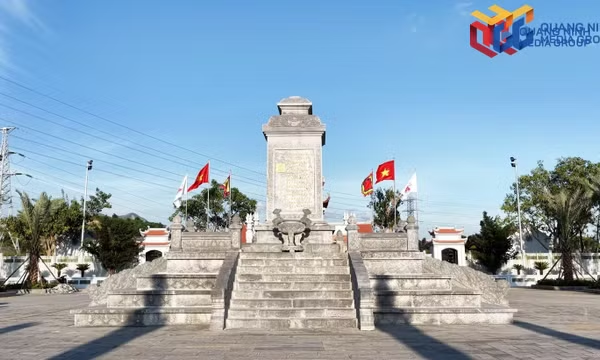
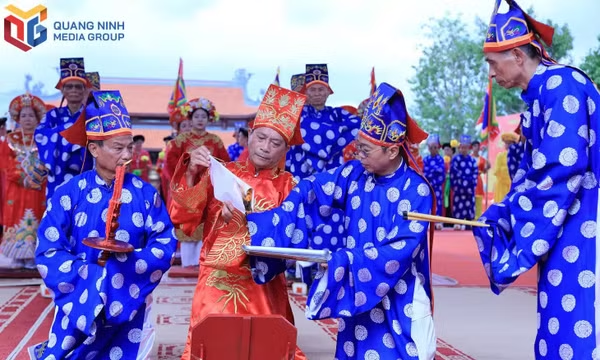
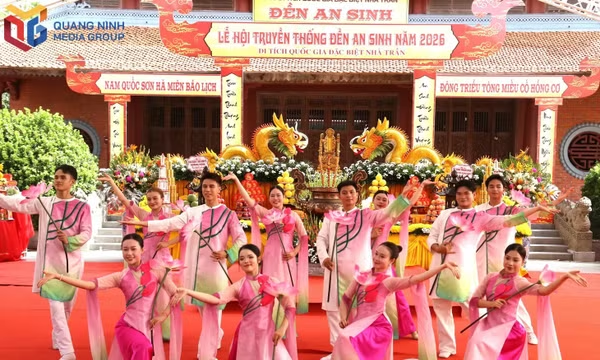
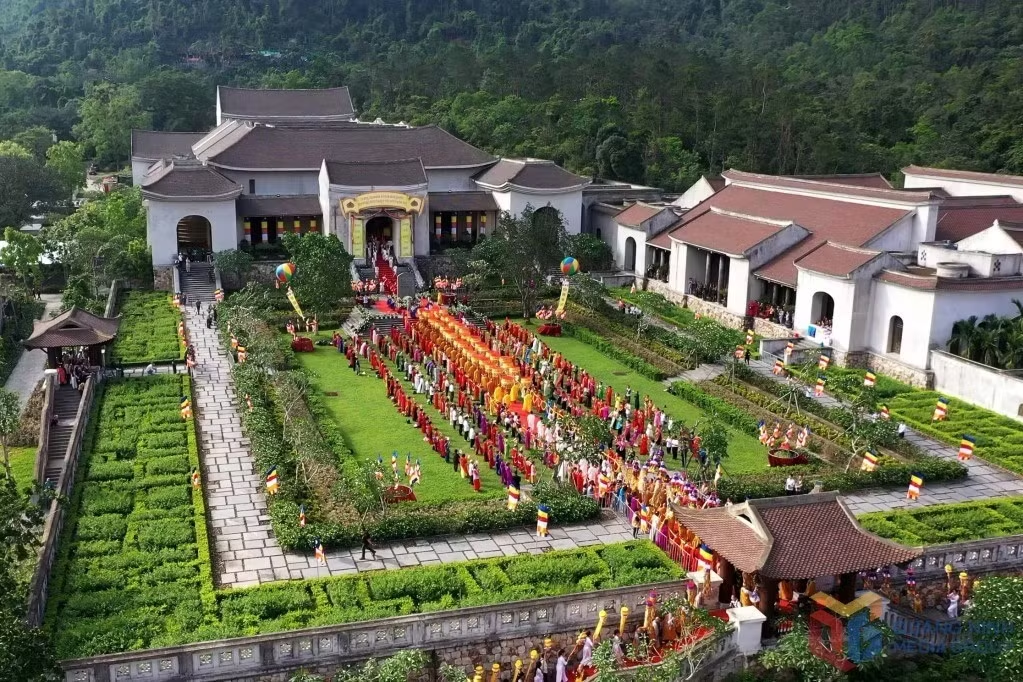
On July 12, 2025, at the 47th session of the World Heritage Committee in Paris (France), UNESCO officially inscribed the Yen Tu - Vinh Nghiem - Con Son, Kiep Bac Monument and Landscape Complex as a World Cultural Heritage Site. This milestone marks international recognition of the outstanding universal value of the Truc Lam Buddhist cultural space. More importantly, it represents the culmination of a protracted journey in which foreign affairs and cultural diplomacy served as pivotal instruments to elevate this complex from a national treasure to a global heritage forum.
Behind the consensus vote of the 21 member states of the World Heritage Committee lay years of meticulous preparation, ranging from scientific research, archaeological excavation, relic preservation, and dossier compilation to the formulation of international advocacy strategies. Throughout this journey, Quang Ninh acted as the lead agency in compiling the dossier while closely coordinating with central ministries, sectors, and the two localities of Bac Ninh and Hai Phong to elucidate the exceptional universal values of the complex.
Following thorough preparation, on January 26, 2024, the nomination dossier for the Yen Tu - Vinh Nghiem - Con Son, Kiep Bac complex was officially submitted by Vietnam to UNESCO. Weighing 54 kilograms, the dossier comprises over 5,000 pages of documentation, hundreds of maps, archival photographs, and survey videos. Its main text spans nine chapters, supplemented by comprehensive appendices on documentation, diagrams, architectural drawings, buffer-zone demarcation maps, and a heritage management plan.
Nevertheless, formidable challenges emerged during the international evaluation process. According to Permanent Deputy Minister of Foreign Affairs Nguyen Minh Vu, the dossier once faced the risk of being recommended for return by ICOMOS due to the need to supplement core elements concerning authenticity and outstanding universal values. This was evaluated as a highly complex dossier, unprecedented in Vietnam's heritage nomination history.
Refusing to relent, central ministries, sectors, and local authorities persevered in coordinating working sessions, exchanges, and advocacy campaigns with representatives of World Heritage Committee member states, experts, and international organizations. The values of Yen Tu were introduced not merely through scientific data, but through a deeply resonant cultural narrative: the genesis and evolution of the Truc Lam Zen sect, the engaged-Buddhism philosophy of King-Monk Tran Nhan Tong, the dissemination of Truc Lam Buddhism, and the historical, architectural, and landscape values crystallized within this heritage space.
Notably, throughout the finalization and defense of the dossier, Quang Ninh not only highlighted the intrinsic values of Yen Tu but also successfully connected the city's heritage narrative with international cultural institutions. This fostered mutual understanding, consensus, and a solid foundation for the inscription of the Yen Tu - Vinh Nghiem - Con Son, Kiep Bac complex.
As the custodian of two UNESCO-recognized world heritages, together with an invaluable system of historical-cultural relics, scenic landscapes, and intangible cultural values, Quang Ninh places strong emphasis on conservation, promotion, and sustainable exploitation, while vigorously advancing international cultural cooperation.
Quang Ninh has steadily translated heritage values into resources for economic, cultural, and tourism development. Here, heritage diplomacy is designated as a vital channel to broaden international cooperation, bring the images of Ha Long Bay and Yen Tu closer to global friends, and attract knowledge, expertise, and resources dedicated to heritage conservation and promotion.
The city regularly maintains exchanges with UNESCO, the World Heritage Center, IUCN, ICOMOS, JICA, the Most Beautiful Bays in the World Club, and numerous international organizations, networks, and experts. It accelerates heritage promotion across international media channels and travel publications, while engaging content creators and KOLs to maximize destination outreach. Concurrently, Quang Ninh implements scientific research initiatives, environmental protection, biodiversity conservation, carrying-capacity assessments, and advanced tourism management practices.
Vu Kien Cuong, Head of the Management Board of Ha Long Bay - Yen Tu World Heritage (under Economic Zone Management Board), stated: "In this new phase of development, we identify cultural diplomacy, including heritage diplomacy, as a crucial resource to elevate local standing and foster sustainable development. The Management Board will continue to deepen relations with UNESCO, the World Heritage Center, IUCN, ICOMOS, and international networks, while proactively expanding partnerships with nations possessing extensive expertise in heritage conservation, marine heritage management, and heritage economic development, such as Japan, South Korea, and regional countries".
“The Management Board will further promote intellectual diplomacy and heritage diplomacy, not only absorbing international practices but also proactively proposing initiatives, designing research programs, organizing expert exchanges, and facilitating professional training so that Quang Ninh can voice its perspectives and make substantive contributions to the international heritage network”, Cuong said. Simultaneously, the city will effectively harness UNESCO's resources and networks, converting heritage values into high-quality cultural, tourist, educational, and creative products that safeguard outstanding universal values while generating livelihoods and uplifting community well-being.
Ultimately, this strategy establishes heritage as a pivotal "bridge" promoting Quang Ninh's image to international friends, contributing to the construction of a green, sustainable, culturally rich locality equipped with regional and international competitiveness.
Spreading Quang Ninh's values worldwide
Quang Ninh city occupies a strategic geopolitical and geo-economic position as an international gateway for commerce, boasting synchronized, modern infrastructure alongside an investment and business climate consistently ranked among Vietnam’s finest. Amidst deepening integration, foreign affairs not only help expand cooperative ties but increasingly serve as a direct resource for socio-economic development, image promotion, investment attraction, tourism elevation, and local status enhancement.
As the nation steps into a new era of national advancement, cultural diplomacy is entrusted with an elevated mission. The 14th National Party Congress defines culture and human development as the foundation, endogenous resource, and growth driver; Resolution No. 80-NQ/TW on the development of Vietnamese culture establishes international cultural integration as a core task to bolster national soft power; and Politburo Resolution No. 06-NQ/TW on implementing the foreign policy of the 14th Party Congress mandates the proactive promotion of Vietnam's soft power, human capital, culture, and value systems.
Consequently, cultural and heritage diplomacy constitutes an intrinsic resource contributing to the socio-economic prosperity of both the nation and individual localities. Cultural diplomacy must actively expand markets, connect international resources, knowledge, and technologies for cultural industries, the creative economy, heritage economics, and cultural tourism.
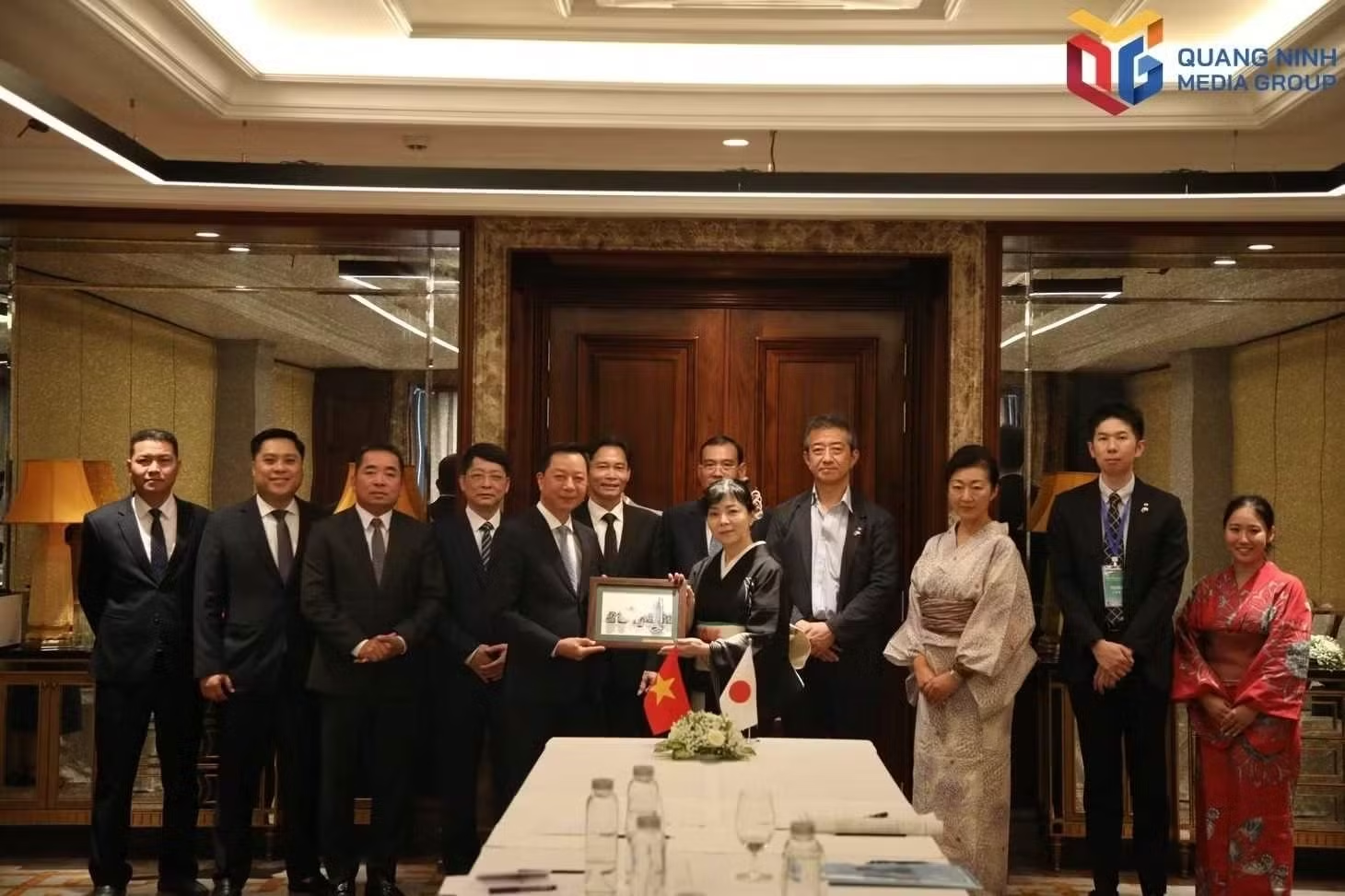
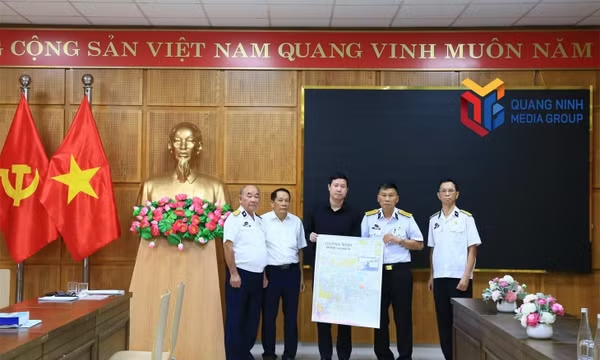
For Quang Ninh, foreign affairs are implemented comprehensively across three pillars: Party-to-Party diplomacy, State diplomacy, and people-to-people diplomacy, strictly adhering to the foreign policies of the Party and State and the guidance of the Ministry of Foreign Affairs. Quang Ninh effectively maintains relations with China's Guangxi Zhuang Autonomous Region, various Chinese localities, and northern provinces of Laos, while broadening cooperation with Japan, South Korea, Europe, and other international partners.
Through outbound missions, receptions of international delegations, forums, conferences, and bilateral-multilateral cooperation mechanisms, Quang Ninh has gradually transitioned from merely expanding relations to fostering substantive cooperation, aligning foreign affairs with the city's developmental targets.
Significantly, cultural diplomacy is defined as a mechanism to promote local branding and heighten international appeal. Executing central directives on cultural diplomacy, the locality has promulgated and synchronously implemented numerous legal documents, including Resolution No. 17-NQ/TU dated October 30, 2023, on building and promoting cultural values and human strengths in Quang Ninh; Plan No. 188/KH-UBND dated August 4, 2022, implementing the Cultural Diplomacy Strategy through 2030; and Plan No. 11/KH-UBND dated January 10, 2025, executing Directive No. 30/CT-TTg.
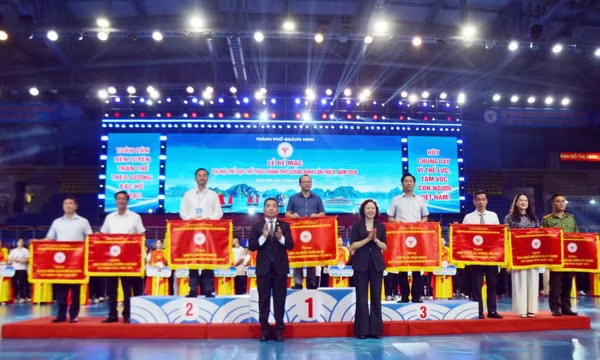
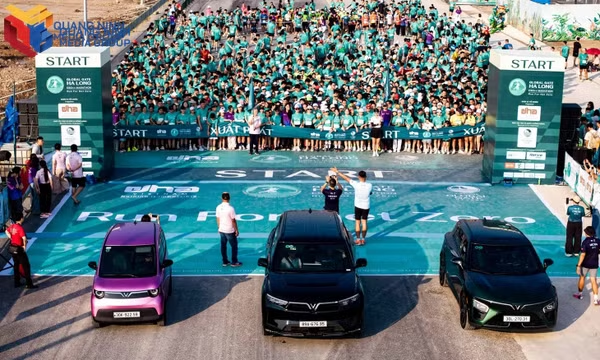
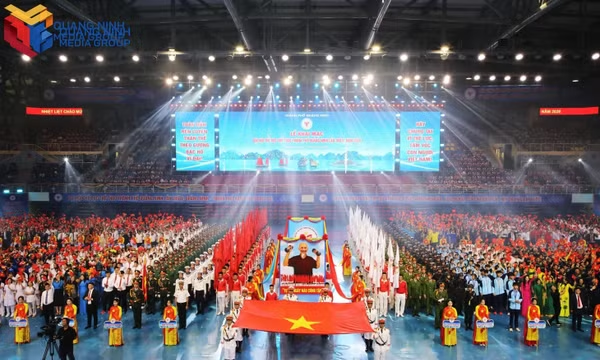
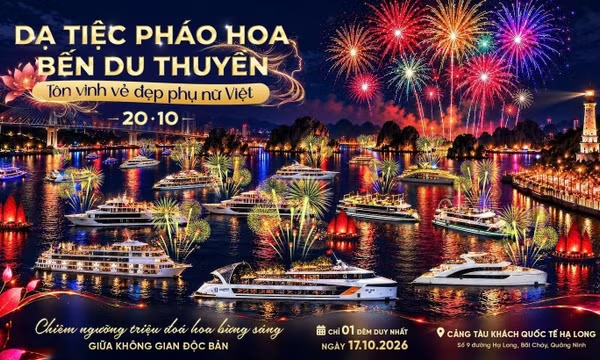
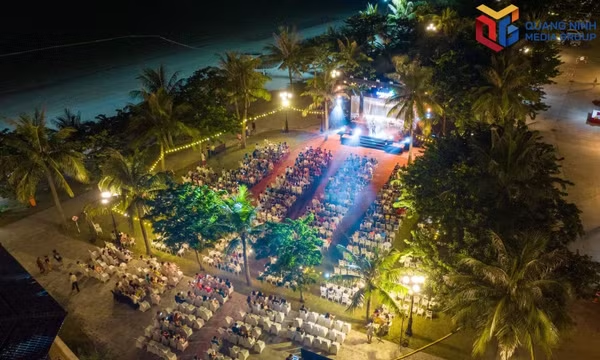
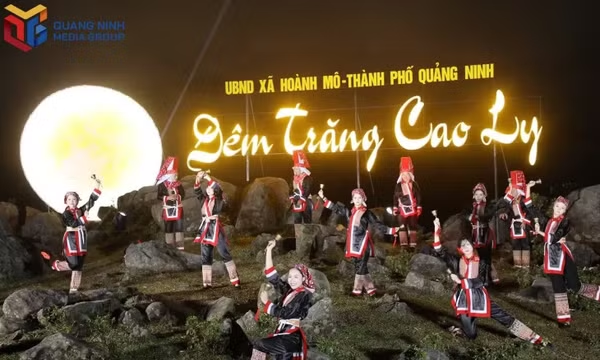
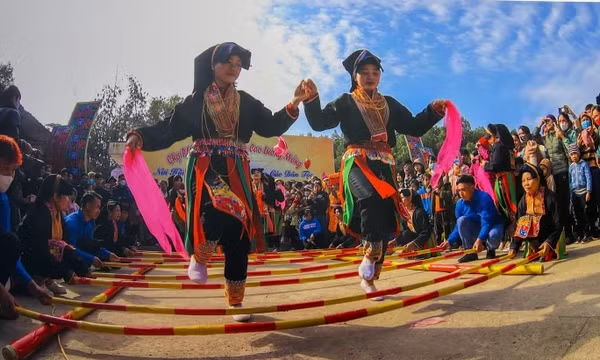
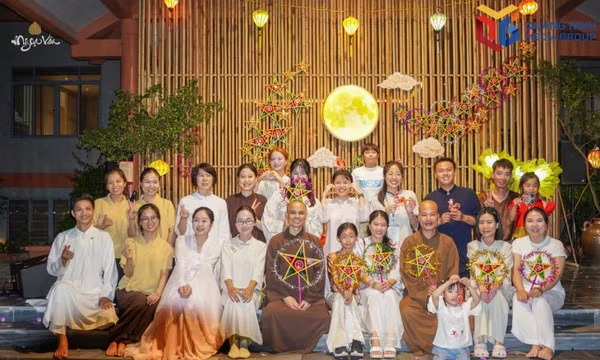
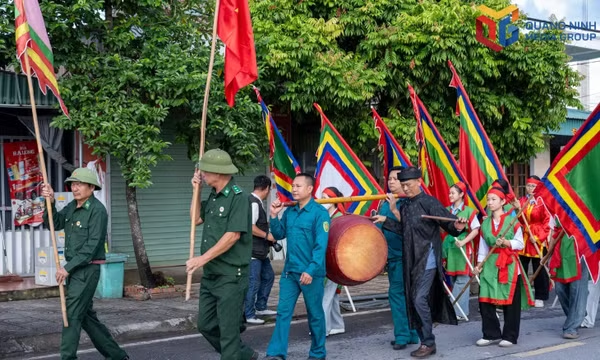
As a result, culture is substantively integrated into foreign affairs, investment promotion, commerce, and tourism. Signature events such as the Ha Long Carnaval, International Day of Yoga, Mong Cai - Dong Hung Investment, Trade and Tourism Fair, promotional campaigns tied to the Clipper Race, and international tourism seminars have served as direct channels introducing Quang Ninh's land, people, culture, and developmental potential to global friends.
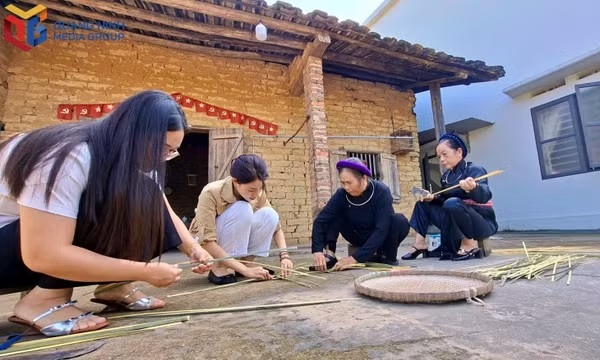
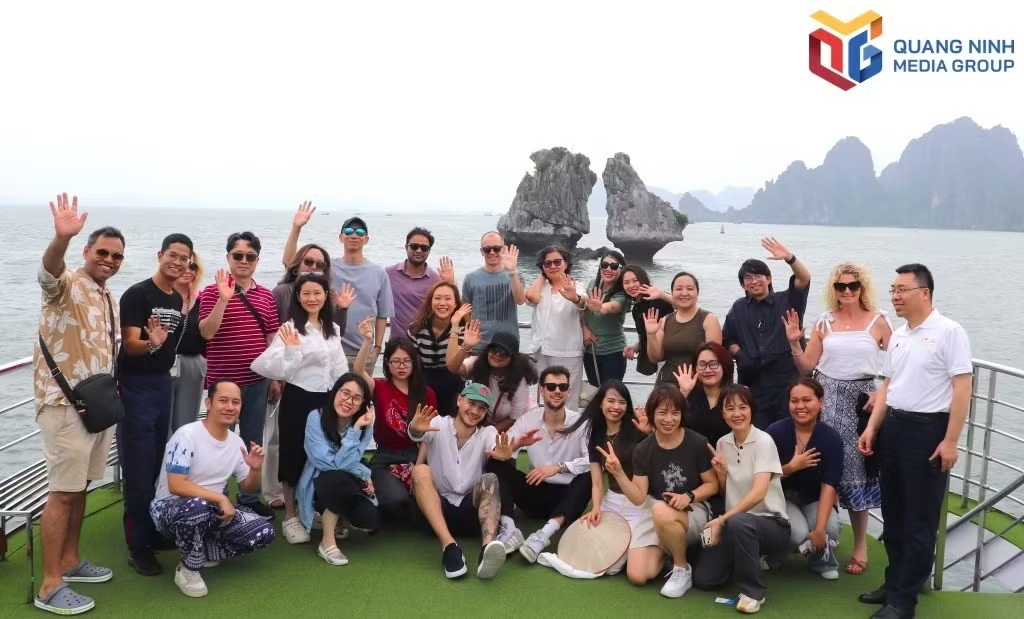
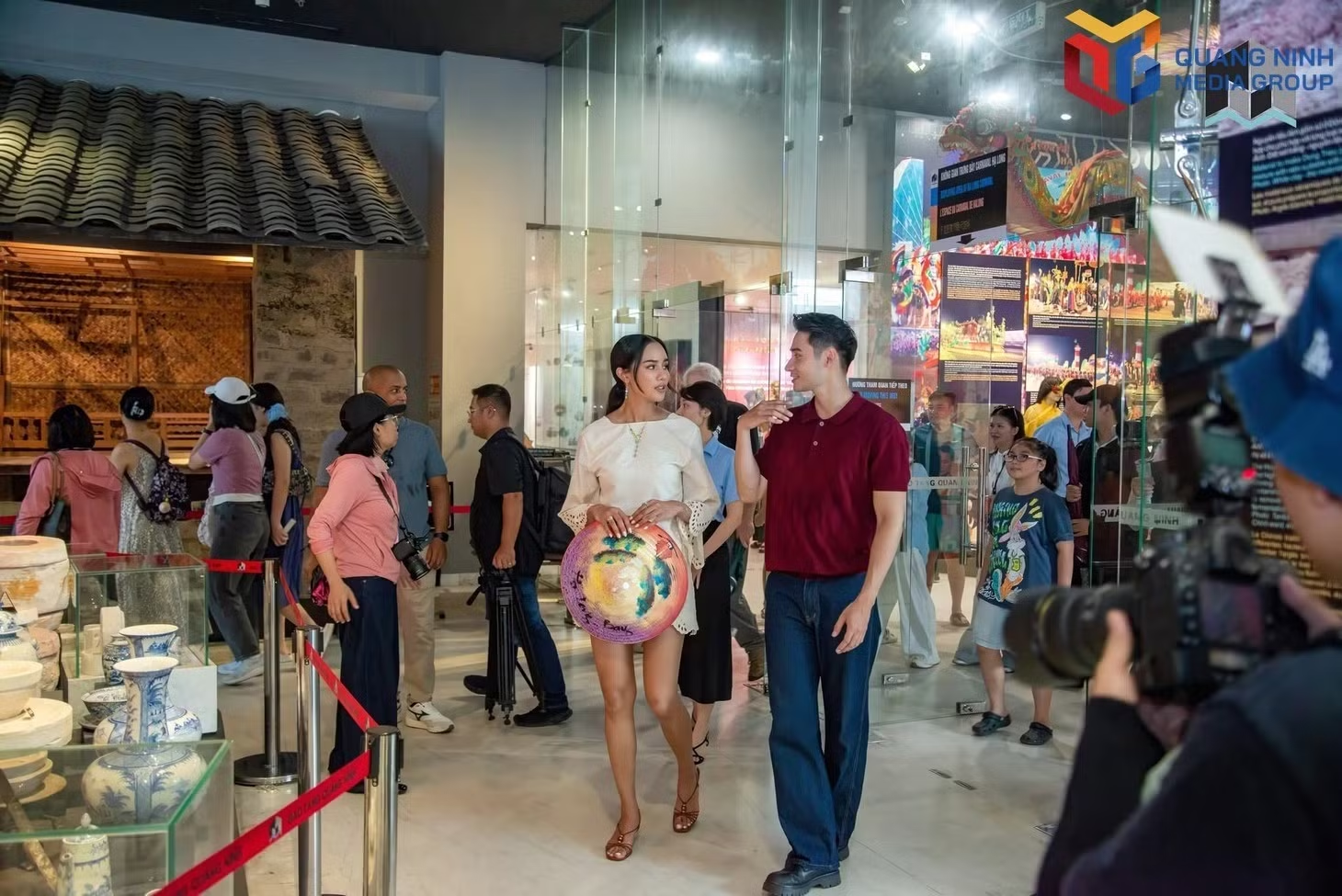
Notably, the city not only projects culture abroad but also proactively invites international partners to Quang Ninh to directly experience and appreciate local values through famtrips, presstrips, KOL campaigns, and foreign press delegations. Furthermore, Quang Ninh actively showcases its profile at international venues, such as the Vietnam Festival in Sapporo (Japan), cultural industry research and promotion programs in South Korea, and the Vietnamese Cinema Promotion Program at the Busan International Film Festival.
External information dissemination is similarly diversified in subjects and communication methods. The city intensifies coordination with domestic and international press agencies, collaborates with over 30 central media outlets, publishes bilingual Vietnamese-Chinese and Vietnamese-English materials, and partners with Vietnamese diplomatic missions abroad to introduce local potential, strengths, and investment incentives. Through these channels, Quang Ninh's socio-economic achievements, foreign affairs, culture, tourism, and investment climate are broadcasted comprehensively to the global community.
Powered by vigorous advancements in cultural diplomacy, Quang Ninh's profile and standing continue to expand, cultivating new connections and drawing international resources for development. So far, the city has hosted 244 valid FDI projects with a total registered capital exceeding 16.03 billion USD. From 2024 through August 2026, import-export turnover reached approximately 57.6 billion USD. Over the same period, Quang Ninh welcomed over 50 million visitors, including more than 10 million international arrivals, generating total tourism revenue surpassing 131,302 billion VND.
These figures underscore the tangible efficacy of external outreach, cultural promotion, and the introduction of Quang Ninh's potential to international partners.
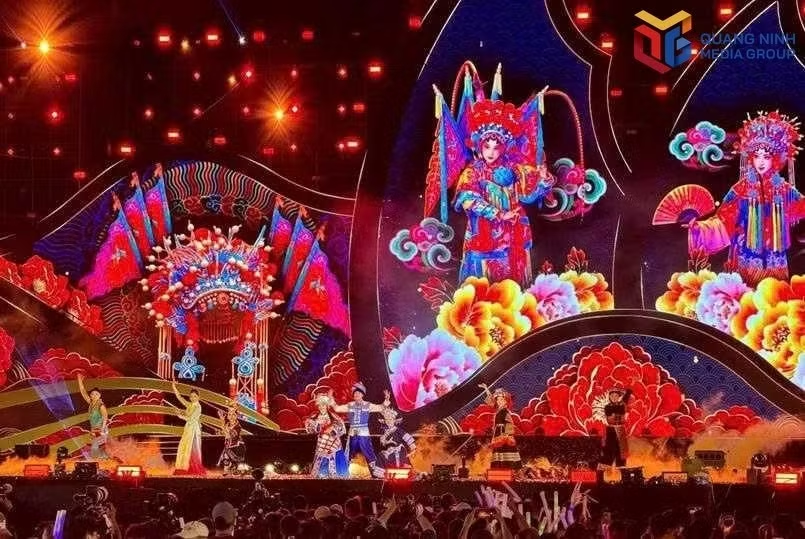
Moving forward, Quang Ninh has set its sights on becoming an international tourism hub, a thriving marine economic center, and a major trade gateway in Northern Vietnam. Thus, the city has currently taken a bold, hands-on approach to global outreach, closely tying its international relations directly to its long-term growth.
At the heart of this strategy is the unique identity of Quang Ninh anchored by Ha Long Bay, the sacred Yen Tu mountain, and its rich cultural heritage. The recent UNESCO recognition of Ha Long Bay-Cat Ba Archipelago and Yen Tu opens exciting doors for the region to grow its heritage economy, cultural tourism, and high-end spiritual travel, while stepping up digital promotion worldwide with the support of Vietnam's global embassies.
In addition to cultural diplomacy, Quang Ninh is actively deepening partnerships with key economic partners across Asia, Europe, the Americas, and the Middle East, while forging strong ties with global corporations, innovation hubs, and financial centers. Core areas of cooperation focus on the green economy, high tech, modern logistics, seaports, digital transformation, renewable energy, and education.
Ultimately, global outreach is much more than networking for Quang Ninh; it is a key driver of local competitiveness. By letting its culture shine, expanding cooperation, and embracing the world, Quang Ninh is steadily cementing its reputation as a dynamic, welcoming, and globally connected destination.