Over more than 40 years of renewal, Quang Ninh has affirmed its position as a dynamic development “locomotive” of the northeastern region, gradually becoming a core force in shaping and advancing regional connectivity strategies. Breakthroughs in governance thinking, leadership in institutional reform, proactive resource mobilisation and a synchronised connectivity infrastructure system are enabling Quang Ninh to expand its development space and create new growth drivers.
Optimising local advantages
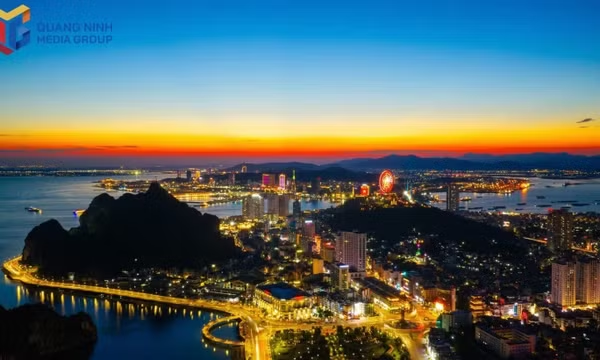
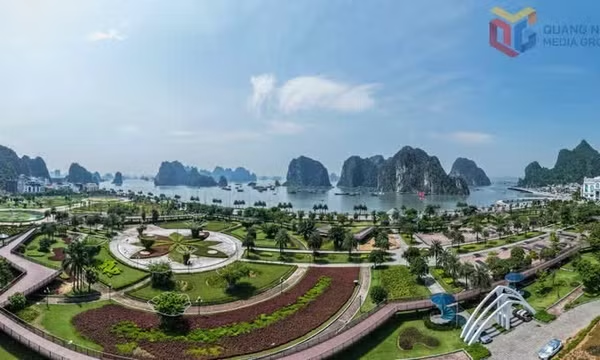
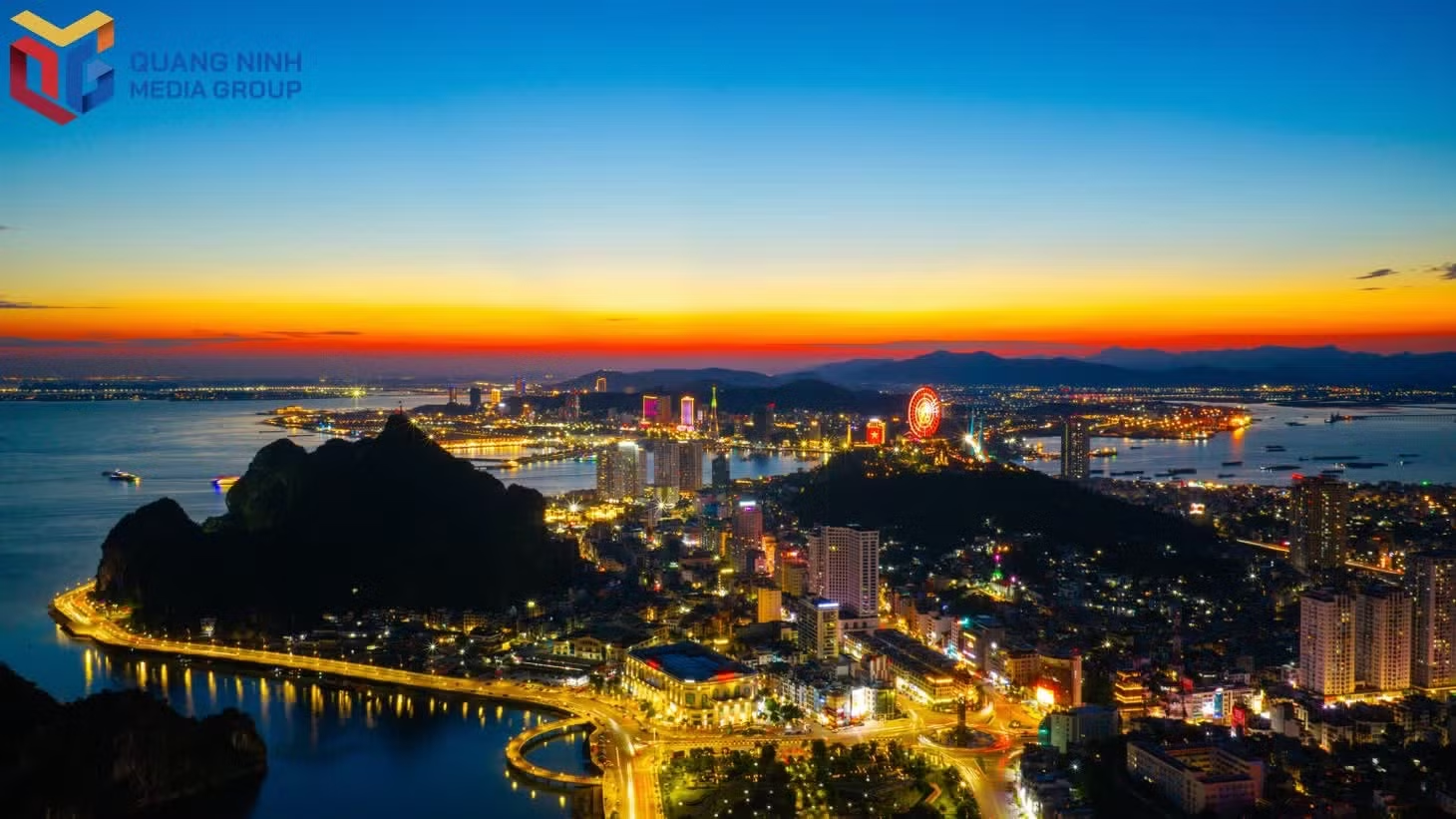
Quang Ninh enjoys a distinctive geoeconomic position, with both land and maritime borders with China, a gateway to the sea for the northeastern region, direct links with the northern economic space, and more than 250 kilometres of coastline. These advantages create a rare development space. What has distinguished Quang Ninh’s development journey in recent years is the way it has turned advantages into resources, resources into drivers, and gradually opened up new development spaces.
One of the most notable approaches has been the principle of “using public investment to lead private investment”, with Quang Ninh boldly allocating resources to strategic infrastructure projects, thereby laying the foundation for mobilising private-sector resources. This has gone hand in hand with the transformation of the growth model from “brown” to “green”, linked to three strategic breakthroughs in infrastructure, administrative reform and human resources.
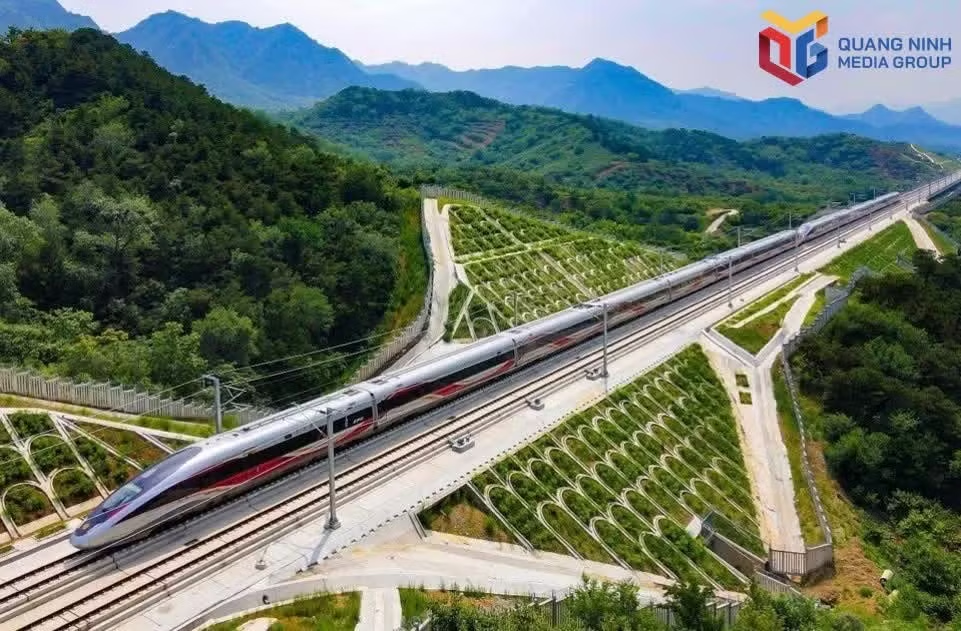
Among these, synchronised transport infrastructure provides an important foundation for expanding development space. With a spirit of self-reliance and resilience, and by proactively proposing that the central government allow suitable mechanisms and policies, Quang Ninh has mobilised diverse resources to build a strategic transport network connecting roads, sea routes and aviation, while moving towards railway connectivity.
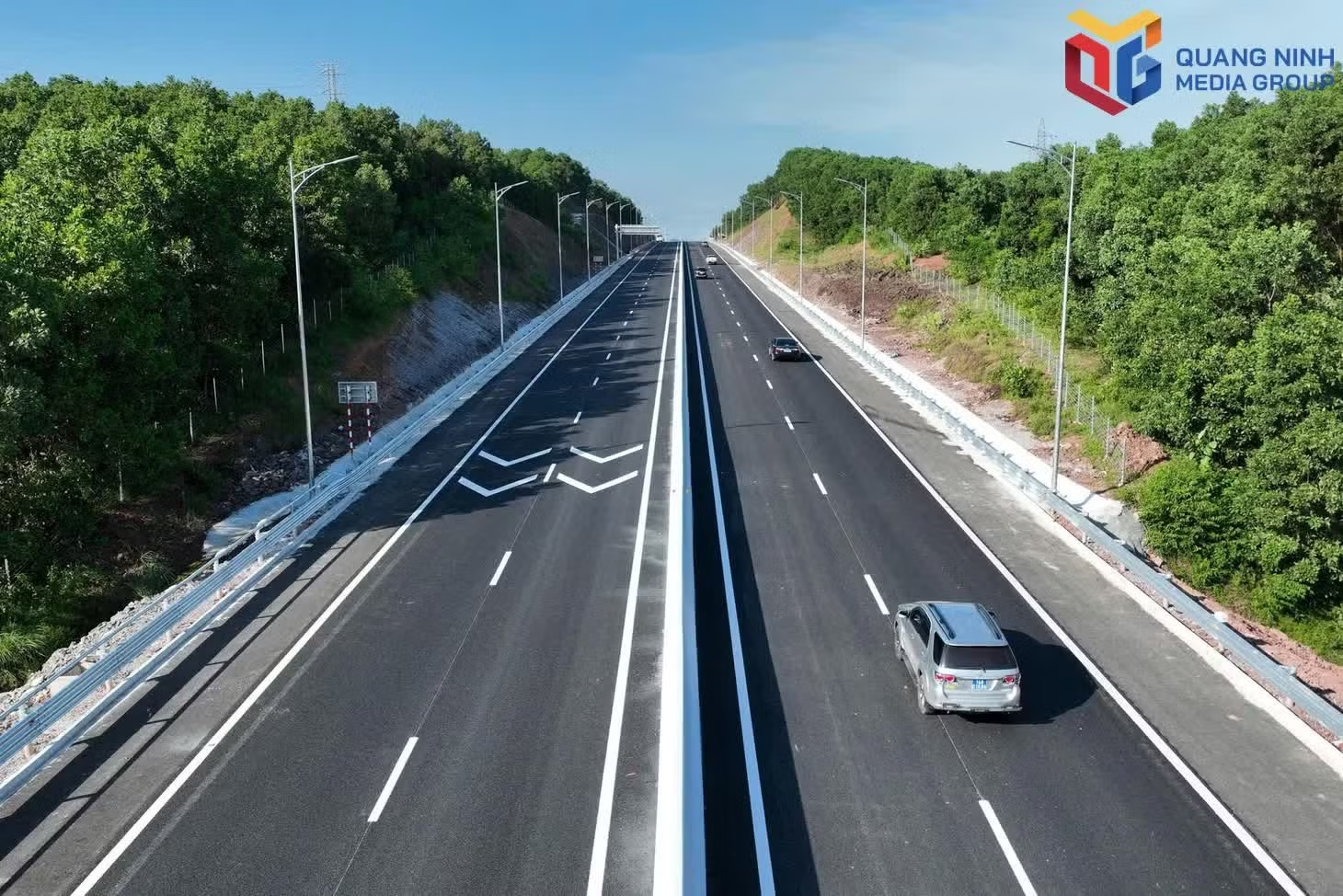
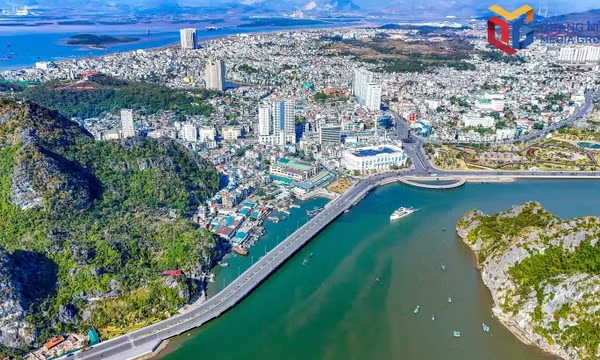
The Van Don–Mong Cai Highway, a key section of the city’s expressway corridor.
From the Hai Phong–Ha Long–Van Don–Mong Cai Highway and the seaport system to Van Don International Airport, a strategic connectivity network has taken shape, shortening distances and travel times between Quang Ninh and Hanoi, Hai Phong and localities in the Red River Delta, while opening wider trade links with China and international markets.
Building on its border-gate advantages, Quang Ninh is shifting from a focus on individual customs-clearance points towards a cross-border trade and logistics ecosystem. Smart border gates, digital technology applications, data connectivity, cross-border e-commerce and smart logistics are opening up opportunities to reduce time and costs and improve the competitiveness of import and export goods. Under the new development orientation, multimodal, smart and green logistics are identified as key service sectors, interconnected with seaports, airports, border gates, economic zones, industrial parks and urban areas.
Mission of regional connectivity and golden opportunities from Capital Region Ring Road No. 5
Within this structure, Quang Ninh does not develop separately from Hanoi, Hai Phong or other localities in the region, but can contribute values needed by the region as a whole. If Hanoi serves as a centre for politics, science and technology, and high-quality services, and Hai Phong as a major industrial, seaport and logistics hub, Quang Ninh has distinctive strengths in the marine economy, international tourism, border gates, cross-border trade and marine-related services. When effectively connected, these different advantages create complementary strength rather than fragmented competition.
The opportunity to realise this role is becoming clearer as the city proposes that the Government approve investment in an expressway connecting with Capital Region Ring Road No. 5 and a route towards Gia Binh Airport. This would be more than a new transport route; it would form a new development corridor, opening an additional direct connection between Quang Ninh and production, urban and service centres to the west.
Under its planning, Quang Ninh will reorganise its development space. The structure of “three development corridors – four socio-economic regions – five growth centres” is designed not only to create growth poles within the city, but also to form a functional system capable of external connectivity. Ha Long will build on its strengths in urban development, services and tourism; Quang Yen will serve as an industrial, seaport and logistics pole; Van Don will develop the marine economy, high-end tourism and international services; Mong Cai will act as a trade gateway with China; and Yen Tu will promote its heritage, cultural and tourism values. Each area has its own advantage and function, together forming an integrated structure with broad spillover effects.
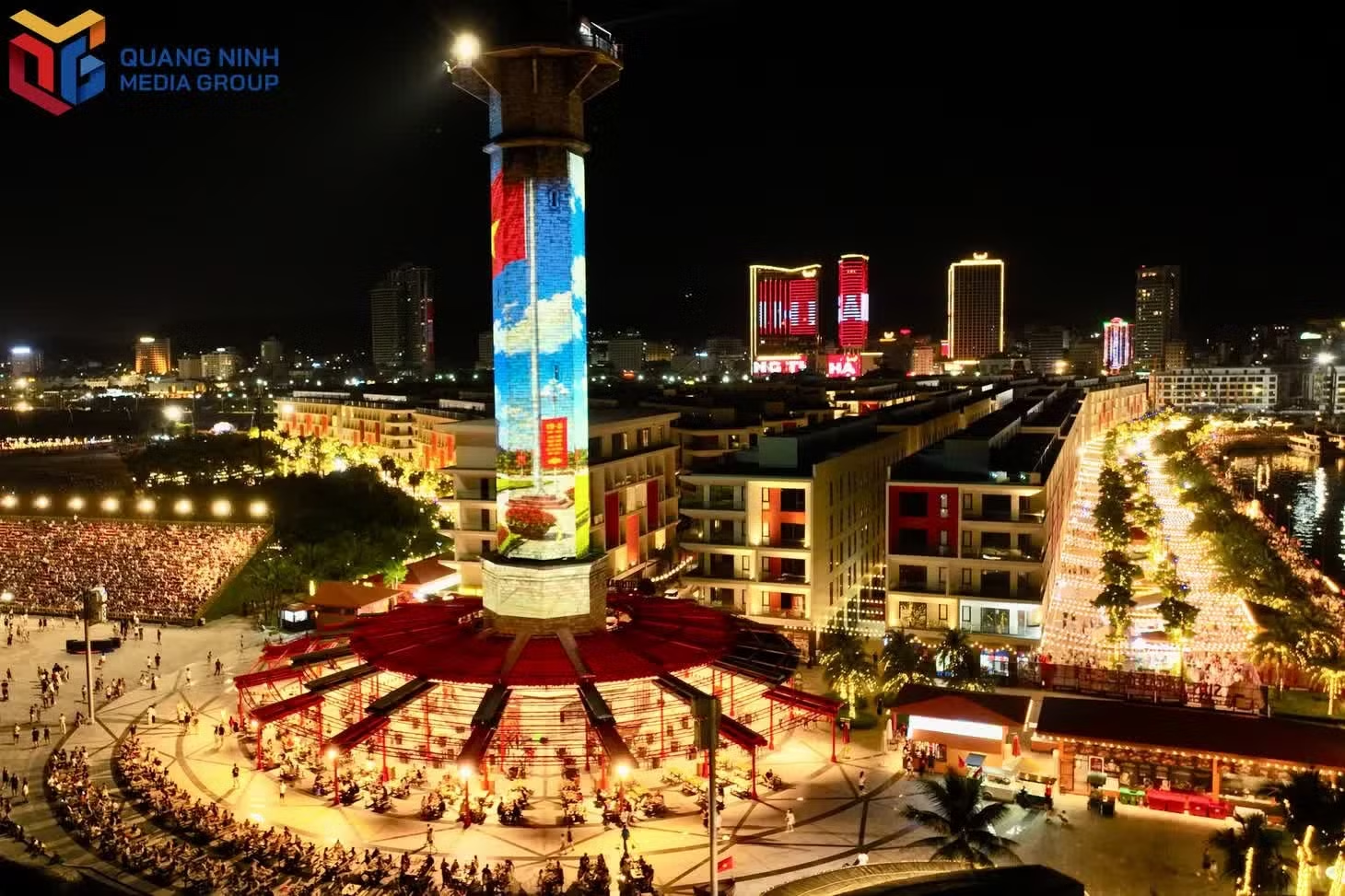
Quang Ninh would then be more than a modern coastal city or a growth pole of the northeastern region. Its greater value lies in its potential to become a meeting point for economic flows: between inland areas and the sea, between Vietnam and China, and between the Red River Delta and the wider Northeast Asian space. This is the broader mission of Quang Ninh City within its new development space: not only to grow faster, but also to become an important link enabling the entire region to connect more deeply, expand its development space and reach further.
By Do Phuong