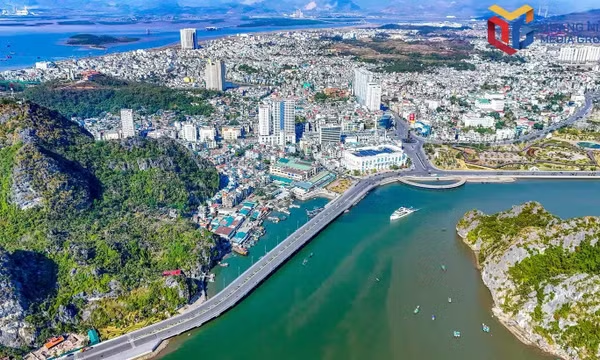
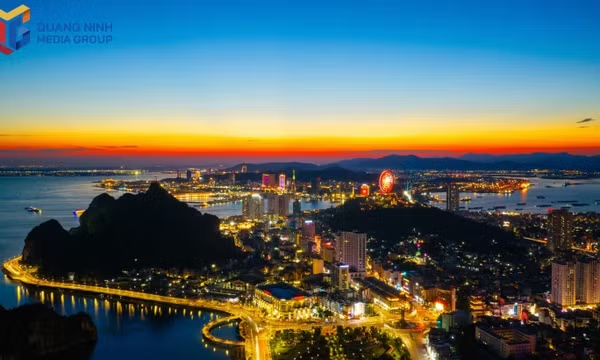
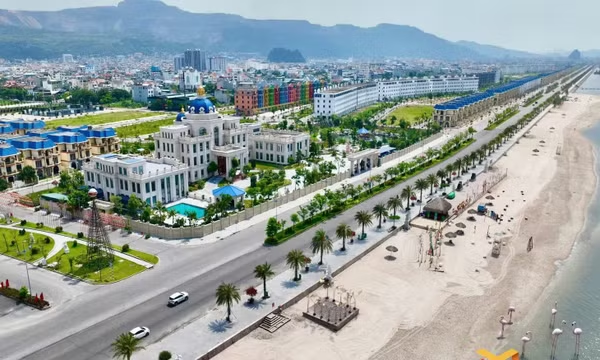
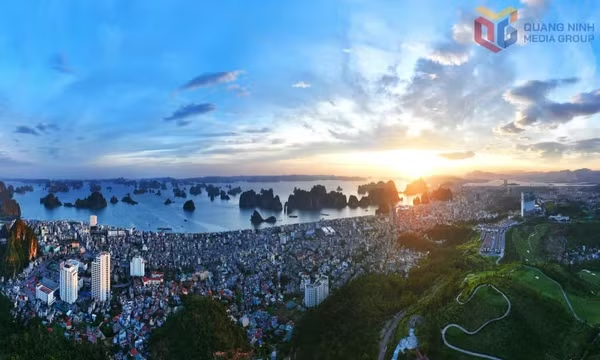
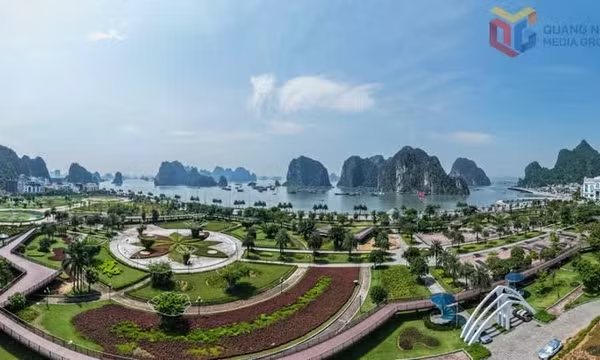
Entering a new phase of growth with its designation as a city, Quang Ninh is consolidating its key economic assets across maritime trade, border commerce, manufacturing, logistics, and tourism. Economic indicators from the first eight months of 2026 reflect a solid baseline, supporting the new city's push toward higher-value growth and enhanced market competitiveness.
Driven by Viet Nam’s national Doi Moi reform policy over the past four decades, Quang Ninh has systematically shifted from resource extraction to a diversified economy. The city has moved past localized planning toward regional synergy and international integration. Years of strategic investment in expressways, deep-water ports, airports, border gates, and industrial zones now provide an infrastructure base built to operate at scale.
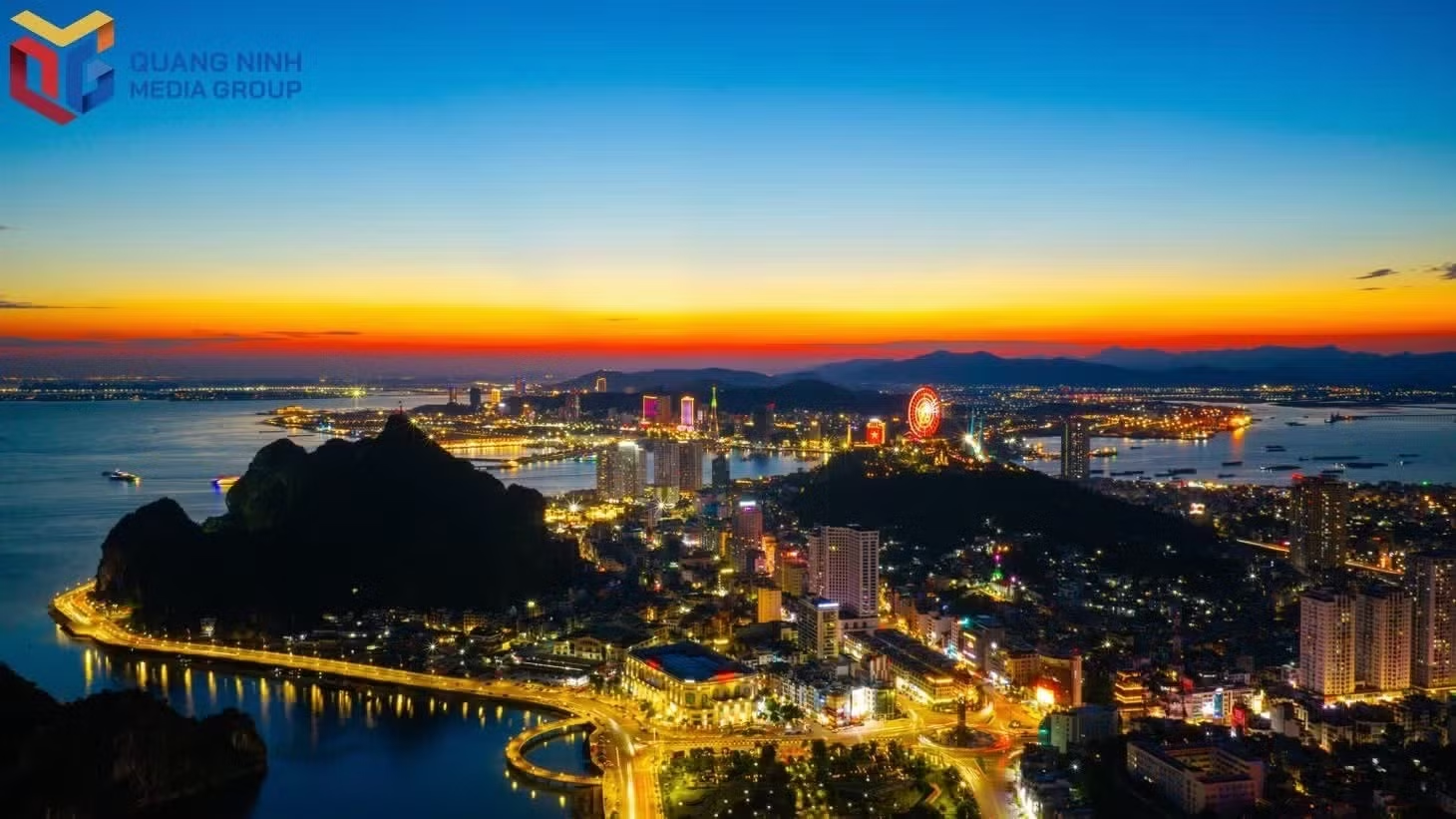
This expanding horizon is defined not just by geography, but by the dynamic convergence of diverse growth drivers. Where regions once operated in isolation, Quang Ninh’s new structural framework unlocks powerful cross-sector synergy: (1) Integrated supply chains: Industrial output connects directly to deep-water ports and international border gates; (2) Expanded tourist corridors: Visitor flows extend seamlessly from Ha Long Bay to Yen Tu, Van Don, Co To, Mong Cai, and the cultural highlands; (3) Blue economy synergy: Maritime trade intertwines with high-tech manufacturing, logistics, services, and advanced R&D.
Rather than exploiting isolated advantages, Quang Ninh has been assembling complete, high-value ecosystems within a unified space.
Capital momentum and investment depth
Socioeconomic indicators through August 2026 underscore this strengthening base. State budget collection reached VND 73.031 trillion (98.82% of the central target), driven by domestic revenues of VND 60.459 trillion and trade tariffs of VND 12.572 trillion. Non-state domestic capital surged with 67 newly licensed projects totaling VND 182.732 trillion. Concurrently, foreign direct investment surpassed $1.1 billion year-to-date, pushing the province’s active FDI portfolio to 237 projects valued at nearly $16 billion.
While these figures reflect an economy operating at impressive scale, the mandate now extends beyond attracting capital as the focus is on accelerating the conversion of capital into real productive capacity, infrastructure, high-value services, and sustained yields.
In order to capture this momentum, the target GRDP growth rate for Q3 has been adjusted upward to 15.41%, projecting 12.56% for the first nine months and 13.21% for the full year. Achieving these targets requires rapid execution across public investment disbursements, industrial manufacturing, service expansion, and room for growth across all sectors.
Advanced manufacturing and heritage tourism
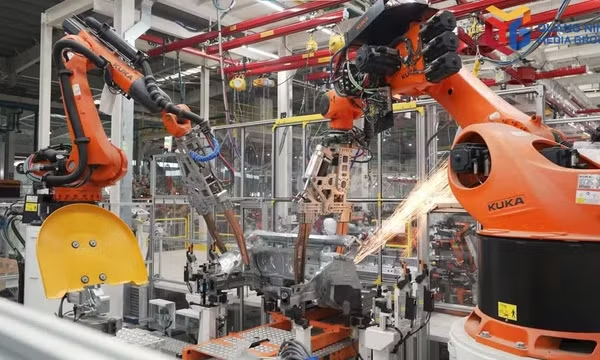
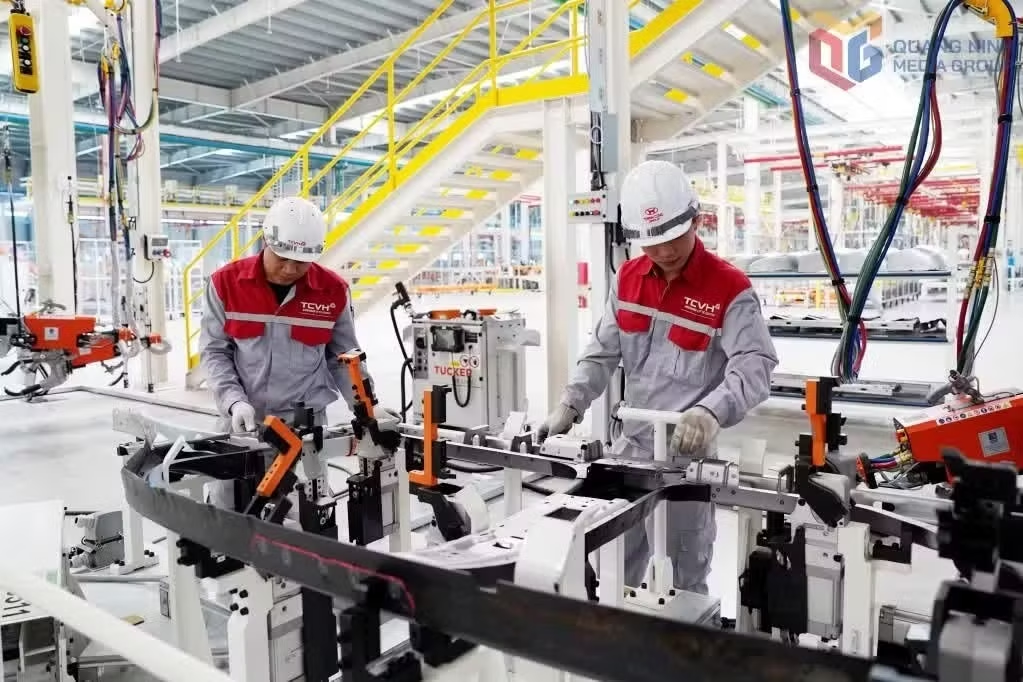
Processing and manufacturing remain central to the city's economic output. Building on its established industrial base, Quang Ninh city has currently prioritized high-tech and high-value investments that offer broad supply chain integration. Beyond its existing industrial parks, 9 new infrastructure projects covering over 4,300 hectares are currently under development, representing approximately 1.5 billion USD in combined domestic and foreign investment. This expanding supply of industrial land supports the growth of modern manufacturing hubs linked directly to deep-water maritime logistics.
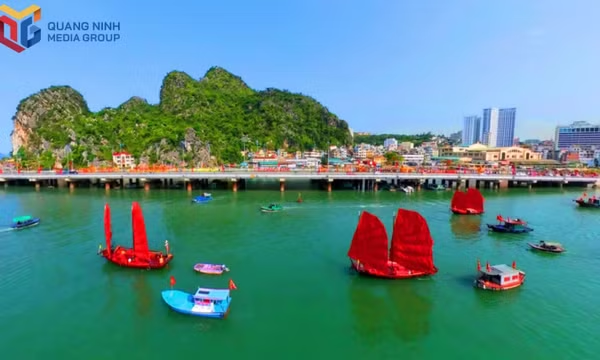
At the same time, the local tourism sector has repositioned its UNESCO heritage sites into a high-value economic driver. In the first eight months of 2026, the city recorded nearly 17.1 million visitor arrivals, a 6% increase year-over-year. Overnight stays reached nearly 6.6 million, up 10%, while total tourism revenue rose 23% to exceed 2.1 billion USD. During the five-day National Day holiday, which coincided with the city’s official designation as a centrally governed city, Quang Ninh hosted 568,000 visitors and generated an estimated 73 million USD in revenue, marking an 84% surge compared to the same period last year.
This performance highlights a transition from traditional sightseeing toward high-end cultural and lifestyle travel. Key destinations including Ha Long Bay, Yen Tu, Van Don, Co To, and Mong Cai are now connected through integrated travel itineraries. Furthermore, the city's newly finalized master plan for heritage economics, the night-time economy, and cultural industries through 2030 sets a clear framework to develop long-term cultural assets while increasing average visitor stay and spend.
Expanding logistics and digital economies
Positioned at a strategic junction of seaport access and overland border trade with China, Quang Ninh city holds significant geographical advantages. Import-export customs revenue reached approximately 513 million USD (12.572 trillion VND) through August 2026, meeting roughly half of the annual target and signaling substantial room for expanded trade activity.
With a view to retaining greater economic value locally, the city is upgrading its port infrastructure, cold-chain storage, warehousing, and cross-border logistics services. By transitioning from a simple transit route to an integrated logistics hub, Quang Ninh City aims to process, store, and clear more cargo locally, capturing higher value from trade flows.
At the same time, the city has developed new growth drivers alongside its core manufacturing and tourism sectors. High-tech industries, innovation, digital transformation, the data economy, and green growth have become central to its long-term strategy. In the first eight months of 2026, municipal spending on technology and innovation reached nearly 12 million USD (291.7 billion VND), marking a 5.3-fold increase year-over-year. Digital infrastructure has been deployed in tandem with physical transport networks.
This digital expansion supports ambitious regulatory initiatives, including a proposed Digital and Knowledge Free Economic Zone. Designed with a flexible regulatory environment, this dedicated zone aims to attract international investment in artificial intelligence, data centers, semiconductor development, research and development, and higher education.
Human-centric growth and regional integration
Alongside economic expansion, social development remains a core priority for Quang Ninh city. Through August 2026, municipal investment in education and workforce training reached approximately 175 million USD (4.29 trillion VND). Health insurance coverage stands at 96.4% of the population, with digital medical records established for over 1.41 million residents.
As a centrally governed municipality, the city is aligning its institutional governance with its physical growth. Urban planning initiatives focus on improving livability, attracting skilled talent, and balancing economic development with environmental and cultural preservation.
Under its strategic framework structured around regional poles, digital and economic transformations, and core growth drivers, Quang Ninh city has streamlined resource allocation across its municipal boundaries to strengthen economic synergy. The strategy aims to transition the city from relying on raw natural advantages to building long-term international competitiveness, converting capital investment into sustainable value within an integrated urban ecosystem.
Leveraging its connected infrastructure of expressways, deep-water seaports, border trade zones, modern urban centers, and UNESCO World Heritage sites, Quang Ninh city is positioned to expand its economic ties across the Red River Delta, the Northern Economic Corridor, and broader international markets.