Over the course of more than 40 years of renewal, Quang Ninh’s achievements have resulted from a process of renewing development thinking, in which appropriate and practical policy decisions have become an important driver of growth. Each well-grounded decision not only addresses immediate issues, but also creates additional room for development, opens up new growth drivers and gradually improves the quality of Quang Ninh’s growth.
Resolutions aligned with reality create room for growth
One of the important changes in Quang Ninh’s development thinking in recent years has been a shift from looking only at existing resources to proactively creating new ones. Public investment, in particular, has been viewed not simply as budget spending, but as “seed capital” to lead and pave the way for private-sector and other social resources to participate in development.
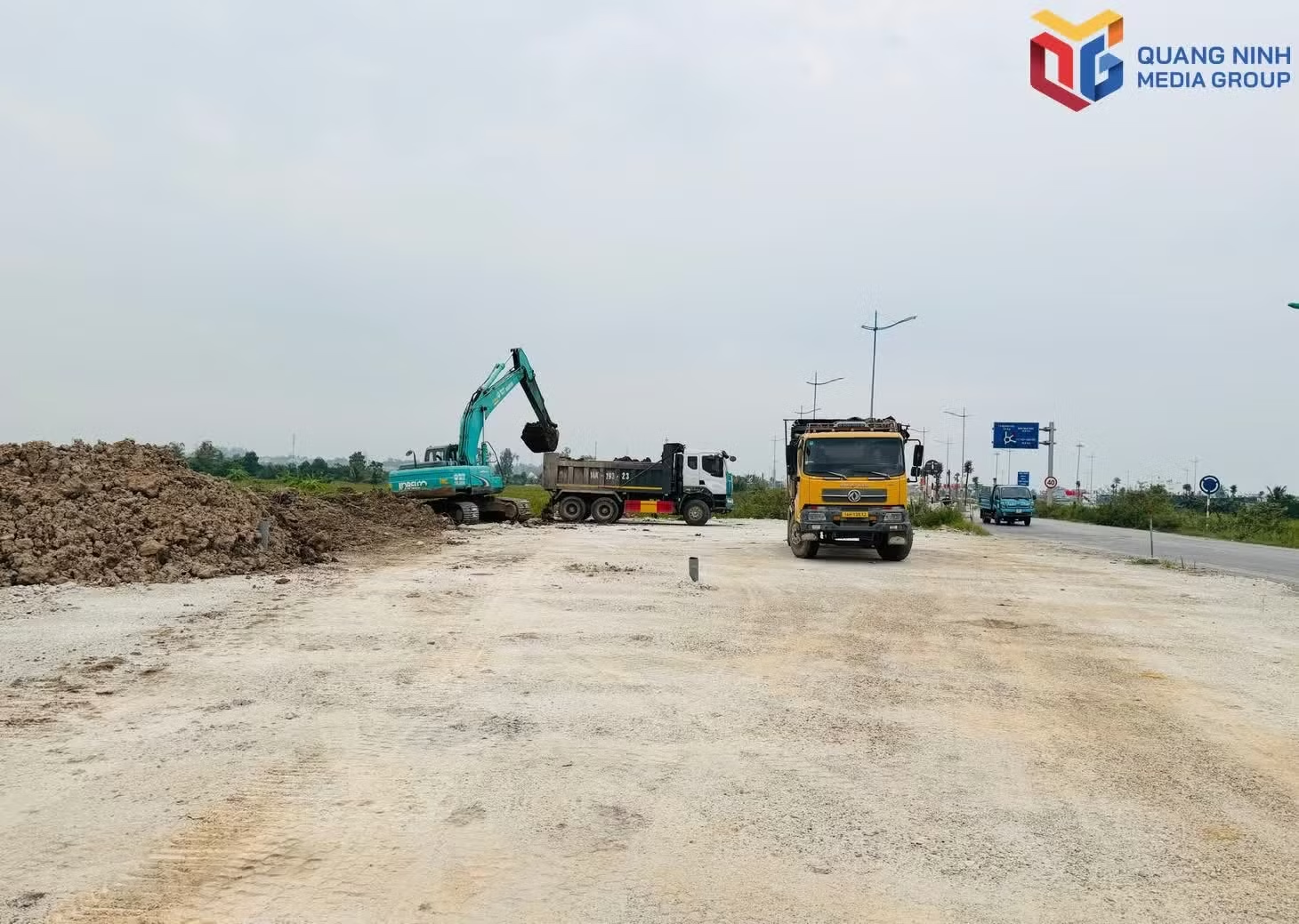
To translate this orientation into practice, the City People’s Council has adopted a number of resolutions on public investment, resource allocation and investment plans for different periods, with a focus on projects and works that enhance connectivity and generate spillover effects. With the resources allocated, many important infrastructure projects have been implemented, gradually expanding development space, improving connectivity among different areas and creating conditions to attract additional non-State-budget resources.
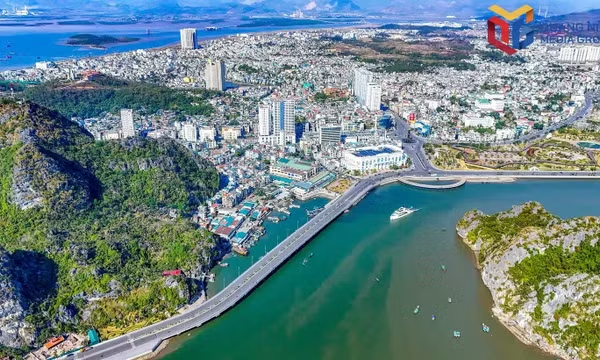
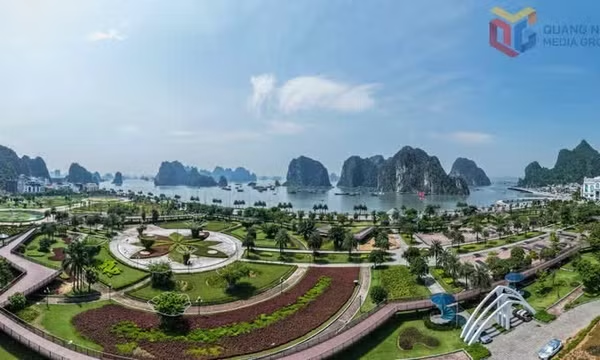
Looking back, expressways, coastal roads, bridges linking growth areas, and infrastructure systems in economic zones and industrial parks have helped reshape both Quang Ninh’s appearance and the way its economic space is organised. The Van Don - Mong Cai Highway, more than 80 kilometres long and with total investment exceeding VND 14 trillion, was completed in 2022, completing the expressway link from Hai Phong through Ha Long and Van Don to Mong Cai. Alongside it, Cua Luc 1 Bridge, the Ha Long - Cam Pha coastal road and many other connecting projects have gradually formed a more synchronised transport network.
Investment in infrastructure has created conditions to attract and effectively utilise non-State-budget resources. In the first eight months of 2026, total non-State-budget domestic investment in the city reached around VND 182.732 trillion, comprising 67 new projects and nine adjusted projects, while FDI reached approximately USD 1.1275 billion. This scale of investment shows that Quang Ninh’s capacity to mobilise social resources for development continues to expand.
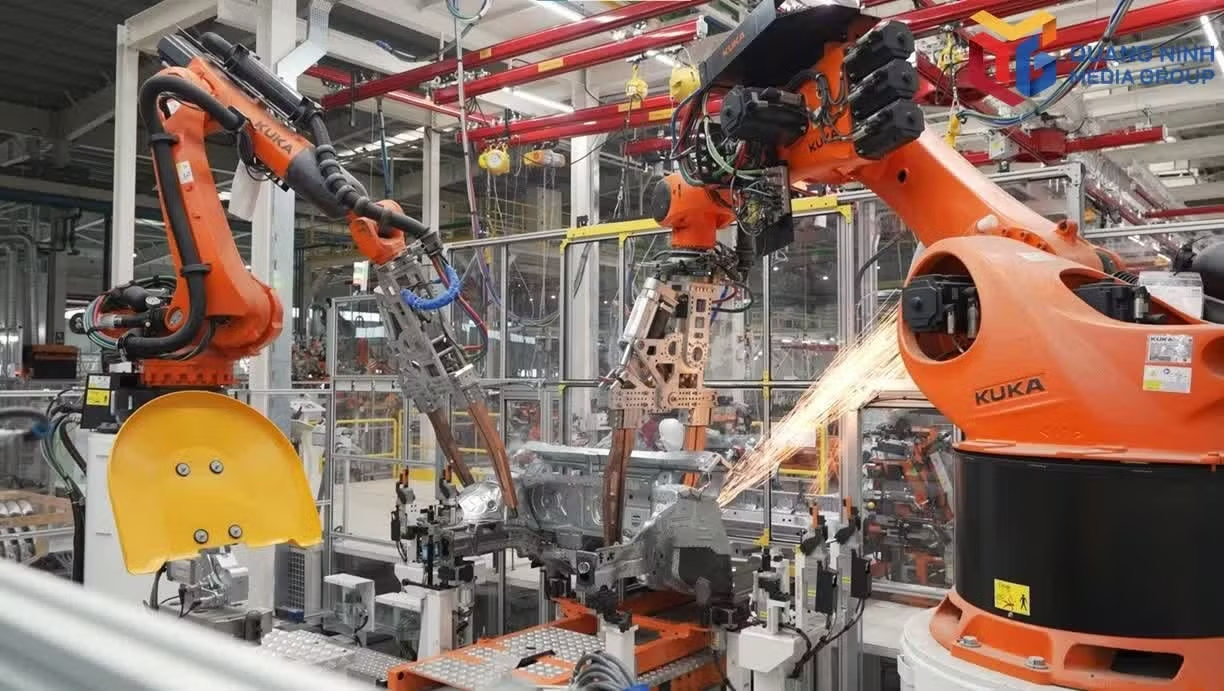
Alongside infrastructure investment, the City People’s Council has also adjusted economic development objectives and tasks in line with practical requirements. Resolution No. 334/NQ-HDND dated February 5, 2026 adjusted the city’s 2026 GRDP growth target to at least 13%, while adding measures to promote the private sector, attract high-quality investment, develop industry and high technology, and foster new growth drivers. This provides a basis for the city to focus more strongly on areas that still have room for expansion and to seek additional growth momentum.
The redefinition of development targets and priorities is creating further momentum for economic sectors with potential. Since the beginning of the year, the industrial production index has increased by 16.24%, while processing and manufacturing has grown by 31.77%. Tourism has welcomed more than 17 million tourist arrivals, generating around VND 51.008 trillion in revenue, while import-export turnover has reached approximately USD 6.645 billion, up 17.9% year on year. Processing and manufacturing and service industries are making increasingly visible contributions to growth, showing that the city’s economic structure is gradually shifting away from dependence on resource extraction towards sectors with higher added value.
Investing in human resources
If public investment provides an infrastructure foundation, policies on human resources, science and technology help create resources for long-term development. These policies also show Quang Ninh’s growing focus on addressing fundamental issues, including attracting, retaining and effectively using high-quality human resources.
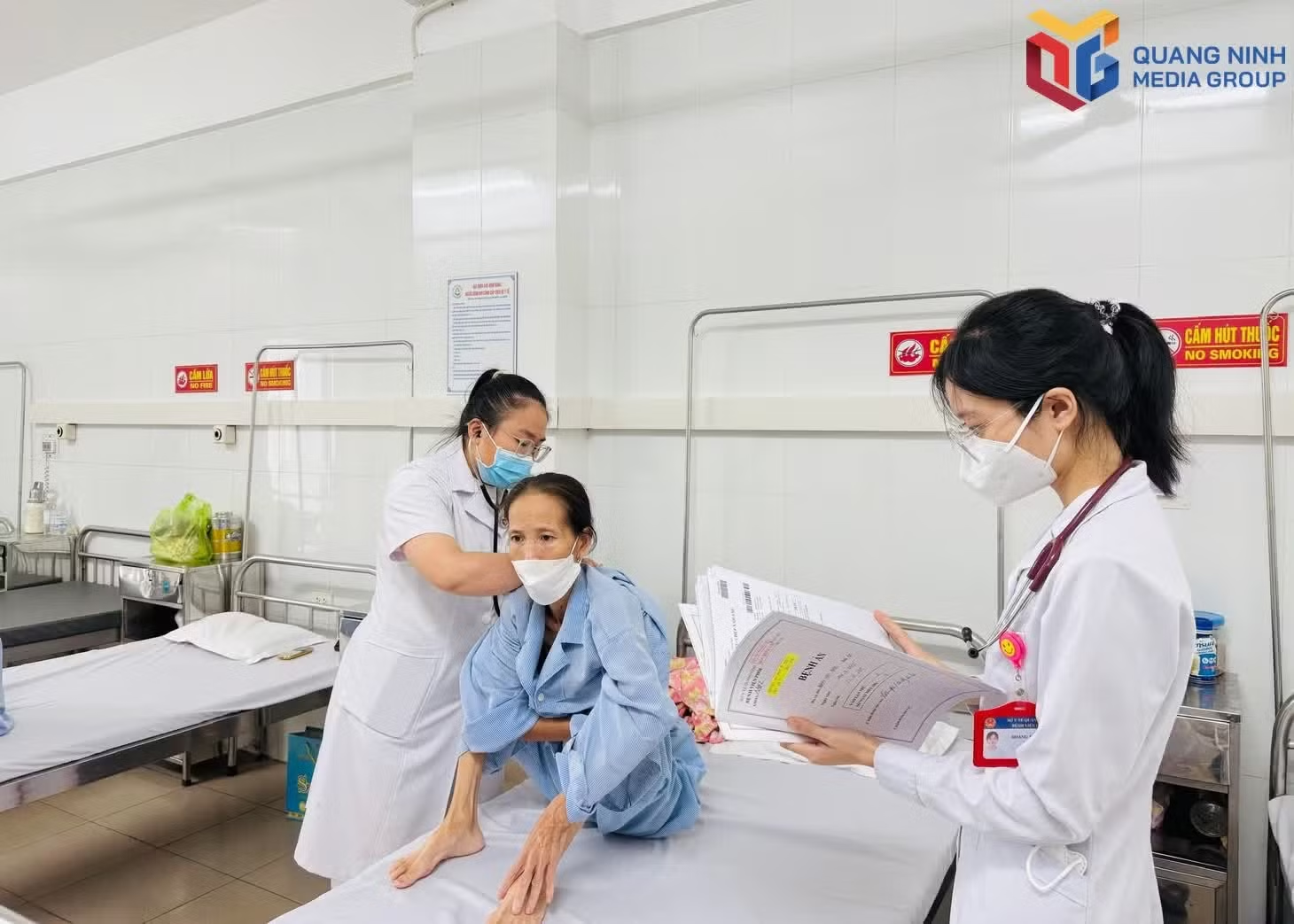
In the healthcare sector, Resolution No. 28/2023/NQ-HDND on policies to attract and support doctors to work at a number of local units is one example. The resolution set a target of attracting at least 298 doctors, with one-off support ranging from VND 200 million to VND 750 million depending on professional qualifications and place of work. Implementation has shown that the policy has created additional opportunities for healthcare units to recruit young doctors, particularly in areas facing staffing shortages.
To date, 65 people have benefited from the policy, including six with master’s degrees, specialist level I qualifications or residency training, and 59 doctors. With a stronger medical workforce, healthcare facilities have been able to expand technical services, reduce dependence on higher-level hospitals and improve the quality of healthcare delivered locally. Four major specialised hospitals in the city have now mastered nearly 80% of the technical procedures on the central-level list, while many advanced techniques such as kidney transplantation, cardiac surgery, cardiovascular intervention, cancer treatment and assisted reproduction have been implemented.
Beyond addressing healthcare staffing needs, Quang Ninh is expanding policies to attract high-quality human resources in science, technology and innovation. Following Resolution No. 57/2025/NQ-HDND, 36 officials at 20 agencies, units and localities across the city are receiving support under the policy for full-time digital transformation personnel, while 19 information technology professionals have been recruited.
Experience from implementation shows that appropriate policy decisions have helped Quang Ninh address many requirements arising at different stages, while also creating conditions for new growth drivers to emerge and develop. This provides a foundation for the city to continue refining its policy decisions to better meet development requirements in the period ahead.