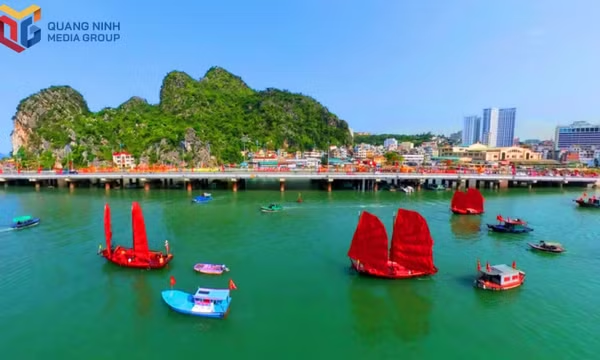
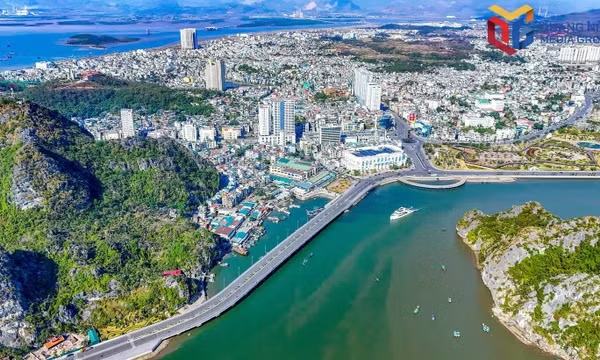
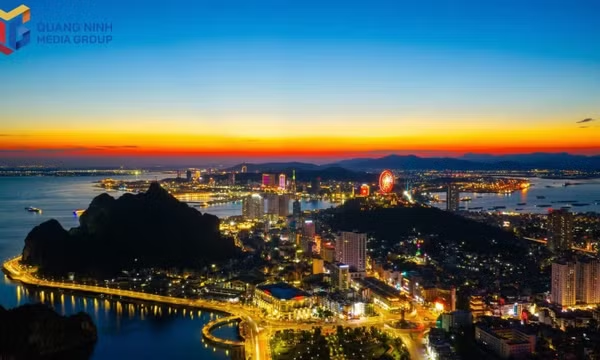
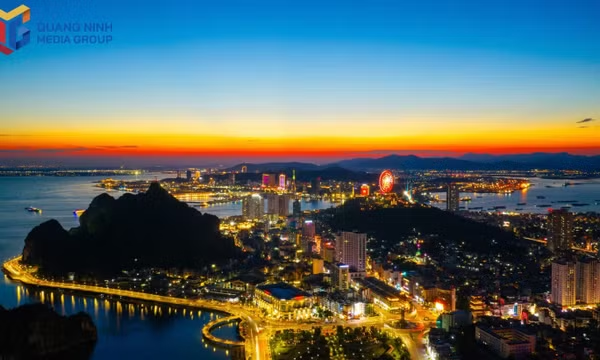
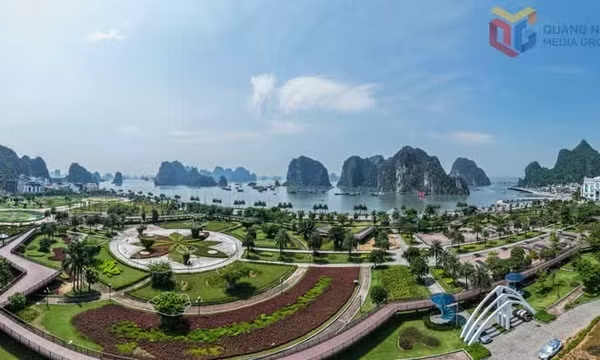
Co To welcomes around 300,000 tourists each year, generating substantial revenue and playing a decisive role in the locality’s socio-economic growth. To support this key economic sector, production activities in Co To are required to meet green, clean and sustainable development criteria, linking production with the protection of natural resources, the environment and landscapes. Co To’s agriculture has been shifting strongly towards greener models that prioritise quality and value while increasing the application of science and technology and processing.
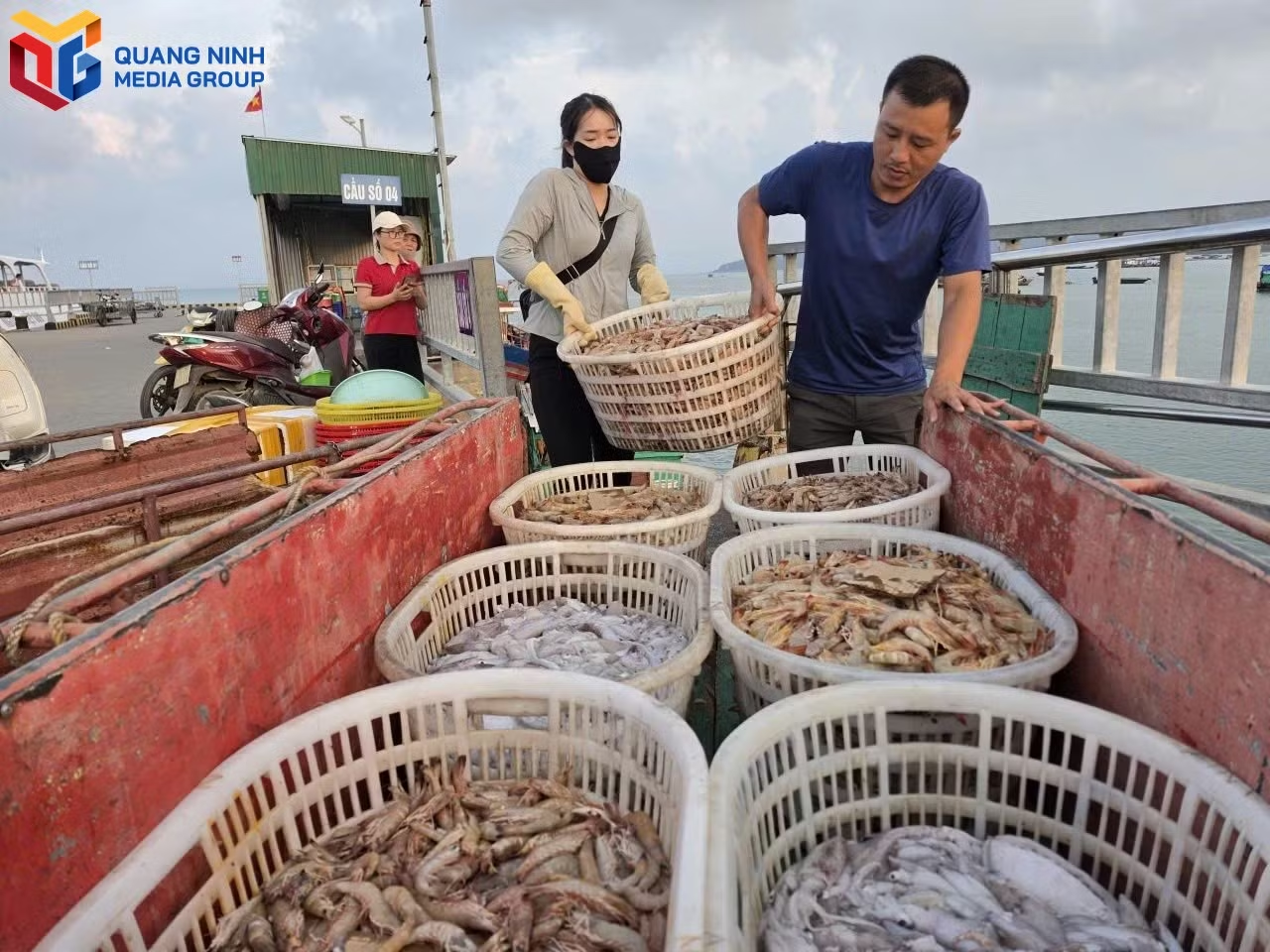
In recent years, Co To has harvested around 6,000 tonnes of aquatic products annually on average. Since the beginning of this year alone, output has exceeded 5,200 tonnes, mainly squid, shrimp and marine fish. Co To squid currently commands a significantly higher price than on the broader market, partly because squid caught in Co To fishing grounds is considered to have better quality than that from many other marine areas. In addition, it is mainly caught by hook-and-line fishing or traps rather than nets and other methods, allowing the squid to be kept alive until it is brought ashore.
To increase the value of harvested aquatic products, a growing number of seafood preliminary processing and processing facilities in Co To are investing heavily in cold-storage systems. Some are equipped with rapid deep-freezing technology capable of completely freezing products in just eight minutes. With advanced cold-storage systems, products placed in storage are frozen almost while still alive, making them convenient to preserve and use while retaining almost all of their original quality.
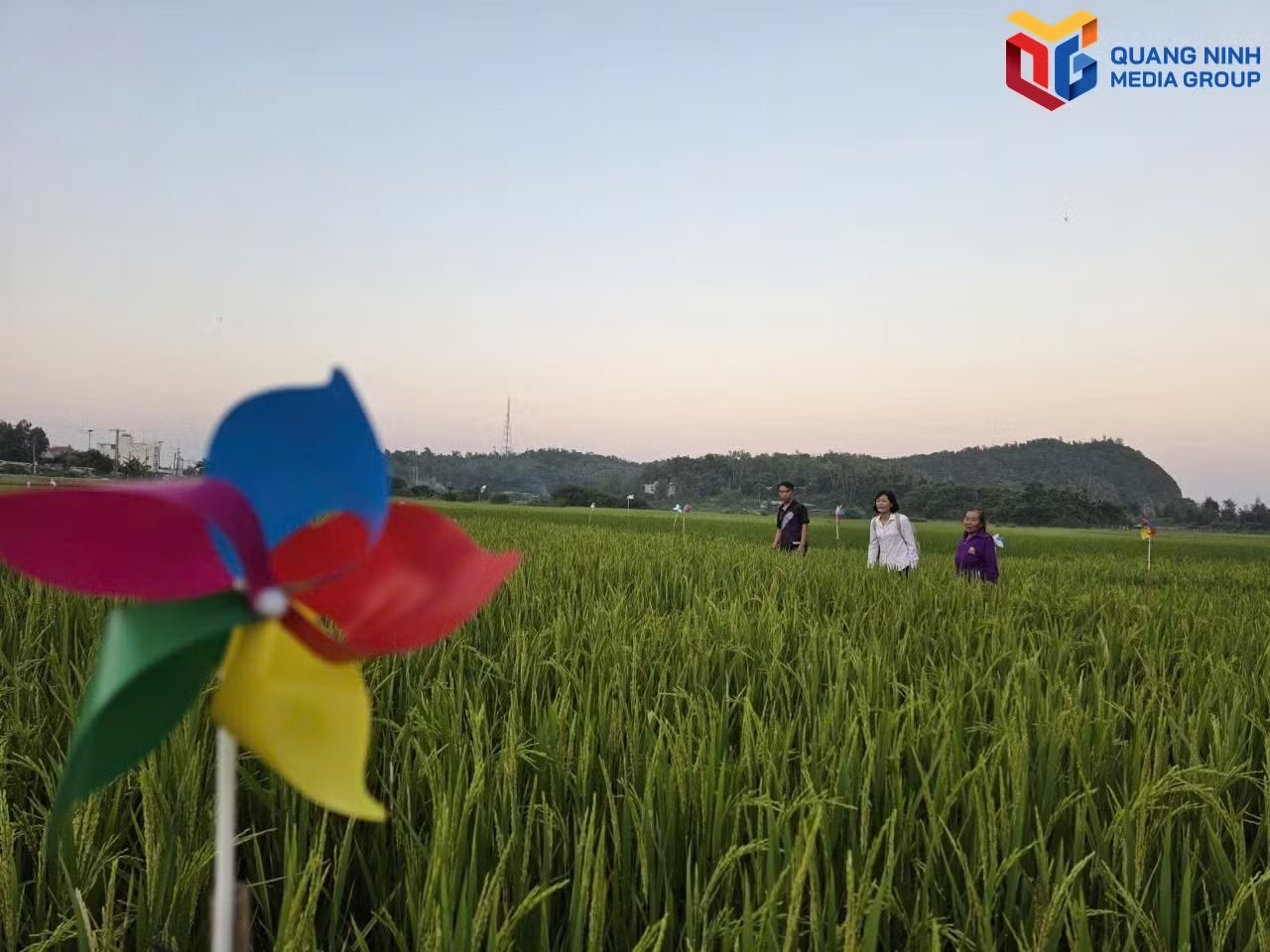
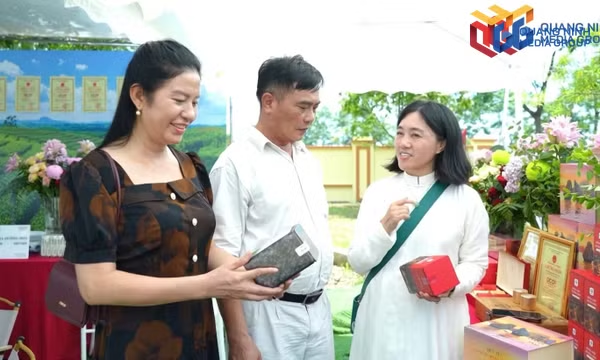
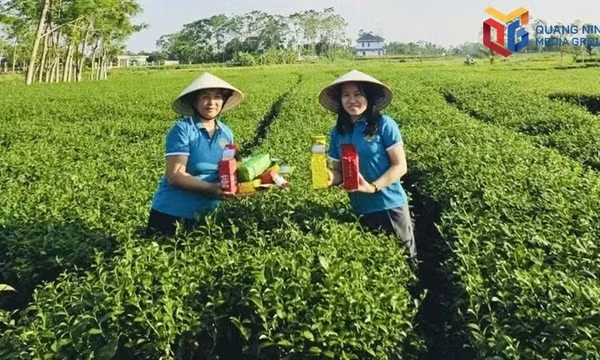
Alongside fisheries, Co To’s agriculture is being maintained steadily through models such as low-emission rice cultivation, managed free-range farming of large livestock, and the raising of pig and chicken breeds suited to the local climate. Feed formulas also prioritise agricultural by-products such as sweet potatoes, cassava, green vegetables, distillers’ grains and small fish.
The “Green Fields - Clean Air” model, being piloted in Nam Hai neighbourhood, has attracted active participation from local farmers. Growers in the area limit the use of chemical fertilisers and pesticides on rice fields and vegetable plots, instead prioritising manual weeding and organic fertilisers. Many fields have also been attractively landscaped and fitted with signs encouraging reductions in agricultural emissions to the environment. This helps create appealing rice-field check-in spots for visitors while also contributing to greater awareness and action on environmental protection in the locality.