Following its inscription as a World Cultural Heritage Site by UNESCO, Yen Tu is entering a historic phase to reposition itself not only as a renowned spiritual destination, but also as a cultural and intellectual hub of global significance. Building on its clearly defined core values, Quang Ninh Province is gradually shaping a new development model, aiming to transform Yên Tử into a distinctive heritage city where cultural heritage values are preserved, promoted, and turned into drivers of sustainable growth.
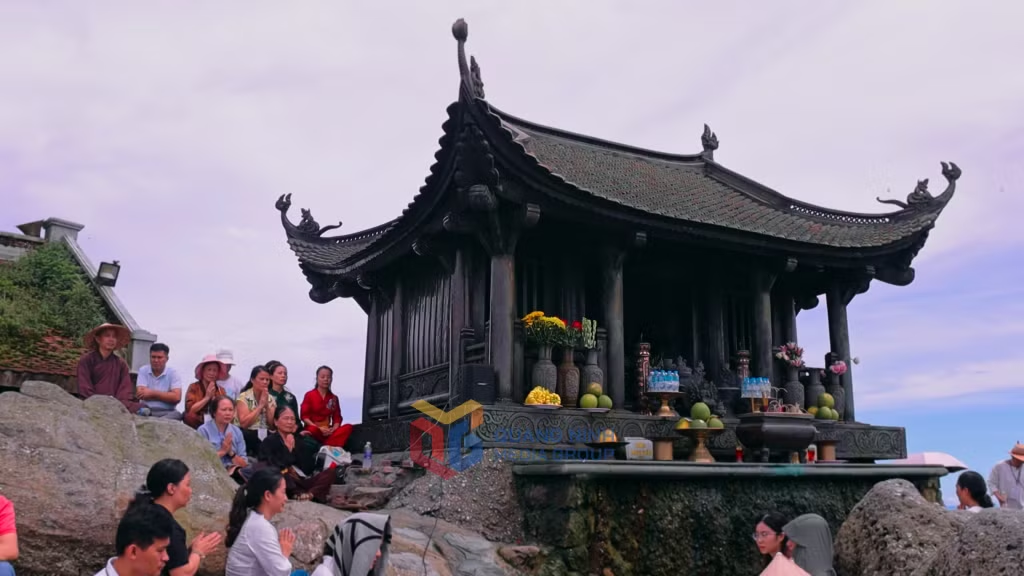
Visitors practicing meditation at Dong Pagoda can experience moments of profound stillness and reflection, fostering a deeper connection with the philosophical teachings of Buddhism.
Yen Tu’s outstanding value lies in the convergence of history, philosophy, and a distinctive cultural landscape. It is closely associated with Tran Nhan Tong, founder of the Truc Lam Zen sect and a revered king who later embraced monastic life, symbolizing a philosophy of engaged Buddhism that emphasizes intellectual cultivation, personal ethics, and social responsibility. From a sacred natural setting, Yen Tu has nurtured a long-standing intellectual tradition with profound influence, often described as “enlightenment valley” of Dai Viet civilization (the old name of Vietnam).
On July 12, 2025, in Paris, the Yen Tu – Vinh Nghiem – Con Son, Kiep Bac Complex of Monuments and Landscapes was officially inscribed on the UNESCO World Heritage List under criteria (iii) and (vi). This designation marks Vietnam’s ninth World Heritage Site and its first trans-provincial serial property, linking Quang Ninh, Bac Ninh, and Hai Phong. Within this framework, Yen Tu serves as the spiritual and intellectual centre, as well as a major pilgrimage destination of Vietnamese Buddhism for more than seven centuries.
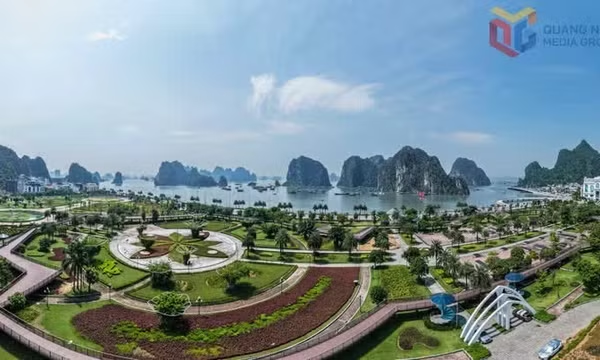
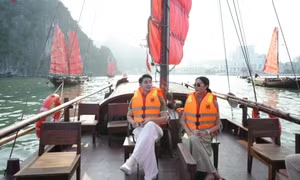
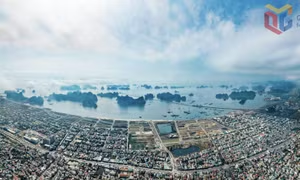
Beyond its spiritual significance, Yen Tu forms part of a distinctive heritage corridor in Quang Ninh, connecting with Ha Long Bay and Bai Tu Long Bay to create a unique space where breathtaking natural landscapes, rich cultural heritage, and maritime civilization converge. This synergy forms a rare and integrated heritage complex, enhancing the destination’s appeal and competitiveness on the global tourism map.
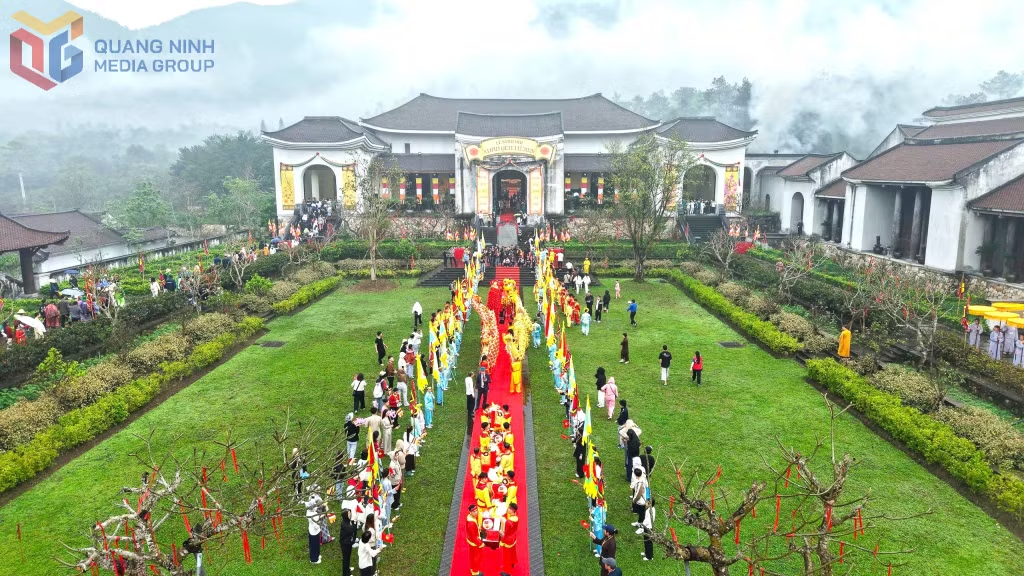
The Opening Ceremony of the Yen Tu Spring Festival 2026 kicked off a series of promotional activities highlighting the World Cultural Heritage Site of the Yen Tu – Vinh Nghiem – Con Son, Kiep Bac Complex of Monuments and Landscapes.
Drawing on its recognized value system, Yen Tu is positioned under the core message: “The Zen and Enlightenment Center of Dai Viet Civilization.” Its development space is being structured within an interconnected framework along the Dong A Heritage Corridor (Van Don – Bai Tu Long Bay – Cua Ong – Ha Long Bay – Cua Luc Bay – Bach Dang – Yen Tu – Dong Trieu), linking key areas and innovation hubs, and forming a seamless continuum of history, culture, and knowledge from past to future.
Looking ahead to 2045, Yen Tu is envisioned as an internationally recognized heritage city, built on a symbiotic model of conservation and development. In the longer term, Yên Tử aims to become a leading global center for the study and practice of Truc Lam Zen, while expanding international partnerships and hosting major global events. Efforts are also underway to prepare a nomination dossier for Buddhist King Tran Nhan Tong to be recognized as a UNESCO World Cultural Figure, further enhancing the site’s global profile.
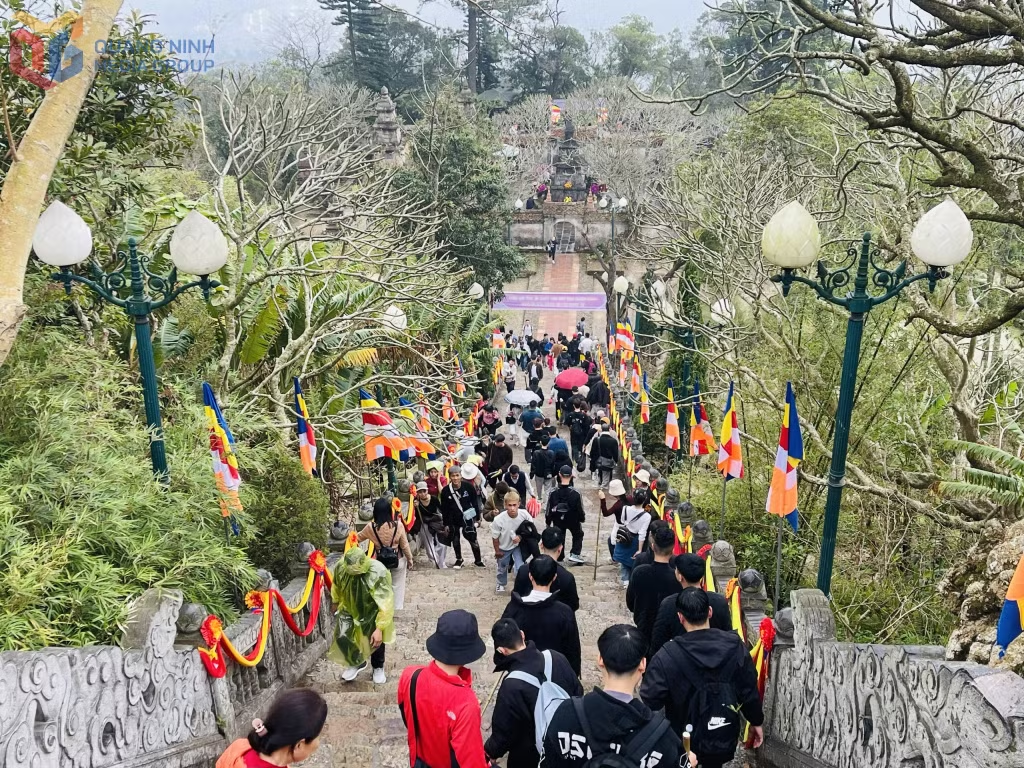
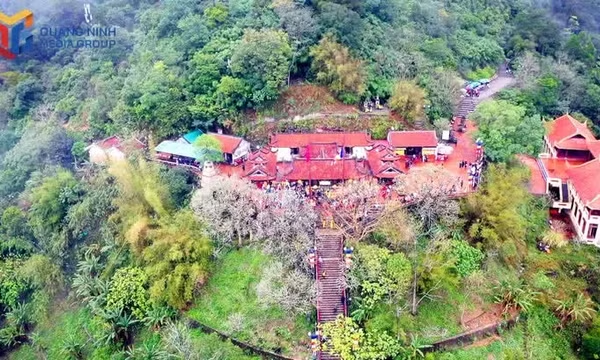
Alive with pilgrims and visitors from across the country, Yen Tu is especially vibrant in the early days of spring.
With a strategic vision and a science-based approach, Yen Tu is steadily advancing toward its goal of becoming a globally unique heritage city. Beyond a pilgrimage destination, it is expected to evolve into a vibrant hub of knowledge, creativity, and enlightenment— emerging as a new symbol of Vietnam on the global heritage and tourism map.