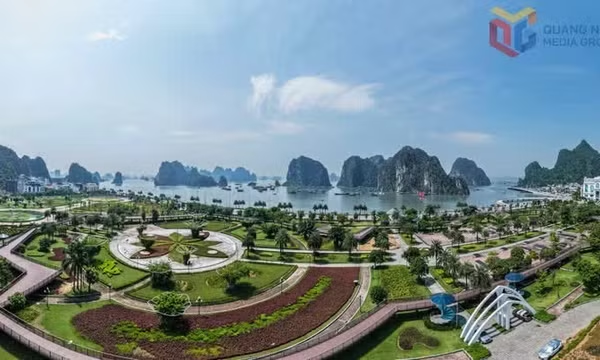
Quang Ninh Province of Vietnam and China’s Guangxi Zhuang Autonomous Region share a land border and are connected by sea, while both occupy strategically important positions along the Vietnam–China and ASEAN–China trade routes. Tapping into the trade potential between Quang Ninh and Guangxi plays an important role in facilitating the flow of goods between Vietnam and markets in southern China.
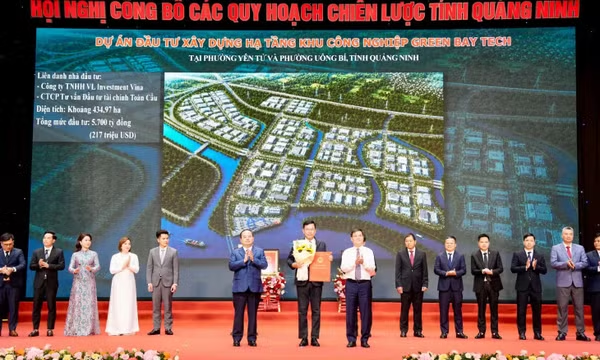
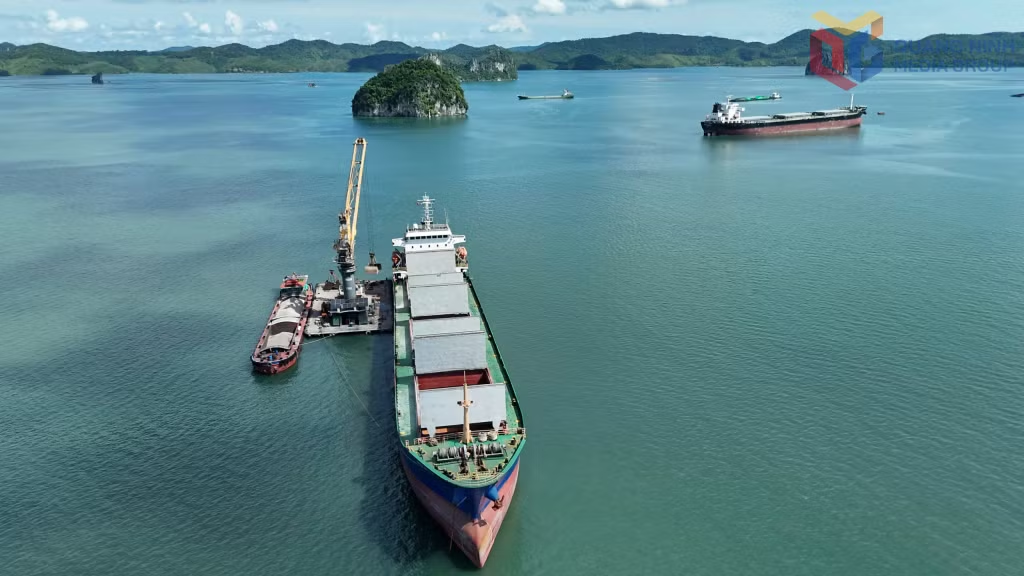
In recent years, Quang Ninh and Guangxi have enjoyed favourable conditions for trade development. Quang Ninh’s transport and logistics infrastructure has continued to improve, with a nearly 176-kilometre expressway connecting Hanoi with the Bac Luan II Border Gate reducing travel time to around three hours. The province is also home to major seaports, including Cai Lan, Con Ong–Hon Net and Van Ninh, which can accommodate large vessels of up to 200,000 tonnes. Industrial parks, border-gate economic zones and other connectivity projects are also being developed. These advantages facilitate not only the movement of goods across the border but also connections with production, logistics and seaport hubs within the province.
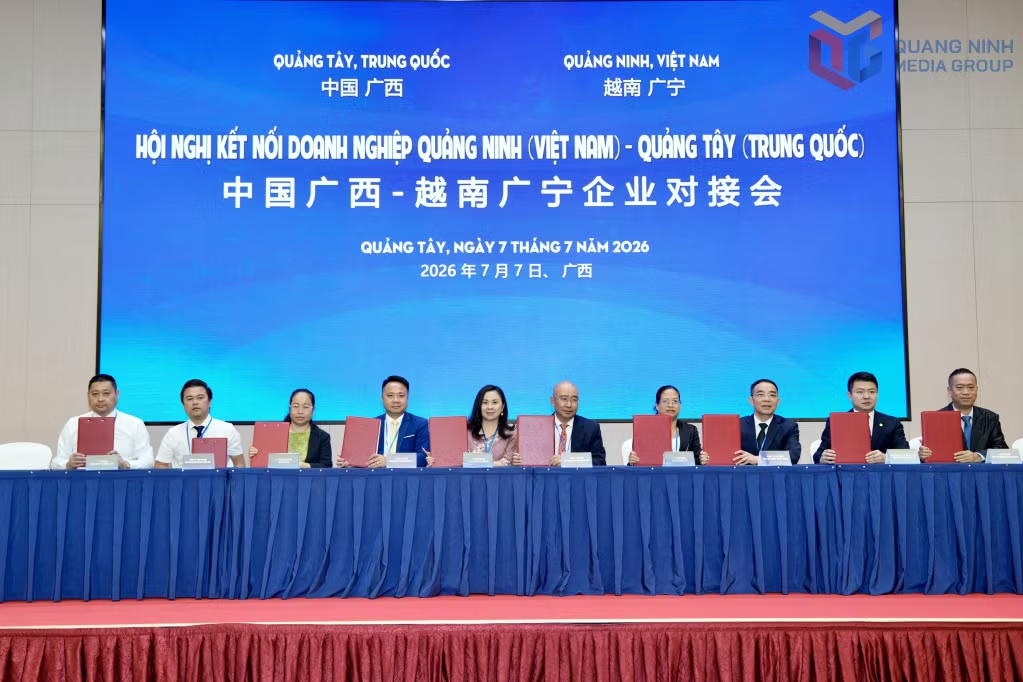
In 2025, total import-export turnover between Quang Ninh and Guangxi through the province’s border gates reached USD 5.88 billion, up 27.5% year on year. During the same year, Quang Ninh signed 44 cooperation agreements with Guangxi covering various fields, including trade, logistics, border-gate management and the development of smart border gates. In the first six months of 2026, the province’s total import-export turnover exceeded USD 4.8 billion, up 16.9% year on year.
In particular, efforts are underway to develop the Mong Cai–Dongxing Cross-Border Economic Cooperation Zone, together with the implementation of a smart border-gate model and a number of connectivity projects. These initiatives are creating significant new opportunities for trade, logistics and investment cooperation between the two sides.
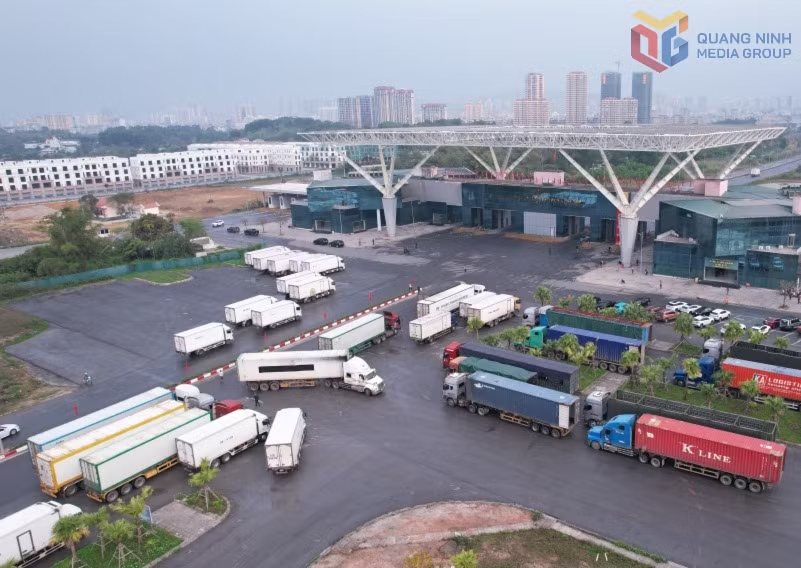
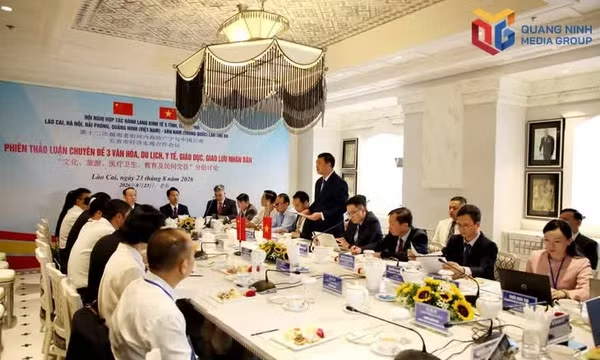
Experience in border-gate management shows that the potential for trade cooperation between Quang Ninh and Guangxi is no longer simply a matter of increasing the volume of goods crossing the border. Increasingly, it depends on the ability to shorten processing times, reduce costs and ensure seamless flow of trade throughout the entire trading process. In line with this approach, Sub-Department of Customs Region VIII is gradually deepening its coordination mechanism with Nanning Customs through the “Two Countries – Four Parties” Customs Dialogue, as well as Km 0 dialogues at the Mong Cai–Dongxing, Hoanh Mo–Dongzhong and Bac Phong Sinh–Lihuo border pairs.
Another area receiving particular attention from the customs sector is the use of technology as a foundation for connecting the two sides. As smart border-gate models are rolled out, their effectiveness will be measured not only by the number of vehicles cleared but also by the extent to which data can be connected, shared and used consistently by both sides.
Customs reform efforts, together with improvements in infrastructure, cooperation mechanisms and the cross-border economic space, are helping transform the way trade between Quang Ninh and Guangxi operates. They also provide a foundation for turning Quang Ninh’s inherent geo-economic advantages into new competitive strengths, deepening cooperation with Guangxi and making it increasingly substantive and sustainable.
By Hoang Nga