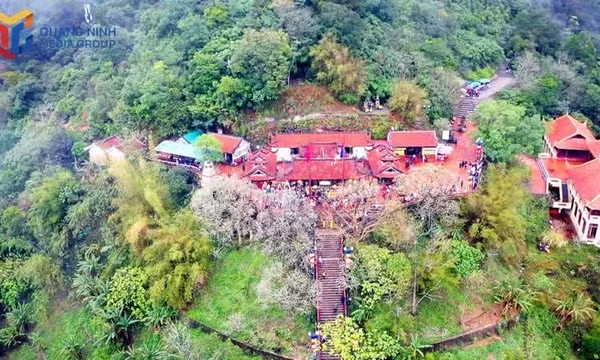
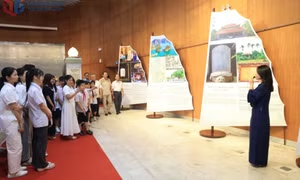
Once the first international trading port of Dai Viet, Van Don preserves not only the remnants of a once-thriving commercial centre but also an exceptional system of ancient Buddhist temples and stupas. Decades of archaeological discoveries have gradually reconstructed the original layout of these religious monuments on Cong Tay Island, shedding light on the cultural and spiritual life of the local inhabitants over 700 years ago.
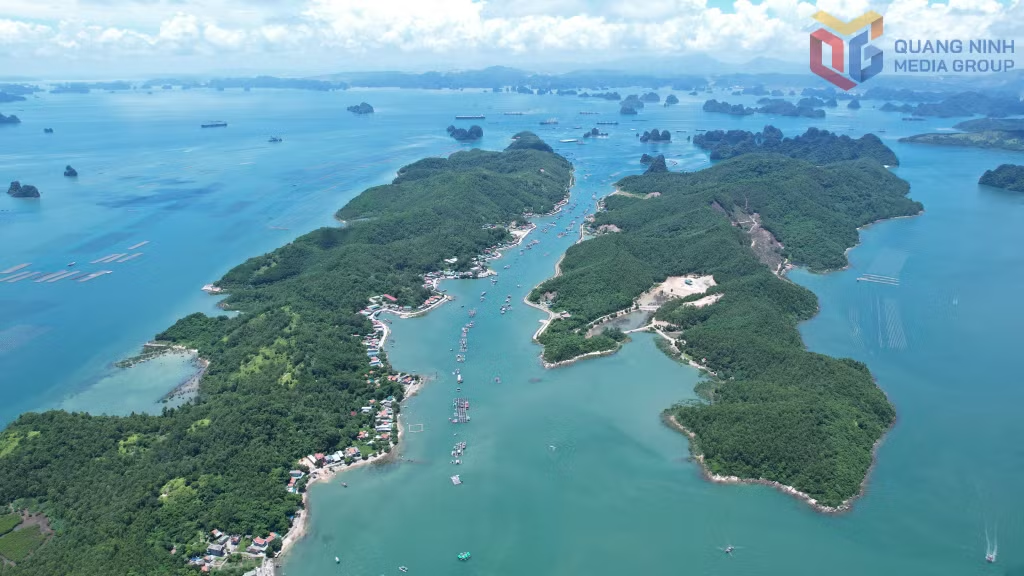
Archaeological research reveals that Cong Tay Island, one of the main centres of the ancient Van Don trading port, preserves the remains of at least four ancient pagodas and one Buddhist stupa, dating back to the late 13th and early 14th centuries under the Tran Dynasty.
The most significant site is Lam Pagoda, first identified in 1967 and excavated in 1971. Nestled in a valley enclosed by mountains on three sides, the pagoda was constructed as a relatively complete architectural complex comprising worship buildings and supporting structures. Stone steps carved with dragon motifs, handrails decorated with squirrel figures, and lotus pedestals for Buddha statues clearly demonstrate the sophisticated architectural techniques and distinctive sculptural artistry of the Tran Dynasty.
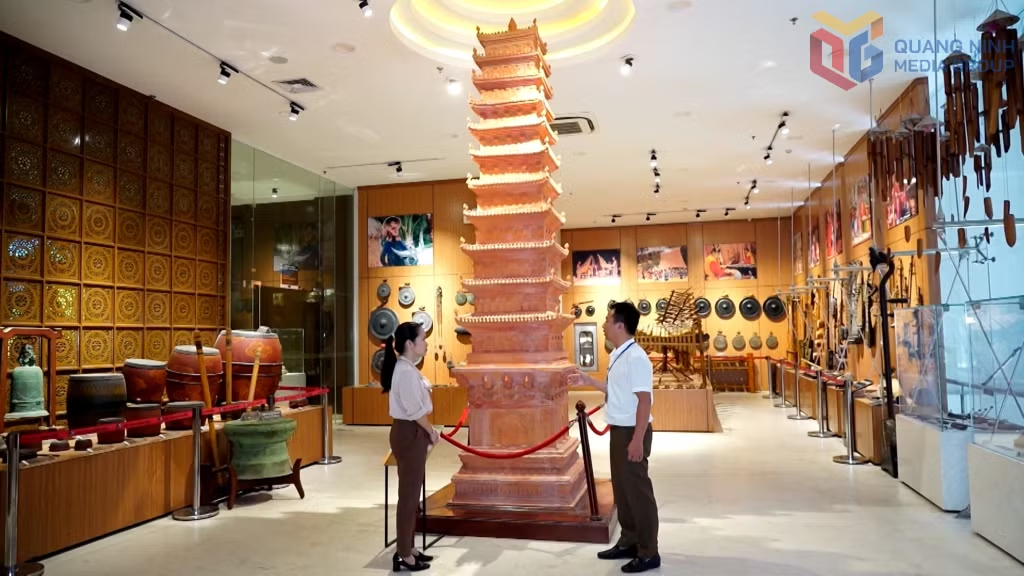
Meanwhile, the Bao Thap Buddhist Stupa holds exceptional religious and architectural value. Excavations carried out in 2009 and 2010 revealed that the complex was built on three terraced platforms at the centre of Cong Tay Island, backed by mountains and overlooking the sea. Thousands of terracotta architectural ornaments were unearthed, including dragons, phoenixes, lotus flowers, bodhi leaves, the mythical bird Garuda, Vajrapani guardian figures, and Kinnari sculptures, reflecting the richness of Buddhist architectural decoration during the Tran Dynasty.
By Xuan Hoa