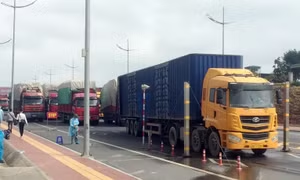
As September 2026 unfolds, Quang Ninh has set its sights on a formidable target: disbursing an additional VND 4.021 trillion ($160 million) in public investment capital, which will lift its nine-month total to VND 17.140 trillion. This initiative is more than an administrative hurdle to meet third-quarter economic benchmarks; it serves as a strategic catalyst to accelerate infrastructure development, create jobs, expand economic corridors, and maximize the multiplier effect of state spending.
Quang Ninh’s total public investment framework stood at VND 36.850 trillion, accounting for rolled-over funds from 2025 and adjusted 2026 allocations by the close of August. Municipal budgets account for VND 29.521 trillion, while communal budgets comprise VND 3.533 trillion. Cumulative disbursements over the first eight months reached VND 13.119 trillion, with August alone contributing VND 1.826 trillion, a significant surge of VND 671 trillion over July. Crucially, the execution rate for the 2026 capital plan reached 61% of the target assigned by the Prime Minister, comfortably outpacing the 36% recorded during the same period last year.
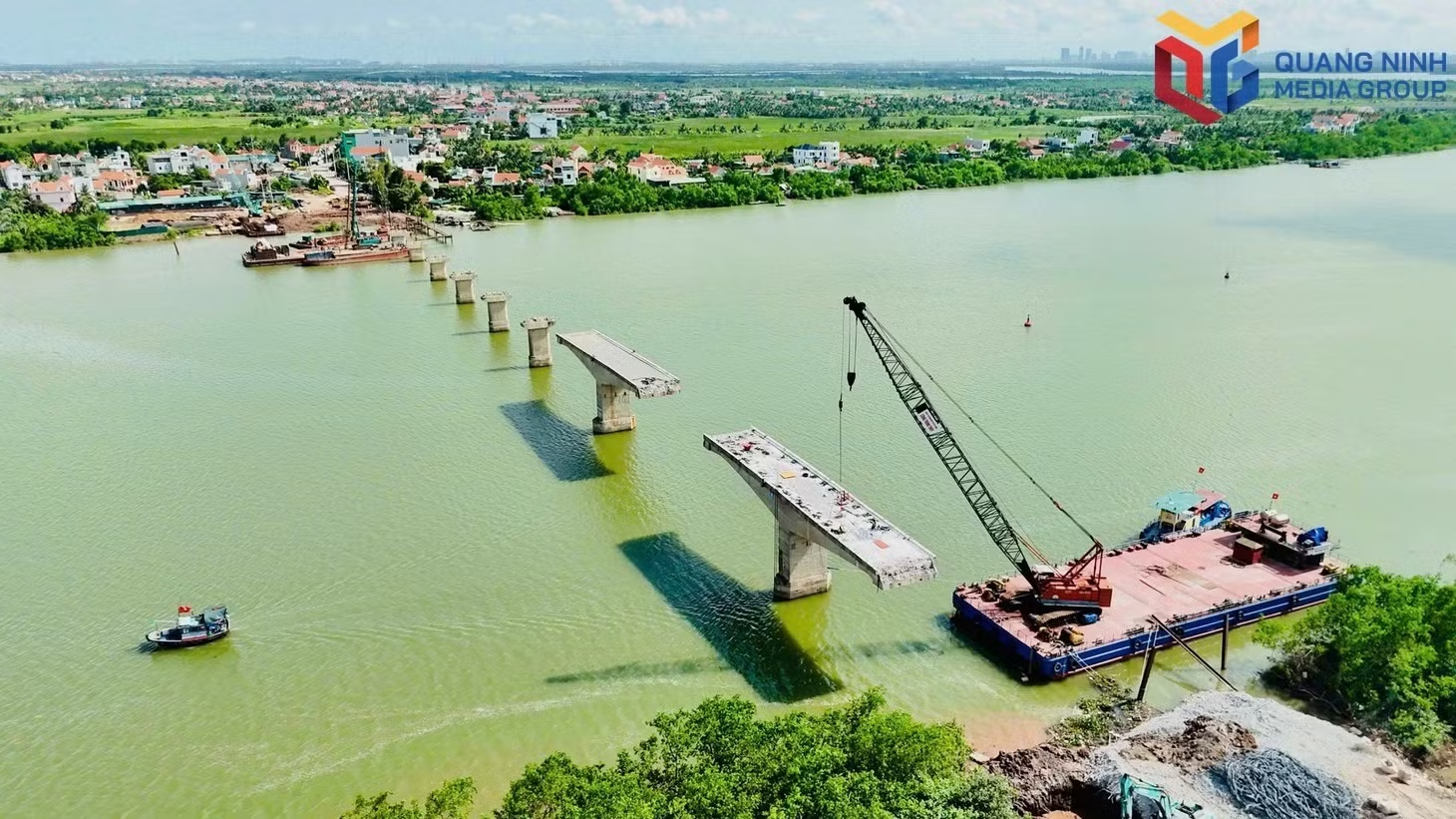
Overcoming execution bottlenecks
Despite these gains, maintaining momentum through September requires navigating immense pressure. The city’s ambitious target for the month aims to push the nine-month total to VND 17.140 trillion, achieving 107% of the quarterly goal and 88% of the entire year's blueprint.
Execution hurdles are heavily concentrated among specific project owners and localities lagging behind the provincial curve. While six out of eight municipal-level investors have surpassed the 82% performance threshold, lagging entities like the Area I and Area II Construction Investment Project Management Boards linger at 46% and 61%, respectively. Among 54 communes, wards, and special zones, the vast majority have exceeded targets, though selective regions like Van Don (65%) and Co To (74%) require focused intervention.
Since the two regional management boards oversee massive portfolios valued at roughly VND 4.496 trillion and VND 2.474 trillion, a single bureaucratic delay, procurement snag, or site-clearance dispute can paralyze vast sums of capital. Consequently, local leadership is shifting away from generalized oversight toward targeted troubleshooting, directly tying disbursement metrics to physical project milestones.
Optimizing capital flow and accountability
On a brighter note, a wave of new projects successfully completed their bidding and investment protocols to break ground in the third quarter, opening up substantial room for capital absorption in the months ahead. August alone saw 34 projects financially finalized, bringing the eight-month total to 508 completed and closed-out projects. This steady turnover allows public funds to cycle back into the local economy with greater velocity.
If current projections hold, investors estimate total year-end disbursements could reach VND 29.475 trillion. Municipal authorities have implemented strict operational mandates to translate these forecasts into reality, including immediate settlement (Payments must be processed without delay upon the verification of completed work volumes), strict accountability (Projects experiencing unjustified delays will trigger administrative reviews of responsible officials, including executive leadership), and proactive capital reallocation (The Department of Finance and State Treasury Region III are closely tracking weekly progress, publicly naming laggards, and reallocating capital away from stalled projects toward high-absorption initiatives before funds become trapped at year-end).
Clearing the path ahead
Beyond financial administration, physical roadblocks, most notably site clearance, remain critical. Securing over 880 hectares of land for key projects in September is non-negotiable; without timely handovers, available capital cannot be translated into active construction. Similarly, securing backfill materials is treated as an integrated link in the supply chain rather than an isolated logistical afterthought.
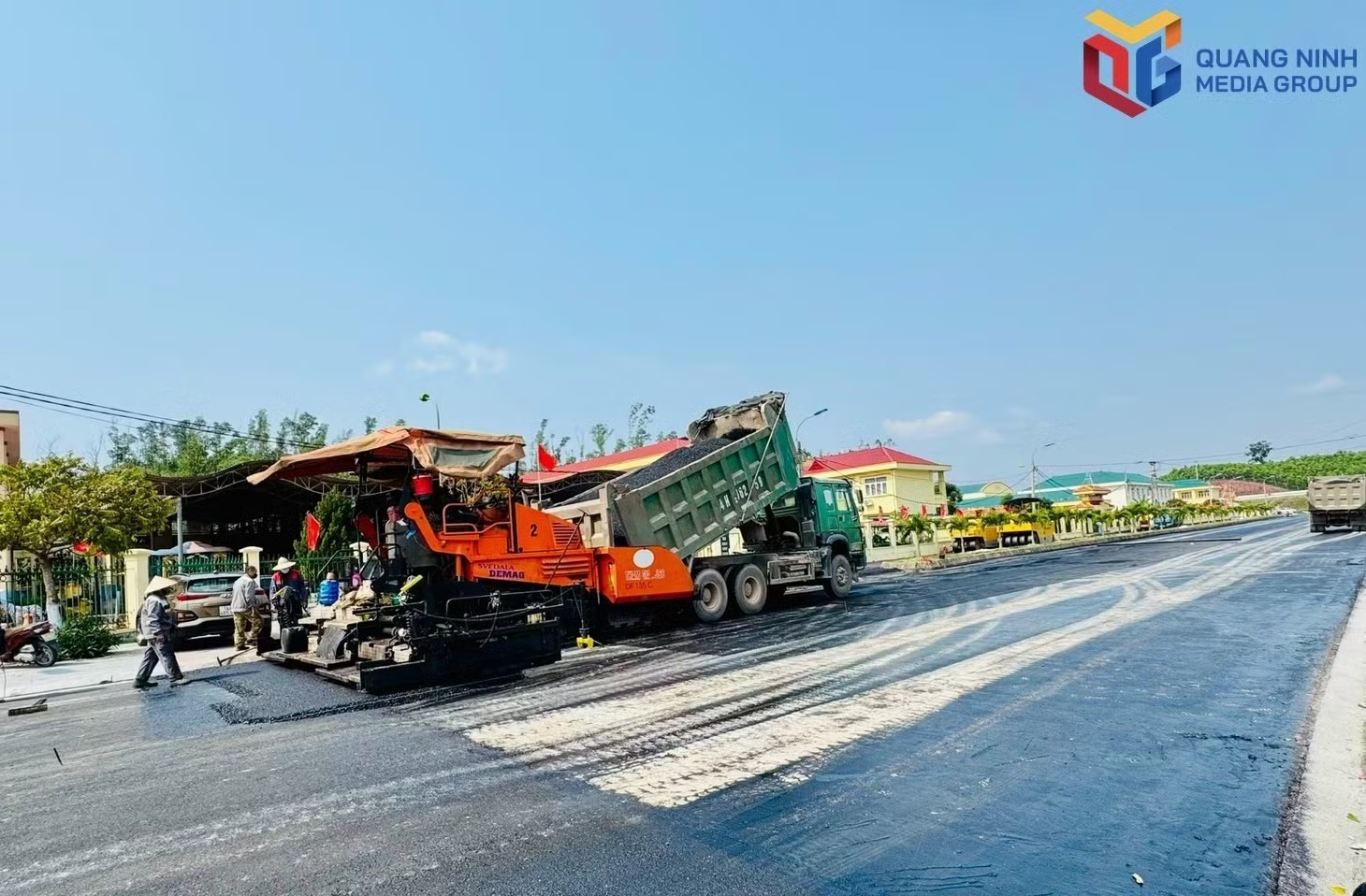
Ultimately, September’s acceleration is not about compromising quality or bypassing legal safeguards. It is about streamlining workflows, eliminating administrative dead zones, and shortening coordination cycles. By channeling over VND 4 trillion into the local economy this month, Quang Ninh city aims not merely to hit its quarterly targets, but to transform public capital into tangible infrastructure that fuels sustainable economic vitality.