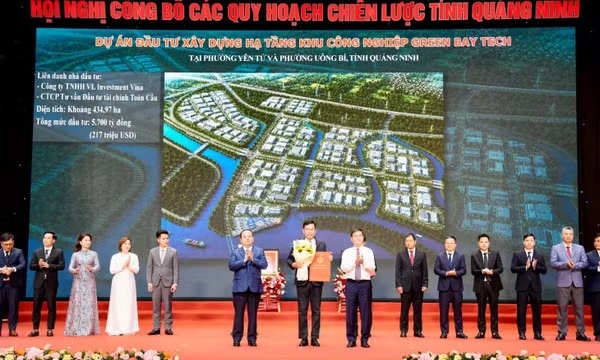
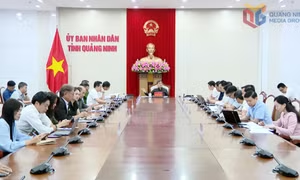
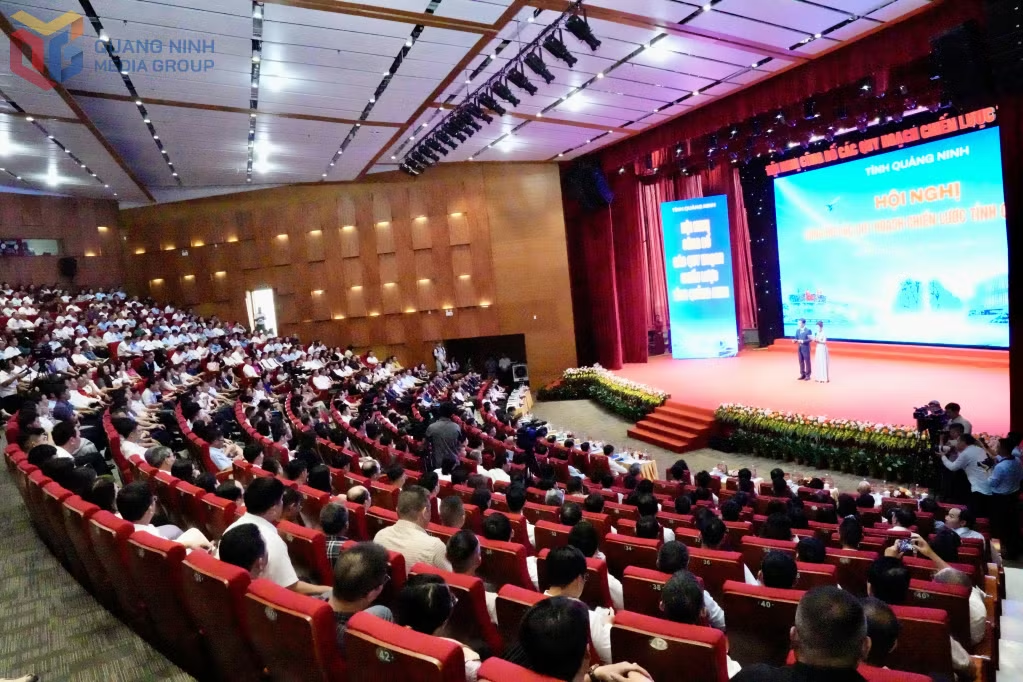
In late June, Quang Ninh Province officially announced the adjustments to its Provincial Master Plan for the 2021–2030 period, with a vision to 2050. This pivotal step aims to redefine the province's new development space, unlock its full potential and advantages, and lay the foundation for Quang Ninh to become a centrally governed city in the coming time.
Expanding development space
For Quang Ninh, visionary planning has always been regarded as a key driver of development, operating under the principle of “planning one step ahead”. This latest adjustment is particularly significant as Quang Ninh is enters a new era of growth, marked by a streamlinedtwo-tier local government model, a newly reorganised administrative structure and more ambitious urban development goals.
For the first time, Quang Ninh's spatial development framework is clearly structured around “three development corridors, four socio-economic regions and five growth hubs”.
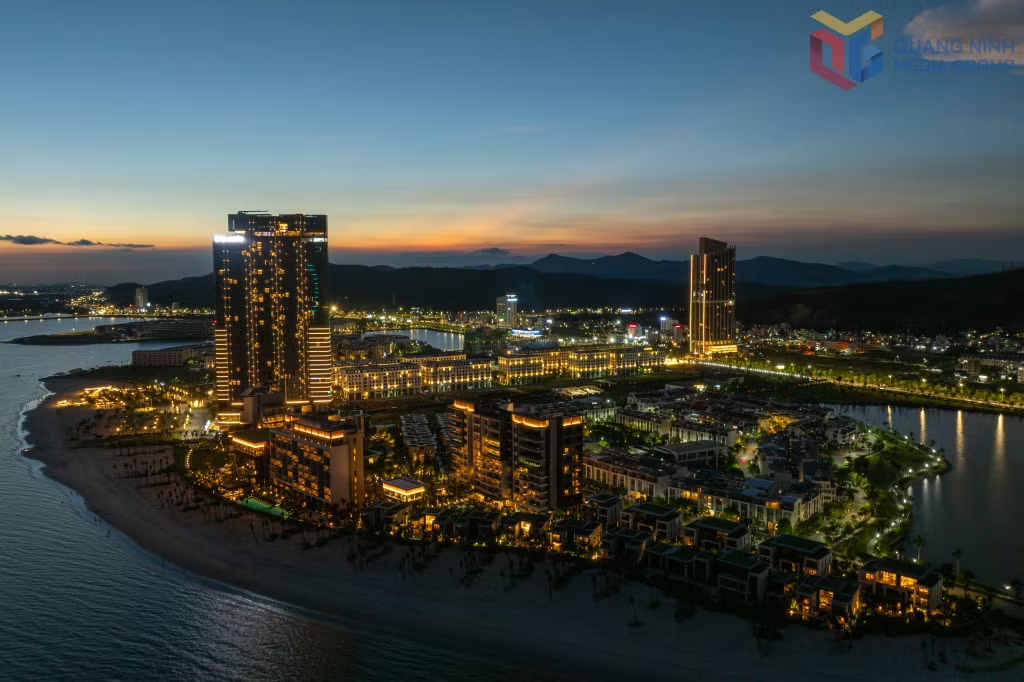
Notably, the master plan places science and technology, innovation, digital transformation, green transition and the marine economy at the core of the province's new growth model. High-tech industries, logistics, artificial intelligence, the data economy, renewable energy and the circular economy are identified as the province's future growth drivers.
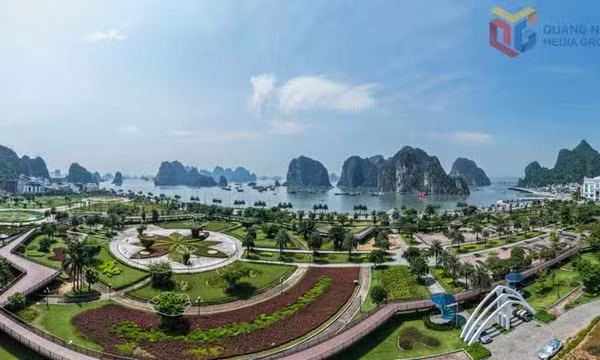
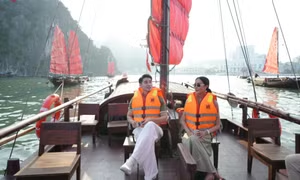
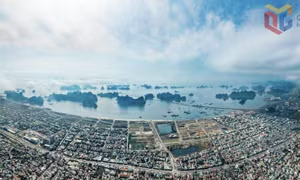
Quang Ninh boasts a unique strategic position, sharing both land and maritime borders with China while hosting Ha Long Bay, a UNESCO World Heritage Site. The province also has a deep-water port system, an international airport, coastal and border-gate economic zones, and one of Vietnam's most modern and integrated transport networks. It is the only locality in northern Vietnam that fully integrates road, sea and air transport, offering unparalleled regional and international connectivity.
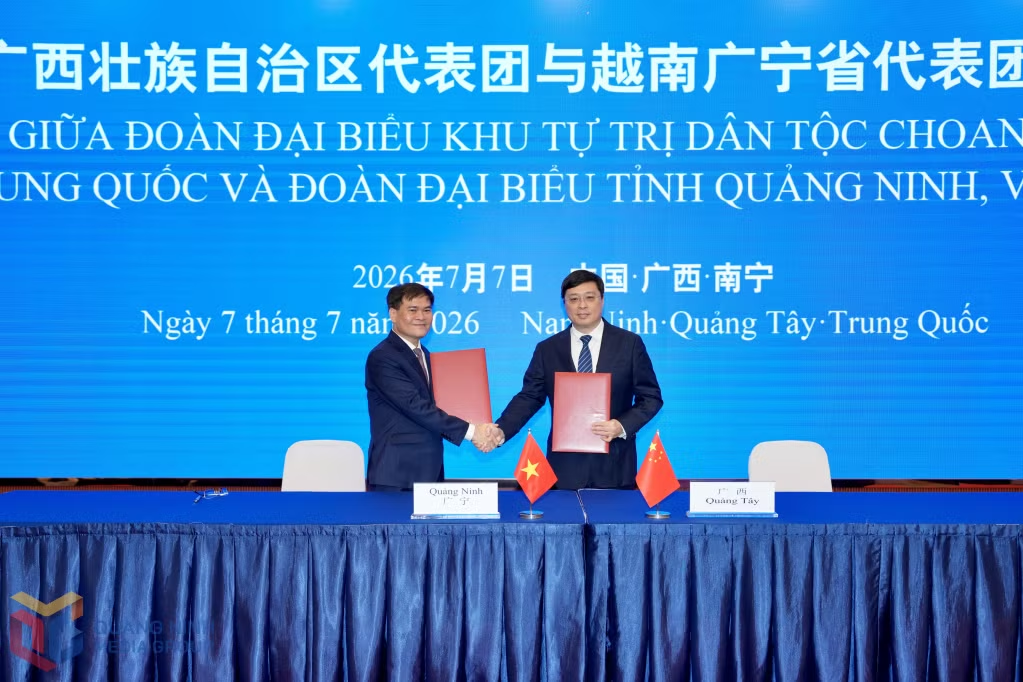
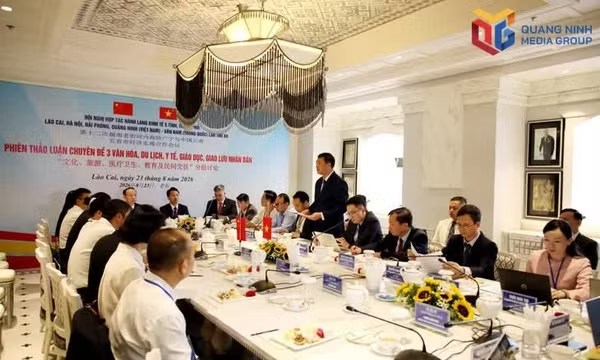
Consequently, Quang Ninh's development space is no longer confined to its provincial boundaries but is closely linked to the Lao Cai–Hanoi–Hai Phong–Quang Ninh and Nanning–Lang Son–Hanoi–Hai Phong–Quang Ninh economic corridors. It also serves as a gateway connecting the Red River Delta, the Northern Midlands and Mountainous Region, ASEAN region and the vast Chinese market. Ongoing investment in highways, deep-water seaports, Van Don International Airport, coastal and border-gate economic zones, alongside plans for the Hanoi–Quang Ninh high-speed railway and the Hai Phong–Ha Long–Mong Cai railway (connecting to Dongxing, China), will cement Quang Ninh's position as a premier logistics, transit and international trade hub in northern Vietnam.
Guided by a long-term vision, the revised Master Plan will serve as a guiding framework for the province to maximize its full potential, advantages, and enhance competitiveness, paving the way for Quang Ninh to become a modern marine economic hub, an international gateway, and a key growth engine for both the Red River Delta and northern region of Vietnam.