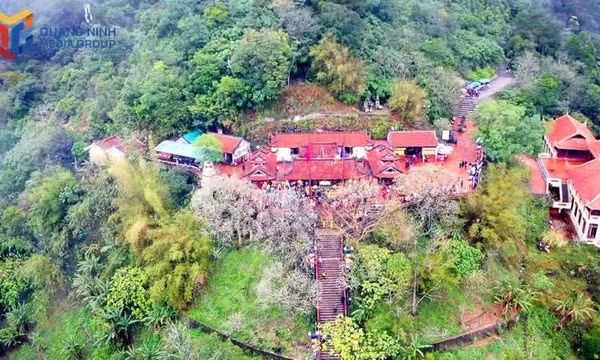
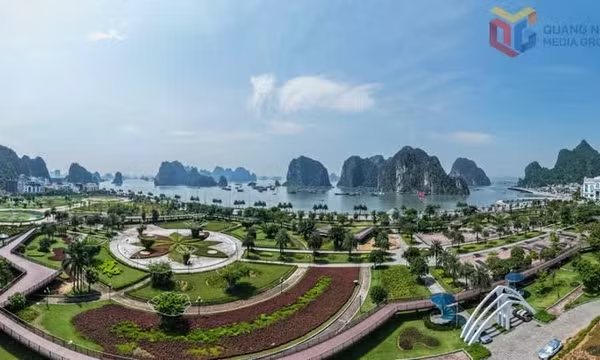
Since ancient times, Yen Tu Mountain has been regarded by Eastern geographers as one of the blessed lands of “Giao Chau”, a place where the sacred energy of mountains and rivers converges and where heaven and earth harmonise, allowing people to detach from worldly concerns and enter a realm of tranquillity and spiritual purity. More than seven centuries ago, this sacred mountain witnessed the birth of purely Vietnamese Truc Lam Zen sect, founded by King-Buddha Tran Nhan Tong.
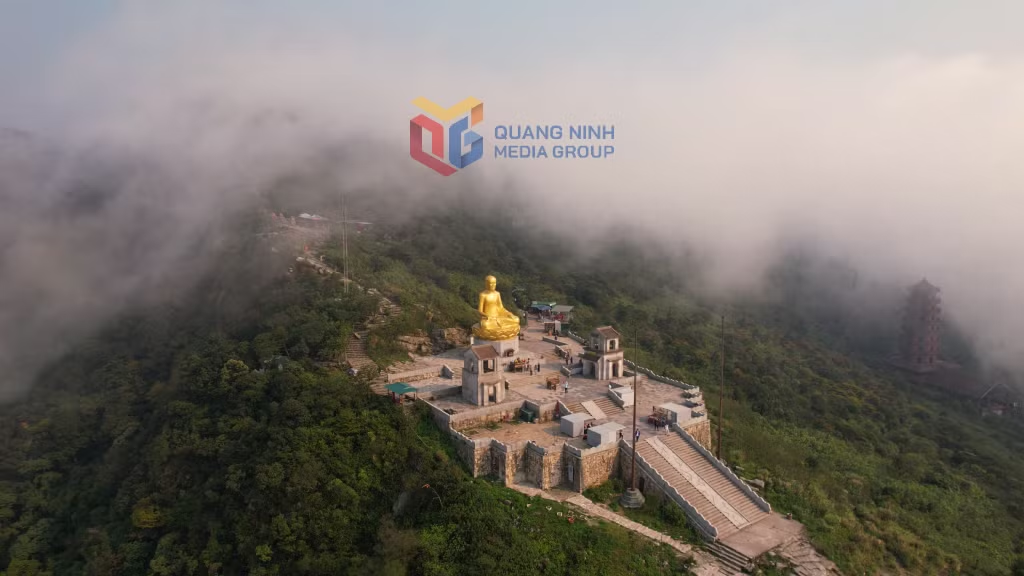
From an overall perspective, the distinctive values of the Yen Tu Complex of Historical Monuments and Scenic Landscapes can be outlined as follows:
Historical value
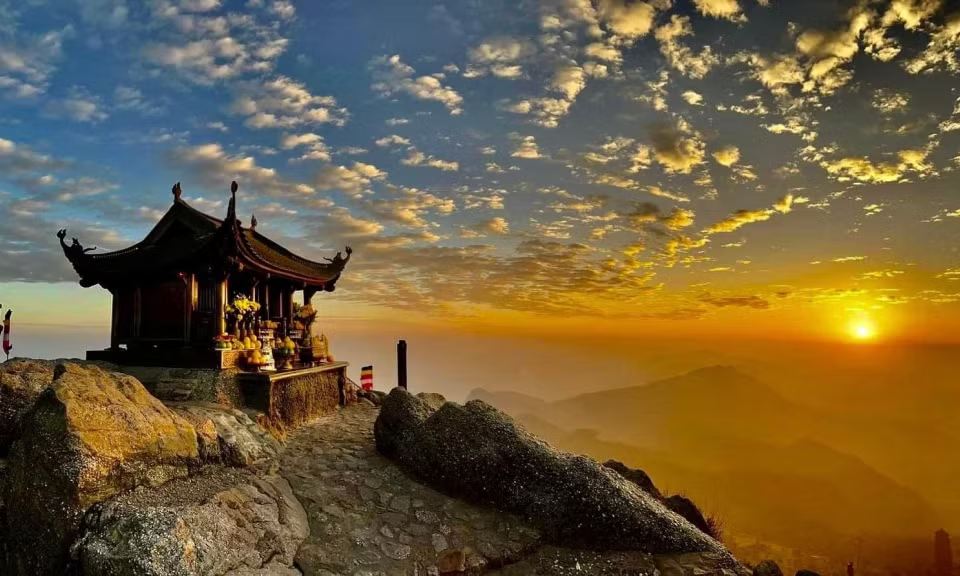
Yen Tu Complex of Historical Monuments and Scenic Landscapes is the place where the Vietnamese Truc Lam Zen Buddhist centre was formed and developed - a spiritual tradition created by Vietnamese people themselves. It is also one of the earliest and most significant religious heritage sites in Viet Nam. The system of pagodas, hermitages, towers, steles and statues at Yen Tu constitutes valuable material historical evidence closely associated with the life and spiritual practice of Dieu Ngu Giac Hoang Tran Nhan Tong and generations of Zen masters who practised here.
Notably, the stone steles at Yen Tu contain a large amount of historical information. Through the study of these inscriptions, scholars are able to reconstruct genealogies of monks who practised here and outline their biographies, thereby tracing the development of Truc Lam Buddhism through different historical periods.
Through the Ly, Tran, Le and Nguyen dynasties, the sacred mountain of Yen Tu became a gathering place for eminent Zen masters of great virtue and learning, including Patriarch Chan Nguyen, Nun Dam Thai, First Patriarch Tran Nhan Tong and Third Patriarch Huyen Quang.
Cultural value
The establishment and development of the Truc Lam Zen sect at Yen Tu left behind valuable Buddhist scriptures and writings that guided monks and followers in spiritual practice, repentance and the observance of the Ten Virtuous Deeds. These include works such as “Thien tam thiet chuy ngu luc”, “Dai Huong Hai an thi , tap”, “Tang gia Toai su”, “Thach that My Ngu”, “Truyen Dang Luc”, Thuong Si hanh trang”... These writings constitute precious intangible cultural heritage accompanying the the historical development of the Vietnamese nation.
In addition, the Truc Lam Zen tradition also left many significant tangible cultural works, including pagodas, hermitages and towers formed during the establishment and development of the Truc Lam ancestral centre at Yen Tu. These valuable tangible remains clearly reflect the development of Vietnamese architecture, fine arts and sculpture through the Ly, Tran, Le and Nguyen dynasties. Many of these artefacts are considered unique treasures within Vietnam’s cultural heritage.
Ideological value
In Vietnamese social history, from the 7th to the 18th centuries, Buddhism in Vietnam was largely led and disseminated through Zen traditions. Most Zen sects were introduced from China, such as the Vini-chi (Vinitaruci) sect, the Vo Ngon Thong (Wu Yantong) sect and the Thao Duong sect… The patriarchs who founded these sects were mainly from China or India. The Truc Lam Zen sect, however, stands out as the only Zen tradition founded by a Vietnamese patriarch. As a result, its teachings were closely connected with the aspirations, customs and cultural practices of the Vietnamese people, allowing its doctrines to be adapted to the spiritual needs of Vietnamese Buddhists..
Scenic value
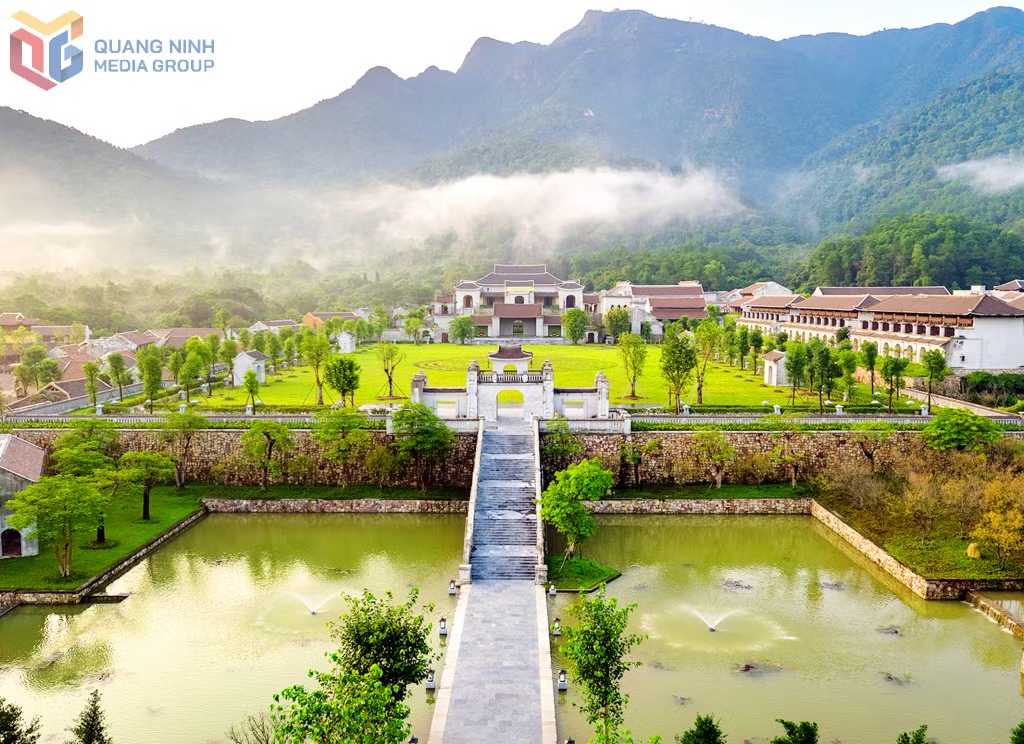
Yen Tu is regarded as one of sacred mountains of Vietnam. Alongside its majestic natural landscapes, it also preserves a rich ecosystem with many rare species of flora and fauna rarely found elsewhere, particularly valuable trees such as pine, bamboo and apricot, as well as a variety of medicinal plants.
The beauty of Yen Tu lies in the harmony between the grandeur of its mountains and the ancient, contemplative character of its pagodas and towers. Streams, clouds, forests, flowers and wildlife combine to create a poetic natural landscape enriched by diverse vegetation and valuable medicinal plants. For this reason, Yen Tu has long been considered one of the 72 blessed lands of Vietnam.
The Yen Tu Complex of Historical Monuments and Scenic Landscapes represents a harmonious combination of natural scenery and architectural and artistic works of national significance. Key sites include Bi Thuong Pagoda, Suoi Tam Pagoda, Cam Thuc Pagoda, Lan Pagoda, Giai Oan Pagoda, the Hon Ngoc tower garden with nine stone and brick towers, the To tower complex (also known as Hue Quang tower garden), Hoa Yen Pagoda, Mot Mai Pagoda, Bao Sai Pagoda, Van Tieu Pagoda and Dong Pagoda. In addition, several hermitages are located throughout the area, including Duoc Hermitage, Thung Hermitage, Thien Dinh Hermitage, Lo Ren Hermitage and Diem Hermitage.
By Bao Binh