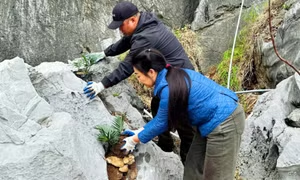
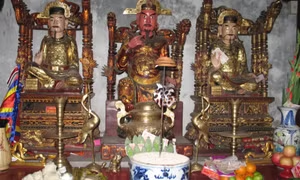
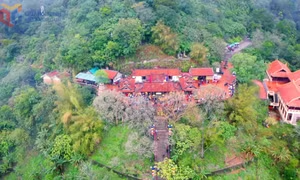
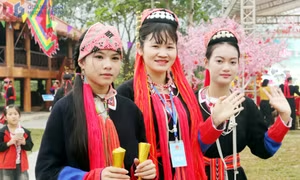
Quang Ninh is home to two UNESCO-recognized World Heritage sites including Ha Long Bay and Yen Tu. The journey to safeguard these two treasures stands as clear evidence of the province’s vision and sustained commitment to heritage conservation and value promotion.
In an interview with Quang Ninh Media Group, Head of Office and the UNESCO Representative to Viet Nam, Jonathan Baker, shared his perspectives on heritage management, opportunities for sustainable development, and ways in which Quang Ninh can connect the two heritage sites to create distinctive cultural and tourism experiences.
- Good morning, Mr. Jonathan Baker! How do you assess the contributions and close cooperation between Quang Ninh province and UNESCO in recent years, particularly in the nomination of the Yen Tu - Vinh Nghiem - Con Son, Kiep Bac Complex of Historical Relics and Scenic Landscapes for the inscription on the World Cultural Heritage list?
I believe that the role of the Ha Long Bay - Yen Tu World Heritage Management Board and Quang Ninh province has been truly significant. This was clearly demonstrated throughout the process of preparing the nomination dossier for the Yen Tu - Vinh Nghiem - Con Son, Kiep Bac Heritage Complex to be inscribed as a World Heritage site. Quang Ninh performed an excellent coordinating role, bringing together all relevant stakeholders, heritage-owning localities, experts, and the Viet Nam National Heritage Council.
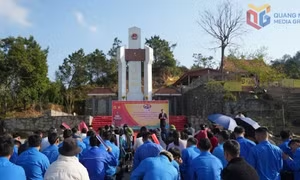
The journey toward the recognition of Yen Tu has been a long one, spanning many years and requiring tremendous efforts from the Government of Viet Nam as well as the localities that host the heritage sites, with Quang Ninh playing a central role. We are truly delighted to have been able to support Quang Ninh throughout the process of preparing this important nomination dossier. Thanks to sustained effort and strong commitment, Yen Tu - Vinh Nghiem - Con Son, Kiep Bac has recently become part of the global World Heritage network.
We remain ready to continue working closely with Quang Ninh province and the Ha Long Bay - Yen Tu World Heritage Management Board to ensure that this heritage site is preserved and its values are promoted in a sustainable manner.
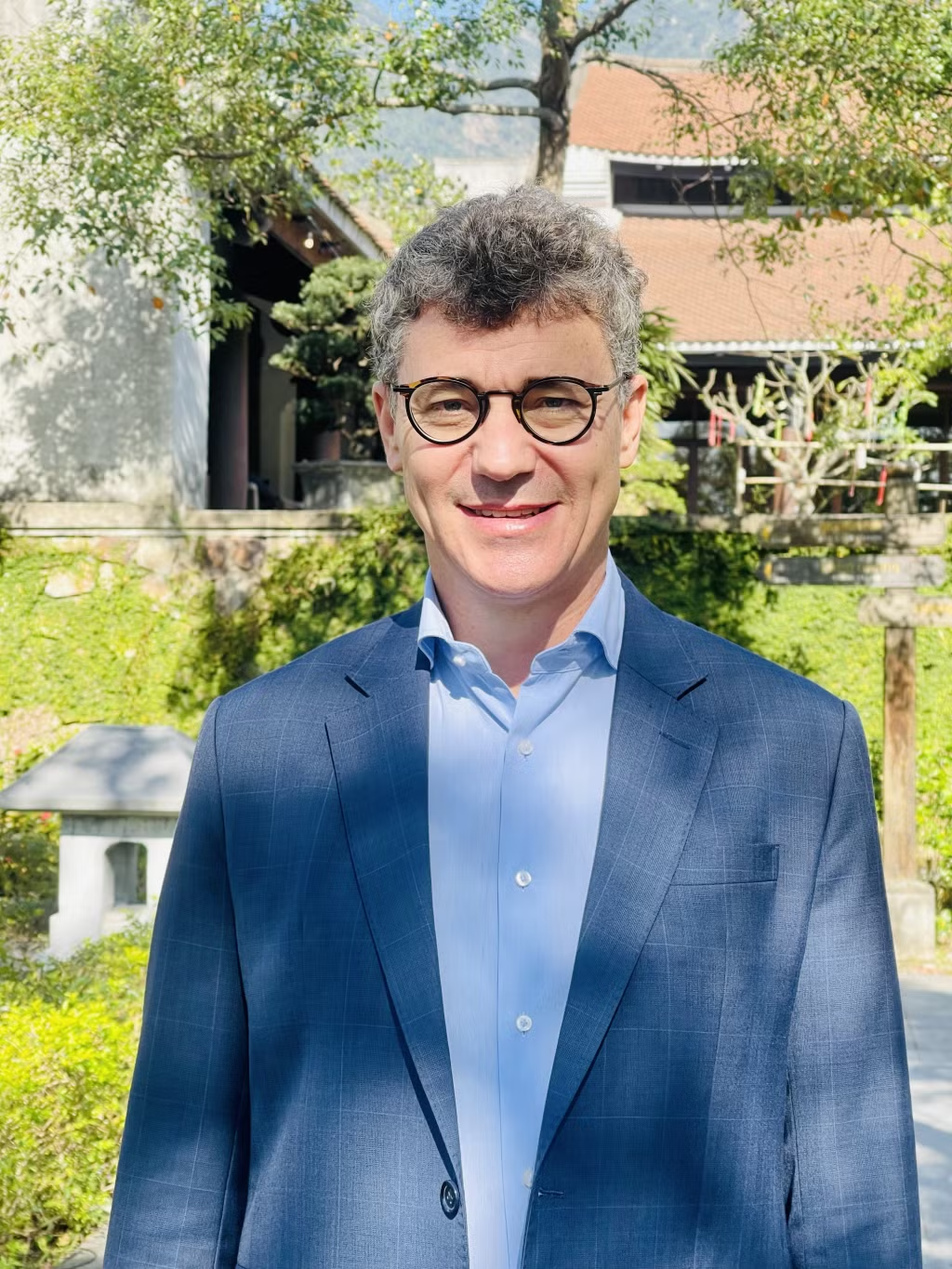
- How do you assess the efforts of the Ha Long Bay - Yen Tu World Heritage Management Board and Quang Ninh Province in protecting and managing World Heritage sites?
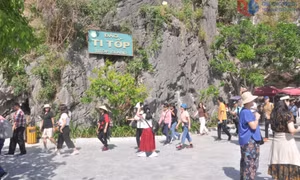
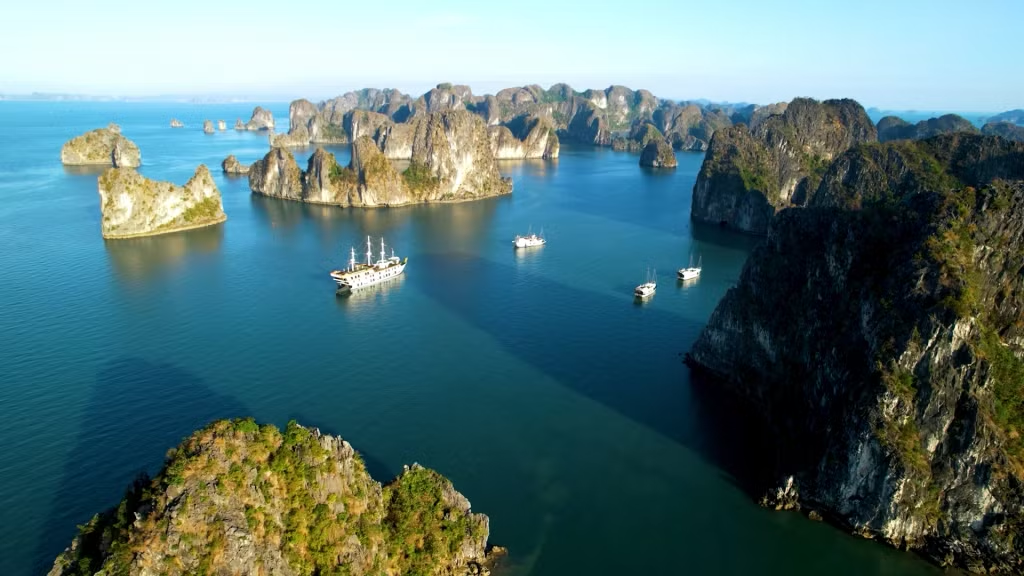
Ha Long Bay is one of the world’s most renowned natural heritage sites, and maintaining its outstanding values over the past 30 years has been a major responsibility that Quang Ninh has undertaken with great seriousness and commitment. Thanks to these sustained efforts, the heritage has been preserved and its values effectively promoted as we see today.
As Quang Ninh enters a new phase with the management of an additional World Cultural Heritage site, Yen Tu, the task will naturally become more complex. Managing both natural and cultural heritage requires different approaches, strategies, and management frameworks for each type. Therefore, certain planning and adjustments will be necessary.
UNESCO stands ready to accompany Quang Ninh in the management of these two World Heritage sites. The UNESCO Office in Ha Noi and the UNESCO Secretariat are always available to provide support. We firmly believe that, drawing on its valuable experience in managing Ha Long Bay, Quang Ninh will continue to manage Yen Tu effectively and ensure the sustainable preservation of both World Heritage treasures for future generations.
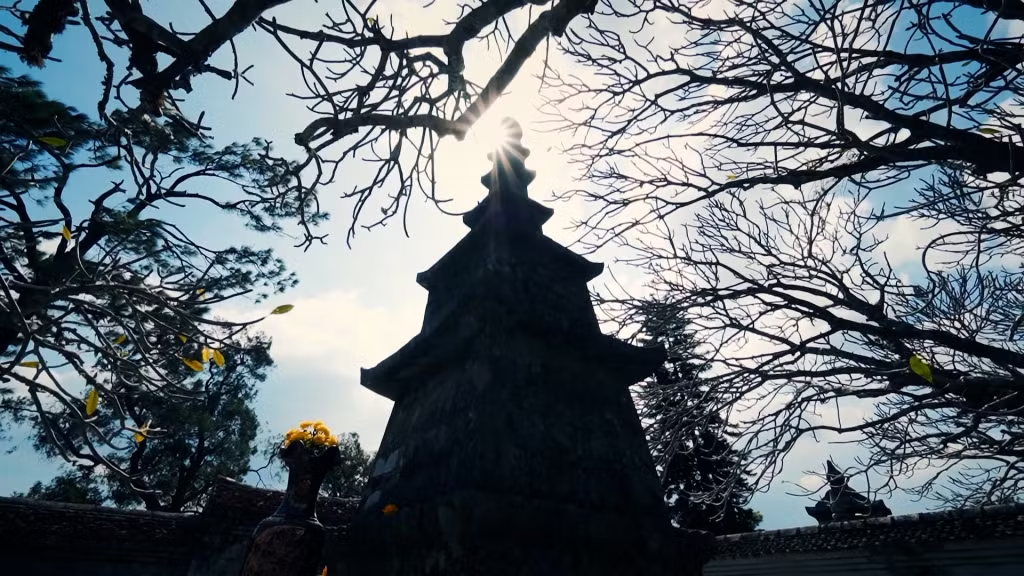
- As Head Office and the UNESCO Representative to Viet Nam, what key messages would you like to convey to Quang Ninh Province and the Ha Long Bay - Yen Tu World Heritage Management Board regarding heritage protection for sustainable development and local socio-economic growth?
We hope to continue our close cooperation with Quang Ninh province and the Ha Long Bay - Yen Tu World Heritage Management Board to ensure that both heritage sites are managed in a balanced and harmonious manner, serving local communities, contributing to economic development, and fostering pride among local residents.
The greatest challenge is always finding the right balance between conservation and economic development. This has been a critical issue at Ha Long Bay and will undoubtedly also arise at Yen Tu. However, we are confident that, together, we can identify the most sustainable solutions.
Heritage sites are not only the treasures of your nation but also part of humanity’s shared legacy, renowned for their extraordinary beauty and universal value. For this reason, Quang Ninh has every reason to be proud of being home to two World Heritage sites, a distinction that carries both honor and responsibility.
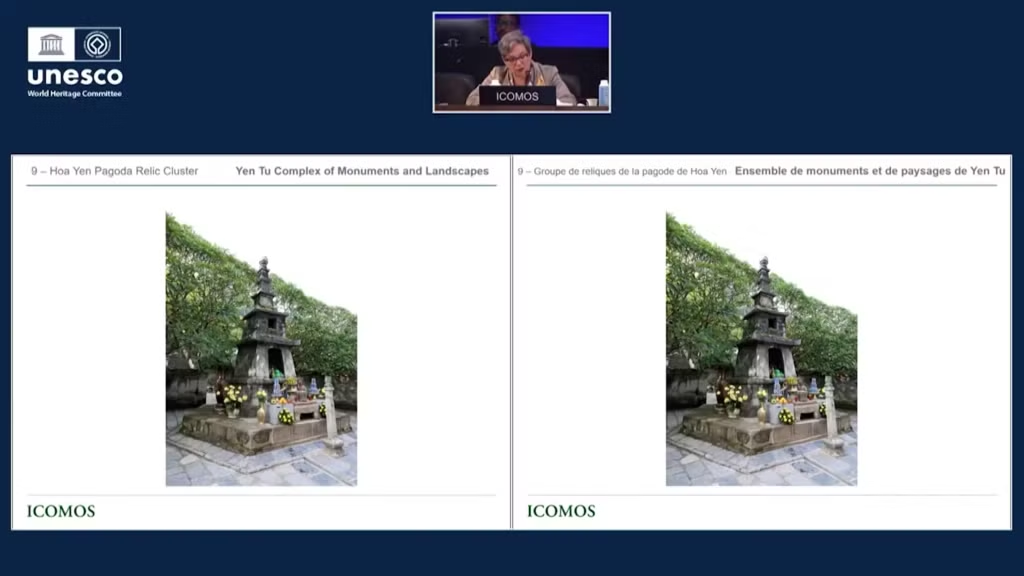
- You have visited Ha Long Bay and now Yen Tu. How would you describe your impressions of these two World Heritage sites?
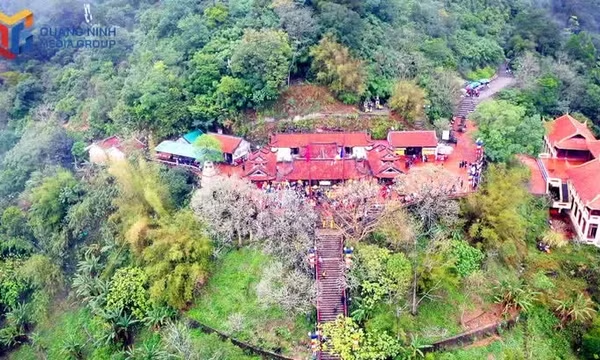
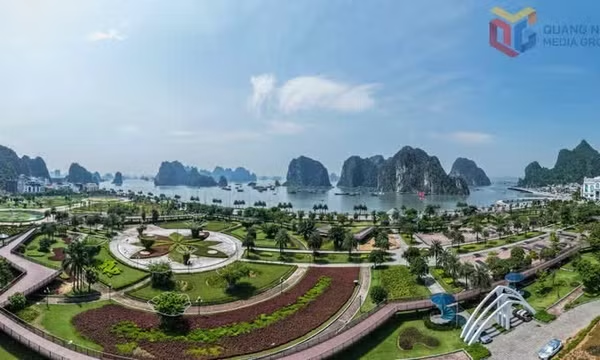
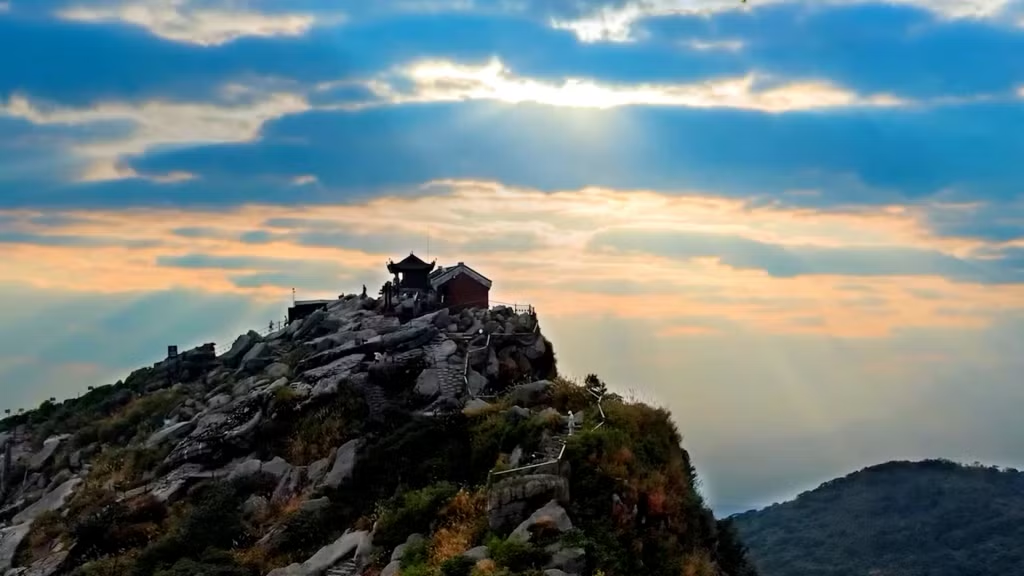
- I find both heritage sites to be truly breathtaking. Each possesses Outstanding Universal Values as defined by UNESCO’s criteria for World Heritage. Ha Long Bay is a rare masterpiece of nature, truly one of a kind in the world. Yen Tu, meanwhile, stands as a powerful cultural and spiritual symbol, imbued with remarkable historical depth.
Every visit brings me new and memorable experiences whether it is the awe-inspiring limestone islands rising from the sea at Ha Long Bay, or the profound sense of serenity when standing on the summit of Yen Tu, immersed in its long-standing Buddhist tradition. These moments vividly reflect the immense scale and significance of both heritage sites, not only for Viet Nam but for all humanity.
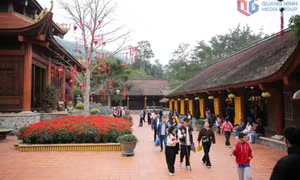
I can clearly sense how deeply meaningful Yen Tu is to the Vietnamese people. The reverence and respect that visitors show toward this sacred place make me feel truly honored to have the opportunity to visit. Each journey here leaves me with even stronger impressions and a deeper appreciation of its enduring spiritual and cultural value.
- It is quite a coincidence that both Ha Long Bay - Cat Ba Archipelago and Yen Tu - Vinh Nghiem - Con Son, Kiep Bac are inter-provincial heritage sites spanning several localities in Viet Nam. In your view, what should be done to strengthen inter-provincial coordination in managing these World Heritage sites?
- When a heritage complex is shared by multiple provinces, it inevitably brings both opportunities and challenges. What is essential is a clear and effective coordination mechanism among the localities to ensure consistency in management and conservation. This is particularly important for the Yen Tu - Vinh Nghiem - Con Son, Kiep Bac Heritage Complex, which extends across three localities: Quang Ninh, Hai Phong, and Bac Ninh.
Quang Ninh has already taken several important steps toward effective heritage management. Notably, in 2021, the province conducted a carrying capacity assessment for Ha Long Bay. I believe a similar approach should also be applied to Yen Tu. Admittedly, the fact that the heritage spans three provinces makes management and carrying capacity assessments more complex. This is why a strong coordination mechanism among the three localities is crucial to ensure the most effective management of the site.
At the same time, inter-provincial heritage sites also offer richness and diversity, adding depth to the cultural landscape value chain. With good coordination, this diversity can become a significant advantage. Naturally, managing natural heritage and cultural heritage involves different approaches, and it takes time to build experience and mutual understanding.
UNESCO stands ready to support Quang Ninh and the related localities in sharing experience, developing coordination models, and applying best practices drawn from World Heritage sites in Viet Nam and around the world.
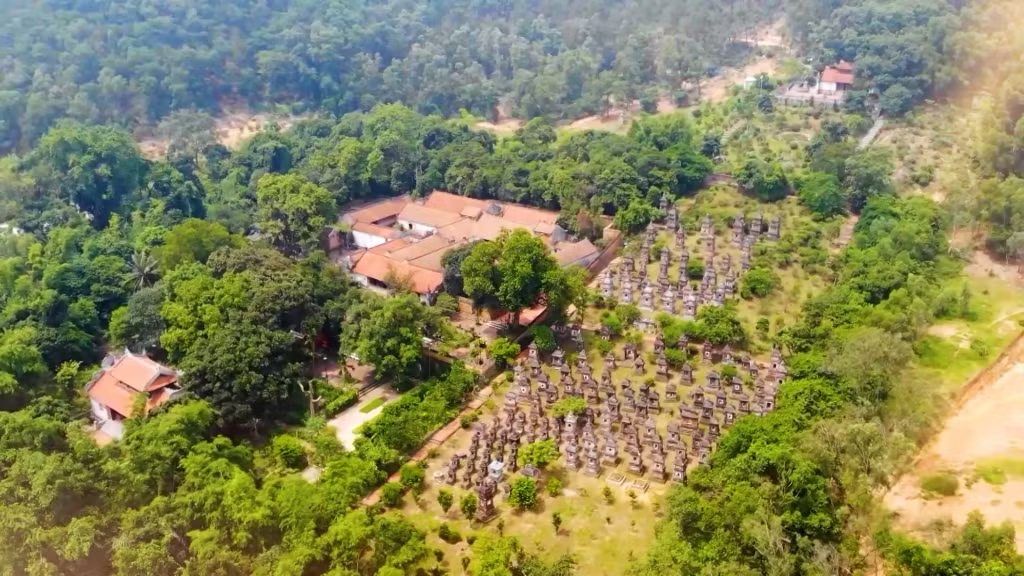
- Could you suggest ways for Quang Ninh to connect its two world heritage sites in order to create distinctive cultural and tourism experiences?
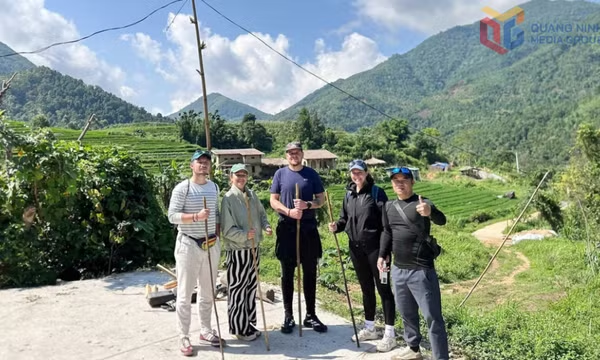
- Having both a natural heritage site and a cultural heritage site is a rare and valuable opportunity for any locality. With this unique advantage, Quang Ninh is well positioned to develop integrated tourism journeys, beginning with a cruise on Ha Long Bay to admire its spectacular natural scenery, and then continuing to Yen Tu to explore its rich history, cultural heritage, and profound spiritual traditions.
Visitors could also spend several days immersing themselves in the diverse experiences these destinations offer. For travelers to Viet Nam, the opportunity to enjoy such a seamless blend of nature and culture is truly exceptional. UNESCO looks forward to working closely with Quang Ninh to develop sustainable and appealing tourism routes that celebrate and enhance the outstanding values of both World Heritage sites.
- Thank you very much for the interview!