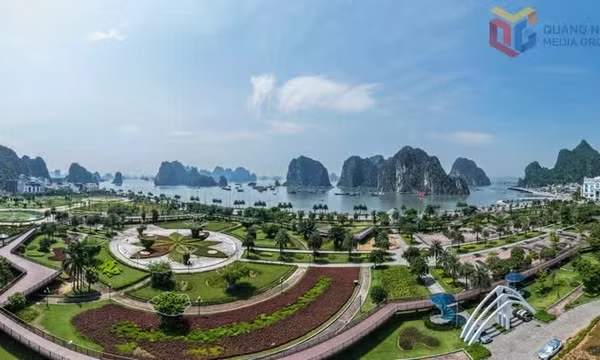
In midsummer, patches of blooming vegetation on the limestone islands soften the sombre grey tones of Ha Long Bay. Yet behind this seemingly natural beauty lies a long process of sourcing seeds, raising seedlings, transporting soil to the island and carefully tending every young plant.
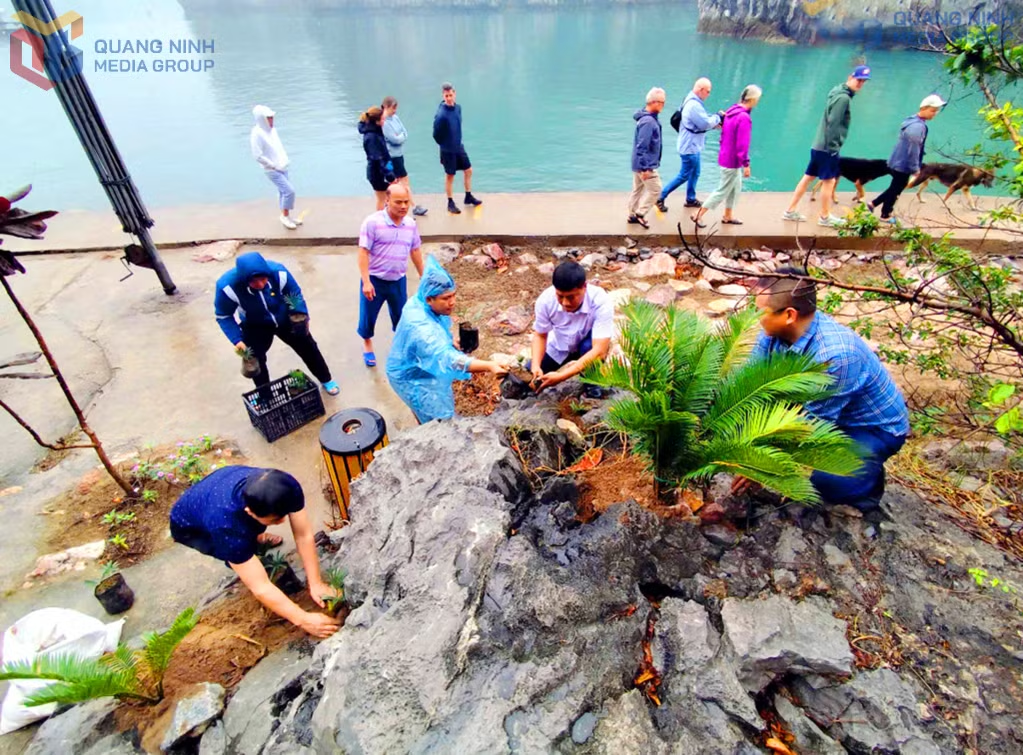
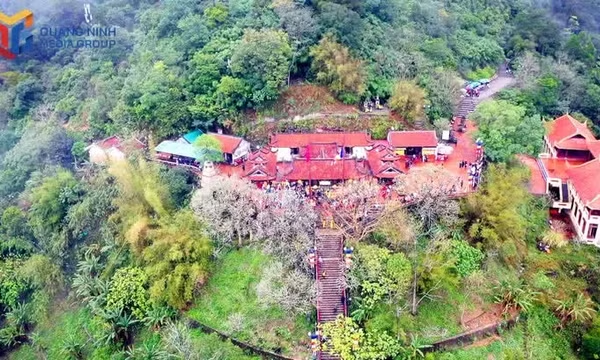
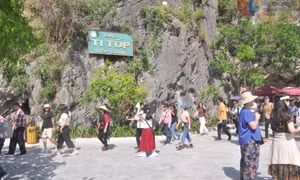
To better understand how this landscape has been created, we returned to Hon Co, an attraction on Route No. 4 in Ha Long Bay. The site has been likened to a “botanical garden” within the heritage area, where a diverse vegetation with many native and rare species is still preserved. Looking up from the foot of the island, the flowers do not form continuous carpets, but appear in small clusters clinging to the mountainside and growing through crevices in the limestone. After the flowering season, bong moc (Boniodendron parviflorum), a rare species listed in the Vietnam Red Data Book, has developed vivid red clusters of fruit. Phat du nui (Mountain dracaena or Lucky Plant) is showing its yellow blooms, while tra lam chieu (Hibiscus tiliaceus) bears pale yellow flowers. Interspersed among them are rieng Ha Long (Ha Long ginger) and trai ly (Fagraea fragrans)... creating natural patches of greenery across the island.
The vegetation includes many species bearing the Ha Long name, such as the co Ha Long (Ha Long palm), tue Ha Long (Ha Long cycad) and rieng Ha Long, as well as slipper orchids and numerous other rare species valuable for their genetic resources and landscape features. Each species is adapted to particular conditions. Some grow in rock crevices, while others live on mountain slopes and withstand thin soil layers and sea winds. Planting here is therefore not simply a matter of greening the landscape; the species must first be suited to the habitat. For this reason, Hon Co was selected in 2025 for development into a botanical garden featuring many endemic and rare species.
Creating this green space requires meticulous care. The plants grow on harsh limestone terrain with limited soil and water. Tue Ha Long and co Ha Long thrive only in rock crevices containing humus or a thin layer of weathered soil, with sufficient light, moderate moisture retention and good drainage. Young plants, in particular, require regular watering and care so that they can take root and gradually adapt to the environment.
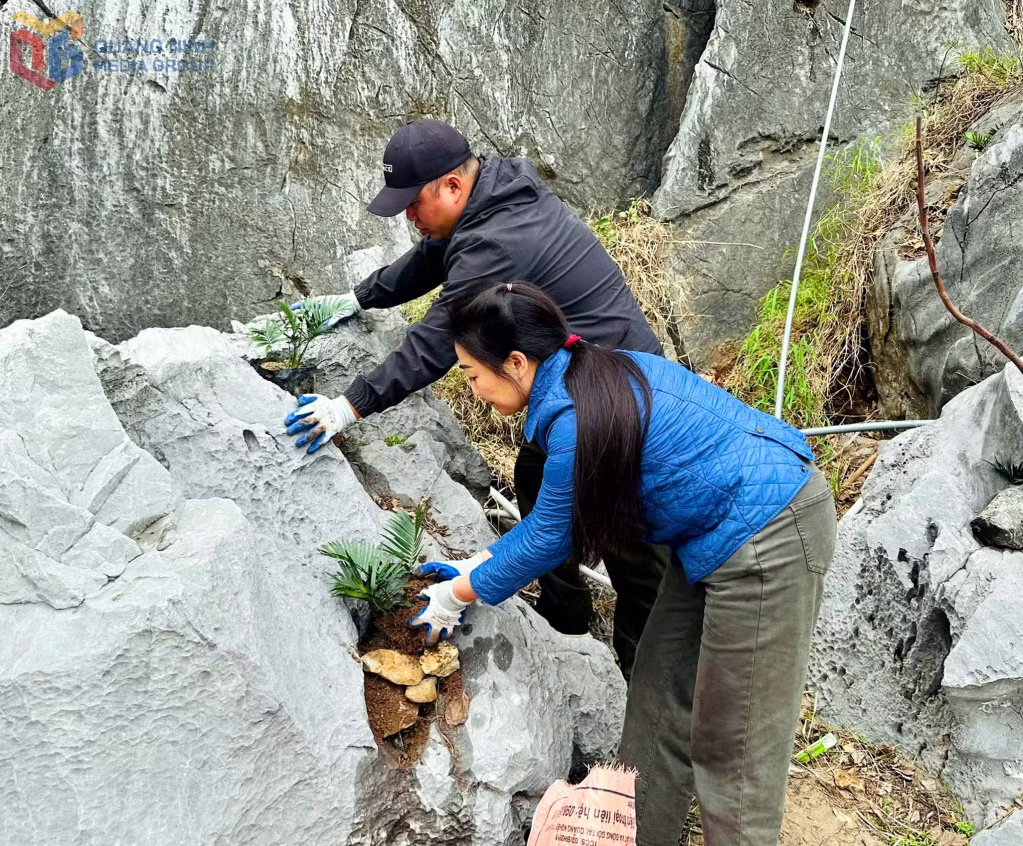
The greatest challenge, however, is not merely transporting plants up the steep limestone slopes. Species such as palms, cycads and bong moc cannot simply be placed in any available space. Growers must take account of canopy cover, wind direction, humidity, soil depth and terrain in order to recreate conditions as close as possible to their natural habitat. Planting is also generally carried out during light rain, which helps the soil retain moisture and limits water loss after the plants are relocated, thereby supporting the rooting process.
Looking at the healthy green canopies covering the rocky outcrops today, we recalled the planting trip in early 2025, when around 150 specimens of endemic and rare plants, including bong moc, phat du nui, rieng Ha Long and trai ly, were transported to the island. These included around 30 Ha Long cycads and palms.
The survival rate has now reached nearly 100%, reflecting the meticulous work involved throughout the planting and nurturing process. It can be said that today’s flowering season on Hon Co began with the the painstaking efforts of those who planted and cared for the vegetation.
A total of 830 vascular plant species have been recorded in Ha Long Bay, including 15 species endemic to Ha Long and 195 endangered and rare species. Within this system, in-situ conservation remains the core approach; propagation helps create a reserve supply of plants; and planting at tourist attractions contributes to restoring vegetation cover and introduce the bay's rich biodiversity to visitors.
By Ha Phong