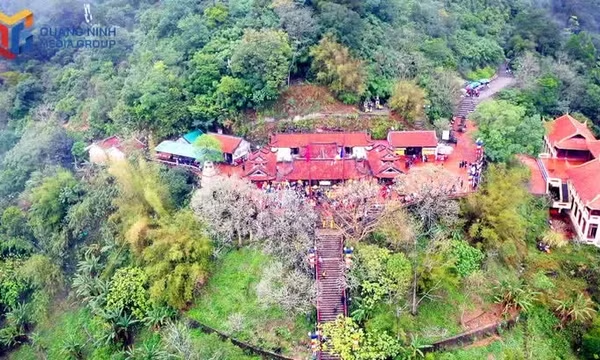
The Hue Quang Stupa Garden is located directly in front of Hoa Yen Pagoda, the main pagoda in the Yen Tu pagoda complex. It is the central stupa garden and contains the largest number of stupas within the Yen Tu Complex of Historical Monuments and Scenic Landscapes. Observing the diverse and rich system of stupas here, visitors can gain insight into the generations of Truc Lam Zen masters who once practised at this sacred site and later passed into eternity.
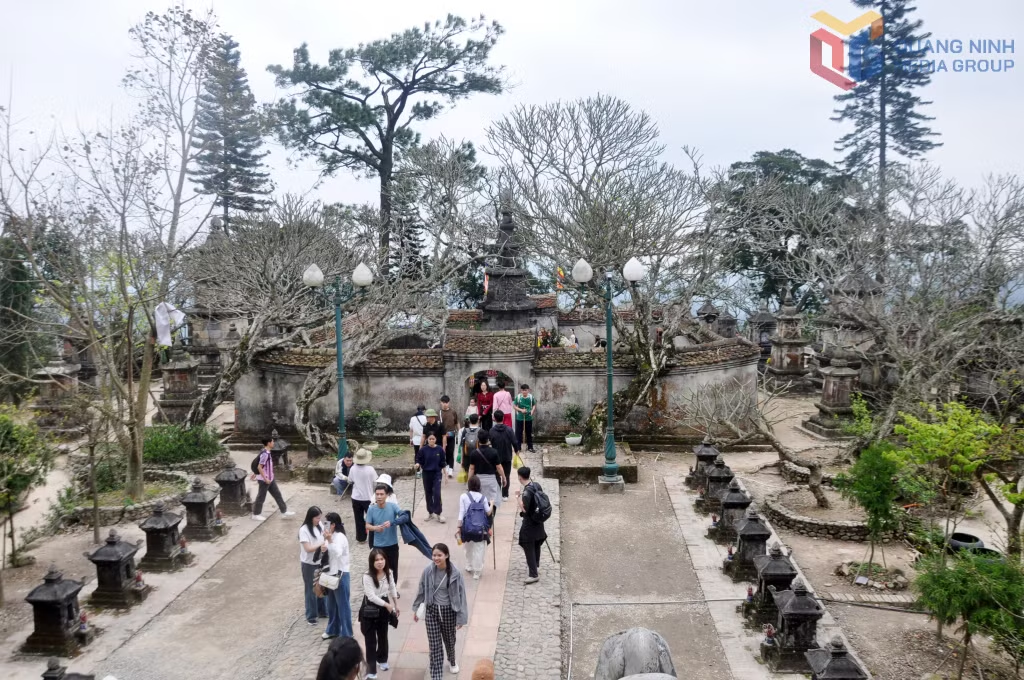
At the heart of the garden stands Hue Quang Stupa (the Patriarch Stupa), built in 1309 by King Tran Anh Tong after King-Buddha Tran Nhan Tong entered nirvana in 1308. It is one of the places where his relics are enshrined. Over time, the original Tran-era structure deteriorated and collapsed. The current stupa was reconstructed during the Le Trung Hung Dynasty on the original foundation and rises to six tiers. During reconstruction, several original components were reused, notably the roof corner elements, lotus pedestal and base, featuring lotus vine motifs and roof decorations with dragon imagery characteristic of the Tran period.
Inside the Patriarch Stupa is a statue of King-Buddha Tran Nhan Tong, regarded as a representative example of Dai Viet Buddhist sculpture from the 17th century. Recognised as a National Treasure in late 2020, the statue is carved from white stone in the lotus-seated posture.
The stupa is enclosed by a brick wall roofed with Tran-style curved tiles. It is the only structure in the garden surrounded by a wall, forming a relatively separate precinct. Historically, nearly one hundred stupas once stood around the Patriarch Stupa; today, about two-thirds remain. These include 40 stupas restored in 2002 behind Hue Quang Stupa, 13 brick stupas scattered across the garden, more than ten stone stupas, and several structures that have collapsed, leaving only traces.
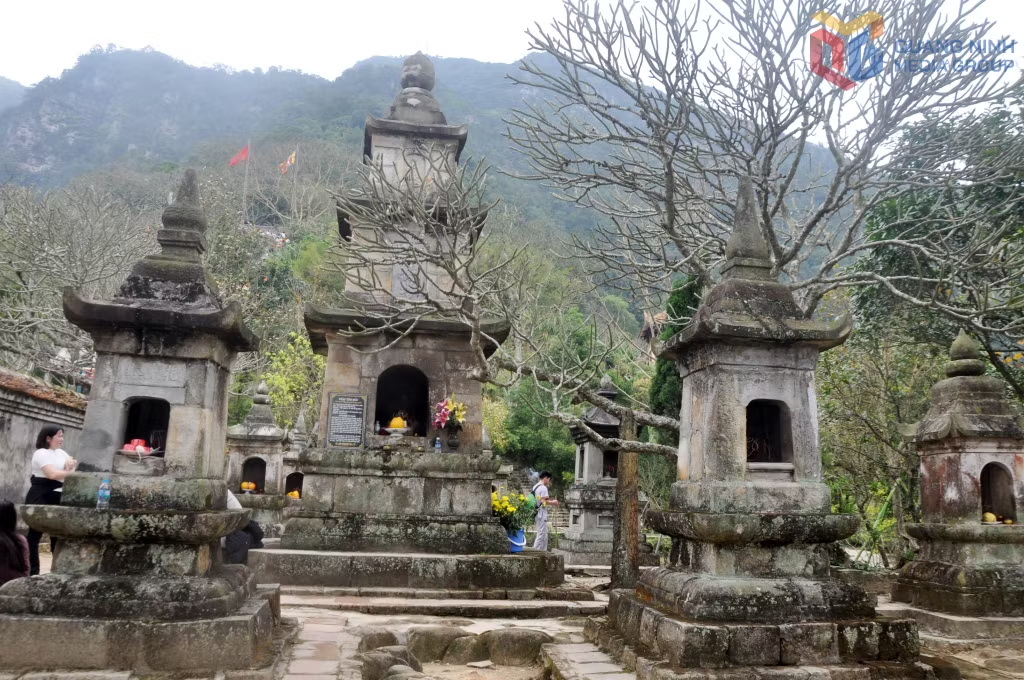
The stupa area of Hoa Yen Pagoda also extends from Hon Ngoc, a relatively large, flat mound near the Voi Quy slope, about 300 metres from the Patriarch Stupa. It is said that when King Tran Anh Tong made his annual visits to pay respects to his father Tran Nhan Tong annually, he would stop at this point before continuing on foot to the pagoda. The site features a cluster of four stone and brick stupas belonging to monks who practised here from the late Le Dynasty to the early Nguyen Dynasty, along with five unidentified graves. In addition, behind Hoa Yen Pagoda there are seven intact stupas and three ruined structures bearing artistic features of the Le and Nguyen periods.
These funerary stupas vary not only in materials but also in size, reflecting the status and rank of the monks commemorated. Historical records show that some stupas still preserve inscriptions detailing names, dates of birth and death, and brief accounts of the monastic careers of eminent Zen masters who practised at this Buddhist centre and were later enshrined here. Others, however, no longer retain clear information. Architecturally, the stupas in the Hue Quang Stupa Garden dated back the Tran, Le and Nguyen dynasties, with the majority, particularly those of Zen masters, built during the Le Trung Hung Dynasty (17th -18th centuries), a time of strong revival of the Truc Lam Zen sect.
By Ngoc Mai