Artificial intelligence (AI) is opening up new opportunities to improve public services, business operations and everyday life. However, making the most of these opportunities also requires the skills to use technology effectively, manage data safely and understand its limitations.
In Quang Ninh, local authorities, businesses and residents are gradually bringing AI into practical use. From weather warnings and public security to administrative services, these applications are helping improve efficiency and service quality. At the same time, the city is investing in digital skills, infrastructure and data security to support the responsible use of AI and long-term development.

Putting AI to practical use
Weather conditions are particularly important for marine tourism in Quang Ninh. Monitoring data shows that Ha Long Bay can experience 350 to 400 thunderstorms each year. Small storm clouds can form and develop quickly, creating risks for residents, tourists and vessels operating at sea.
In order to improve safety, the Quang Ninh People's Committee has worked with Vietnam's meteorological agency to develop a weather forecasting and warning system suited to local conditions. The system supports the management of tourism, transportation and fishing activities at sea.
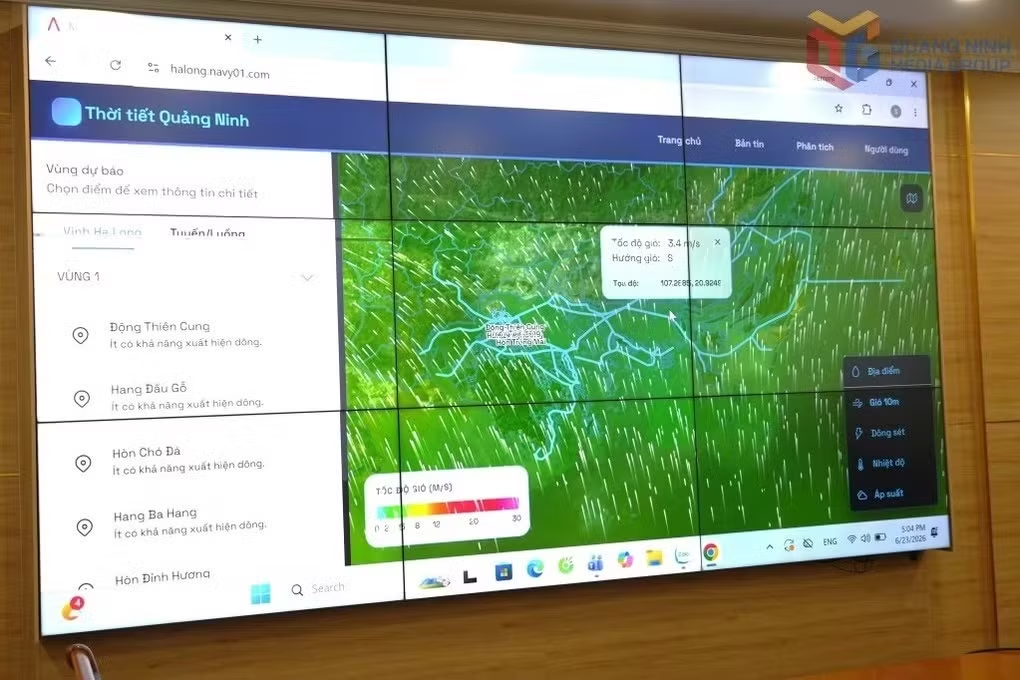
In July 2026, a thunderstorm and lightning warning system began operating for Ha Long Bay, Bai Tu Long Bay and other areas of Quang Ninh. Available at https://halong.navy01.com/, the system uses AI to analyze weather data and automatically issue early warnings.
These warnings help authorities manage vessel operations and give boat captains more information when deciding whether to adjust their routes during sudden weather changes.
Le Duc Hoai, a tourist boat captain on Ha Long Bay, said his crew regularly uses the system. "Before every trip, we check the thunderstorm and lightning warning website for the latest weather updates. This helps us plan our routes, choose suitable destinations and ensure passenger safety”, he said.
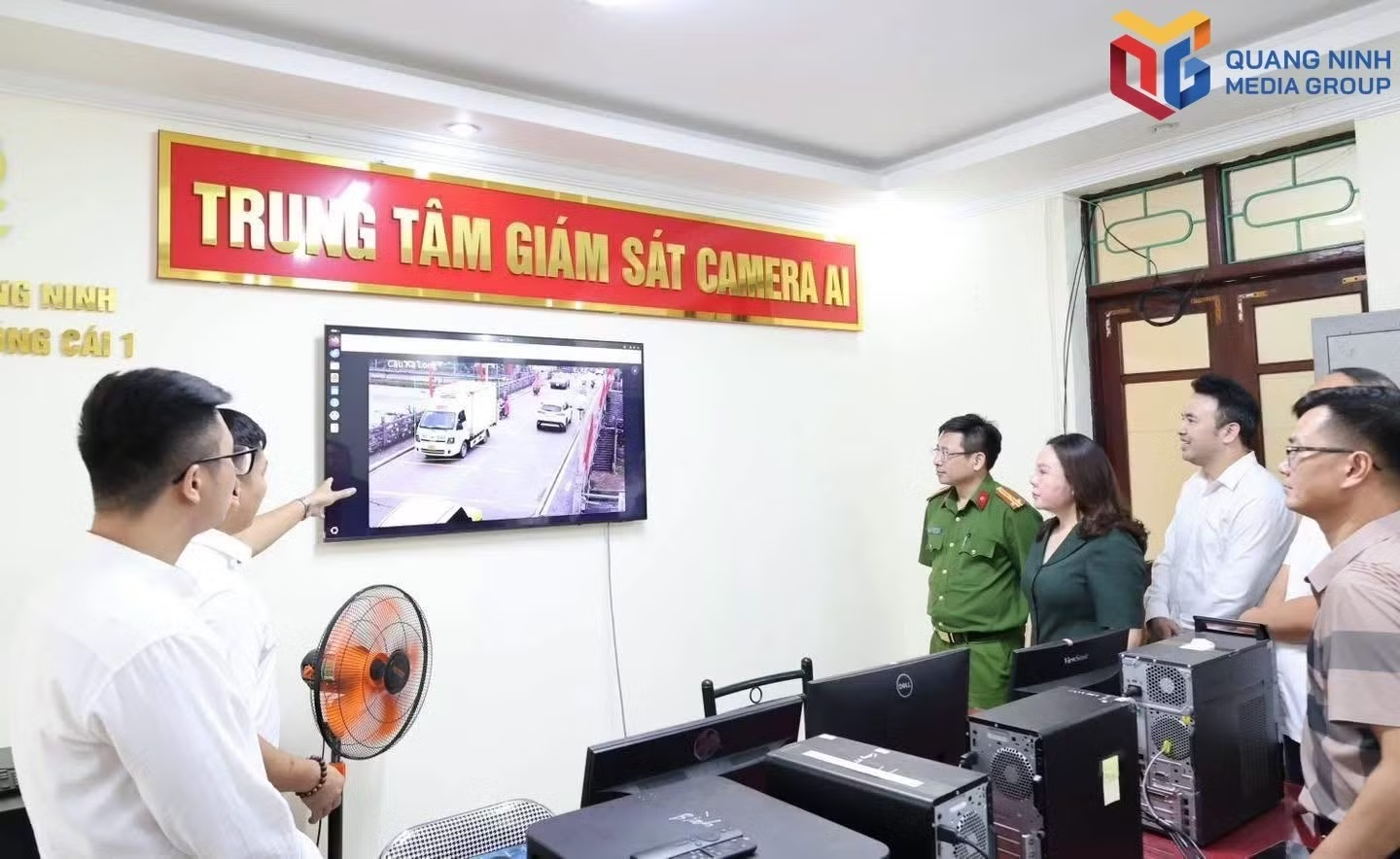
AI is also being used to improve public security and safety. In early September, police in Mong Cai 1 Ward introduced an AI-powered surveillance camera system at major roads and key locations. The cameras operate 24 hours a day and send live data to a command center at the ward police headquarters.
The system helps officers monitor public areas, identify unusual activity and respond more quickly to potential problems. It also supports crime prevention, traffic safety, urban management and fire prevention.
Another area where AI is bringing practical benefits is public administration. Since April 2026, Quang Ninh has introduced 10 AI-powered smart kiosks in Co To, Van Don, Hong Gai, Ha Lam, Quang Yen, Dong Trieu, Cua Ong and Tien Yen, as well as at the city's Public Administrative Service Center.
The kiosks allow residents to have copies of documents certified in about three to five minutes, compared with around 15 minutes previously.
Government offices are also using virtual assistants and chatbots to improve administrative services and support daily operations.
In health care, education and judicial administration, AI can help staff analyze data, review records, prepare forms and update information in specialized software systems.
Outside the public sector, businesses and residents are increasingly using AI to search for information, create content, promote products, serve customers, analyze data and improve production and business operations.
These applications show how AI can support local development when it is used to address specific needs and improve existing services.
Developing the skills to use AI responsibly
As AI becomes more widely used, the ability to understand and manage the technology is increasingly important.
AI can help people work faster and process information more efficiently, but its benefits depend on how it is used. Digital skills, data protection and human judgment remain essential.
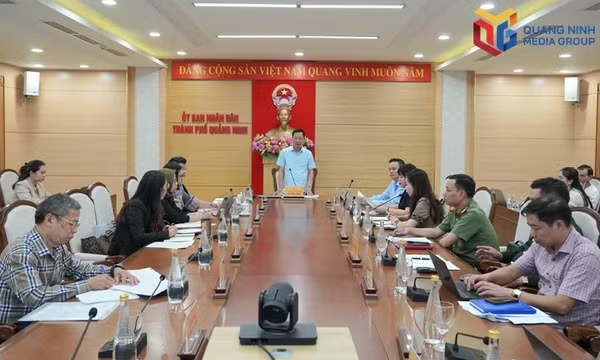
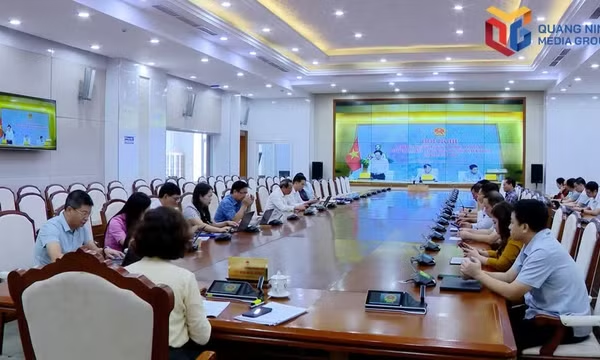
Quang Ninh has introduced a program called "Digital Literacy for All" to help residents and public employees develop the skills needed to use digital technology in their work and daily lives. Under the program, public officials and employees are encouraged to improve their digital skills, share knowledge with colleagues and introduce more effective working methods.
The city is also providing training to help its public workforce adapt to digital government services and new technologies.
Under Decision No. 398/QD-UBND, issued by the Quang Ninh People's Committee on Jan. 30, 2026, the city is organizing 122 training courses for more than 10,785 public officials and employees. Of these, 17 courses, involving more than 1,200 participants, focus on skills needed in the digital era.
The training programs cover digital transformation, data management and AI applications, with an emphasis on skills that employees can use in their daily work. The aim is to improve administrative efficiency, support better decision-making and provide more effective services to residents and businesses.
Making responsible AI use part of long-term development
Expanding AI applications is only one part of Quang Ninh's digital transformation efforts. Ensuring that the technology is used for the right purposes, that data is protected and that people have the skills to manage it is equally important.
The city is working to improve its digital infrastructure, develop and connect data systems, and strengthen information security.


These measures are intended to create a more reliable foundation for AI applications in government services, business operations and other areas of daily life.
Quang Ninh is also improving policies and encouraging cooperation among local authorities, businesses, and science and technology organizations.
Such cooperation can help organizations share knowledge, develop practical applications and make better use of available technology.
Continued training will be important as AI becomes more common. Public employees, businesses and residents need to understand both what AI can do and where human review is still necessary.
The goal is to move beyond simply adopting AI tools toward developing the skills and systems needed to use them effectively and responsibly.
By focusing on practical needs, digital skills, data security and cooperation, Quang Ninh aims to make AI a useful part of its economic and social development while supporting a more sustainable future.