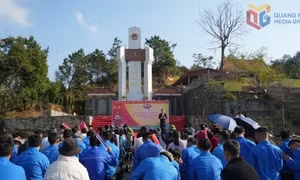
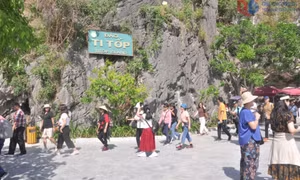
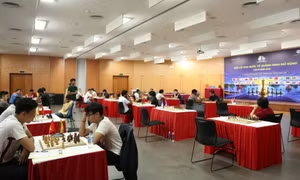
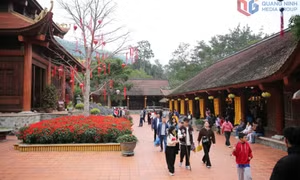
On 12 July 2025, at its 47th session, the World Heritage Committee of UNESCO officially inscribed the Yen Tu - Vinh Nghiem - Con Son Kiep Bac Complex of Monuments and Landscapes on the World Cultural Heritage List. Local authorities and relevant institutions are now implementing coordinated measures to ensure the heritage continues to endure and to embody Vietnam’s humanistic ideals and cultural identity in the contemporary world.
Outstanding universal values
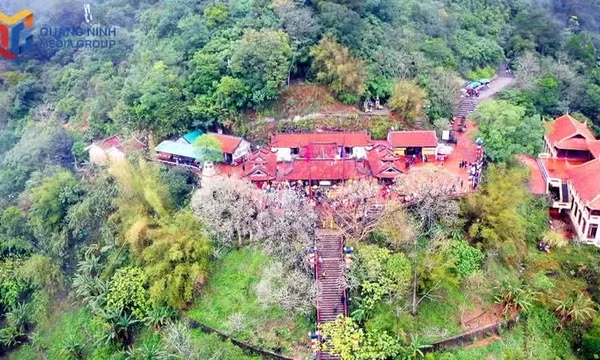
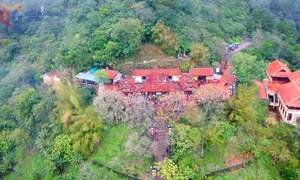
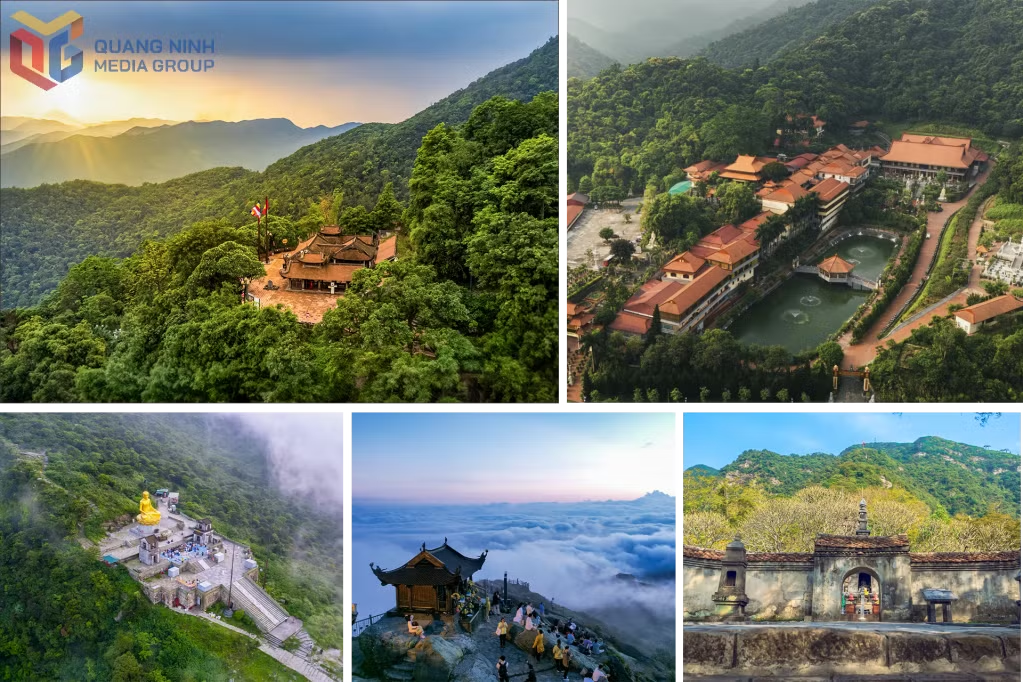
The World Cultural Heritage Site of the Yen Tu - Vinh Nghiem - Con Son, Kiep Bac Complex of Monuments and Landscapes comprises 12 component sites located across three localities: Quang Ninh, Bac Ninh, and Hai Phong. The property covers a core zone of 525.75 hectares and a buffer zone of 4,380.19 hectares. These sites are closely interconnected within a coherent heritage ensemble that narrates the historical development of Truc Lam Buddhism, a distinctly Vietnamese Zen tradition founded in the 13th century by the Trần dynasty kings, most notably King-Monk Tran Nhan Tong. Together, they represent a unique and enduring contribution to the world’s cultural and spiritual heritage.
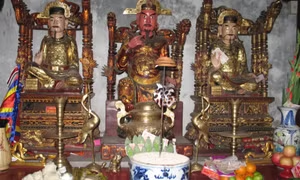
Through a well-preserved system of pagodas, hermitages, pilgrimage routes, stone steles, woodblocks, and sacred sites extending from Yen Tu to Vinh Nghiem and Con Son-Kiep Bac, this serial property comprehensively reflects the historical evolution of Truc Lam Buddhism from its foundation and institutionalization within the Vietnamese state, to its periods of revival and continuous transmission over the centuries.
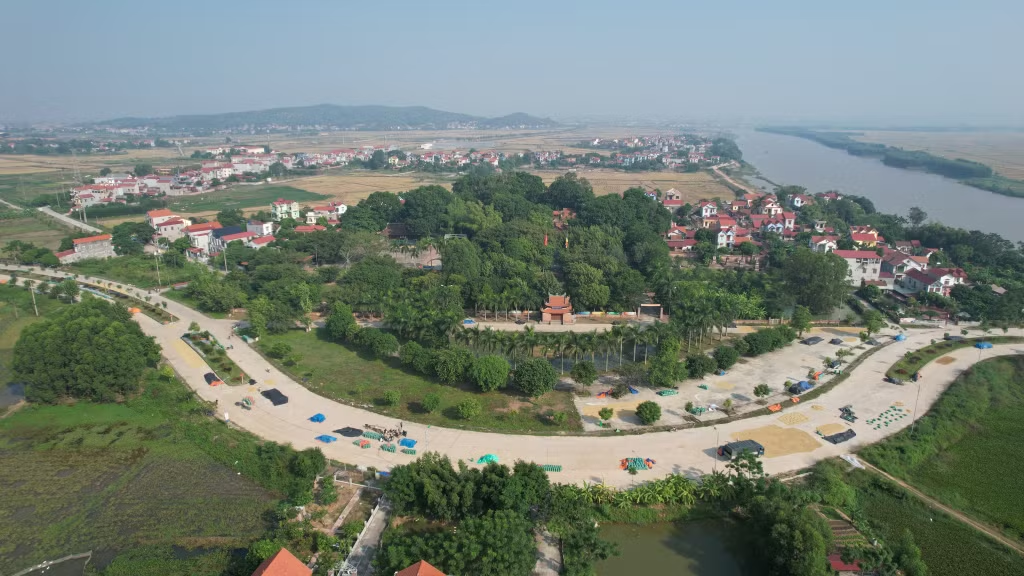
The Yen Tu - Vinh Nghiem - Con Son, Kiep Bac complex has been inscribed on the World Heritage List by UNESCO under criteria (iii) and (vi), as outstanding testimony to the harmonious integration of state authority, religious philosophy, and community participation in the formation of Vietnamese national identity. Its sacred landscape was shaped through a sustained and intimate interaction between human beings and nature, grounded in an ethical system that promotes peace, self-cultivation, tolerance, compassion, and harmony between humanity and the natural world. These values closely align with UNESCO’s core mission of advancing shared human values of peace, reconciliation, harmony, and sustainable coexistence, particularly meaningful in the context of today’s global challenges.
This inscription not only affirms the international recognition of the site’s outstanding universal values, but also acknowledges the profound humanistic ideals embodied in Truc Lam Buddhism as established by King-Monk Tran Nhan Tong, as well as the sustained efforts of local authorities in safeguarding and promoting the heritage. The enhanced international standing of the property contributes to enriching Vietnam’s cultural identity while providing a strong foundation for long-term conservation and sustainable development.
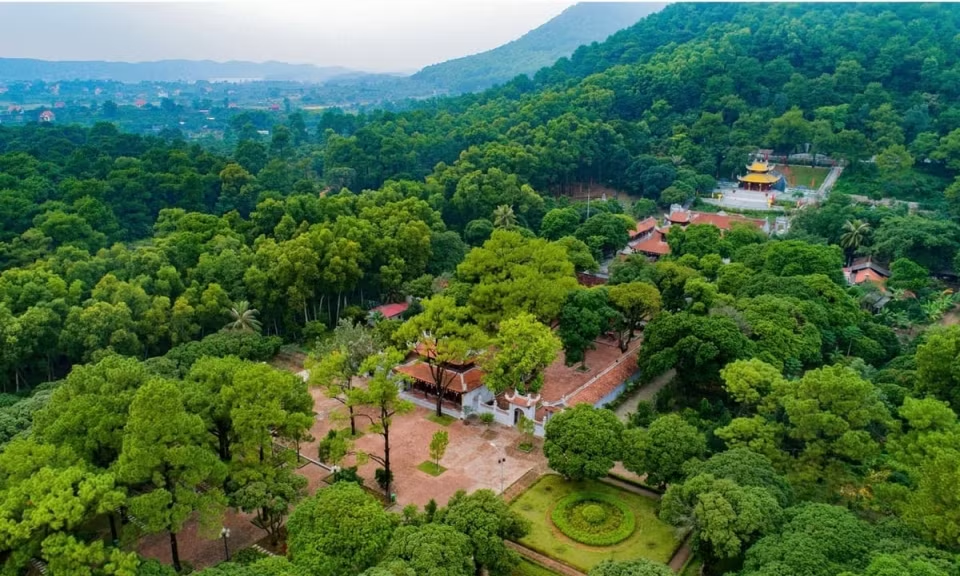
Head of the UNESCO Office in Vietnam, Jonathan Wallace Baker, has emphasized that the global significance of the Yen Tu - Vinh Nghiem - Con Son, Kiep Bac complex lies in its profound representation of Vietnam’s spiritual life and national identity. As the birthplace of Truc Lam Buddhism, the site exemplifies how national identity was shaped through the integration of Buddhist philosophy, spiritual values, and the historical process of state formation. For this reason, UNESCO considers the property to be truly exceptional, bearing outstanding universal values not only for Vietnam, but for humanity as a whole.
Strengthening connectivity in heritage protection and value promotion
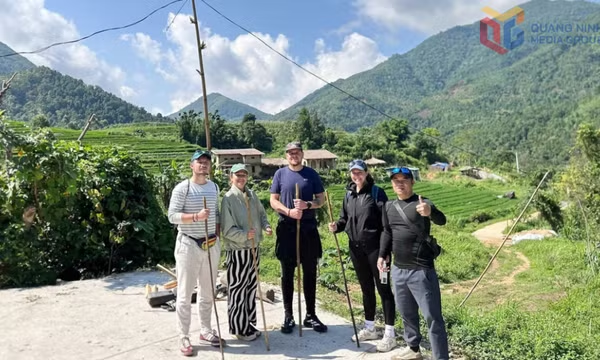
11 years after the recognition of the Trang An Landscape Complex, Vietnam has welcomed its ninth World Heritage property: the Yen Tu - Vinh Nghiem - Con Son, Kiep Bac Complex. This milestone presents a unique opportunity for the heritage to be widely known, appreciated, honored, and safeguarded by the global community. Inscription on the World Heritage List by UNESCO not only elevates the international profile of the site, but also opens significant prospects for the development of cultural and spiritual tourism. At the same time, it places new demands on inter-provincial connectivity and coordinated heritage management to ensure effective conservation, sustainable development, and visitor engagement commensurate with the site’s outstanding value and status.
Even prior to its World Heritage inscription, local authorities had undertaken considerable efforts to conserve and promote the heritage in close connection with tourism development. In Quang Ninh province in particular, all three heritage areas have benefited from comprehensive master plans for conservation and value enhancement for more than a decade.
Tung Lam Development Joint Stock Company is an early pioneer of the “heritage enterprise” model with over 20 years of engagement in Yen Tu-shared that in the coming period. Deputy General Director Le Trong Thanh revealed that the company would continue to develop distinctive cultural tourism products closely associated with Yen Tu’s natural landscape and spiritual legacy, especially the life and teachings of King-Monk Tran Nhan Tong. These included the Buddhist Museum, the Tran Nhan Tong Museum, and a cultural village space at the foot of Yen Tu Mountain.
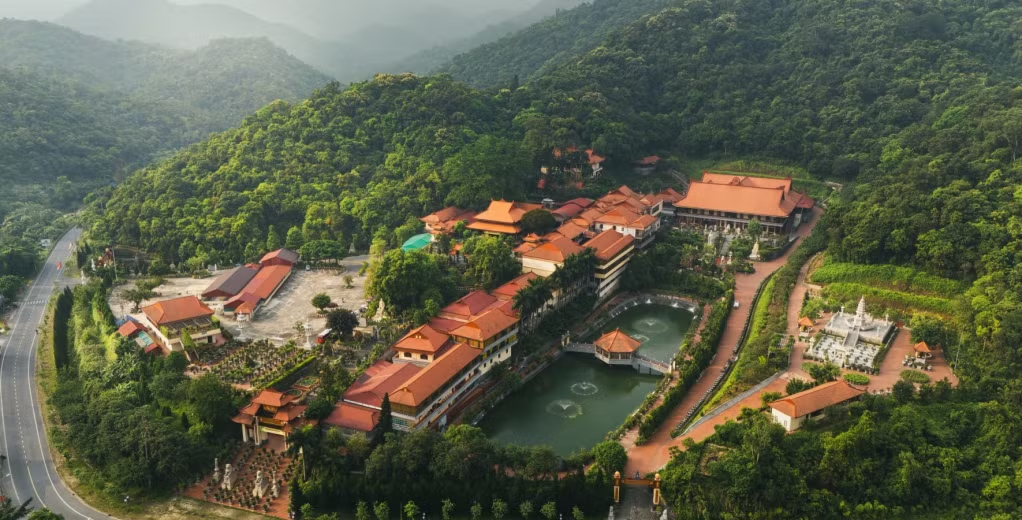
“Digital technologies will be applied along pilgrimage routes to enhance visitor experiences, while international cooperation will be strengthened to develop market-specific tourism products for Taiwan, the Republic of Korea, China, and other markets, thereby expanding the global reach of the heritage”, he said.
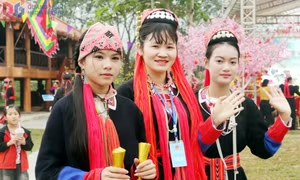
According to plans by the Ha Long Bay - Yen Tu World Heritage Management Board, experiential meditation activities within the Yen Tu core zone will continue to be developed in greater depth, building on Yen Tu’s distinctive cultural and spiritual strengths. Digital storytelling technologies will also be increasingly applied, enabling visitors to “see, hear, and touch” history rather than merely read information panels. Yen Tu will continue to host a series of four-season cultural events, including spring festivals, light festivals, vegetarian cuisine festivals, Zen music festivals, and traditional arts performances.
In Bac Ninh province, tourism is identified as a key economic sector, with the UNESCO-recognized Yen Tu - Vinh Nghiem - Con Son, Kiep Bac heritage space positioned as a central pillar. The province plans to cooperate in developing inter-provincial pilgrimage routes, such as heritage pilgrimage tours connecting Luy Lau, Dau Pagoda, Tay Yen Tu, and Vinh Nghiem Pagoda; Yen Tu - Con Son, Kiep Bac routes; and cultural-historical tours combining Quan Ho folk singing, traditional craft villages, archaeological sites, Buddhist monuments, and scenic landscapes.
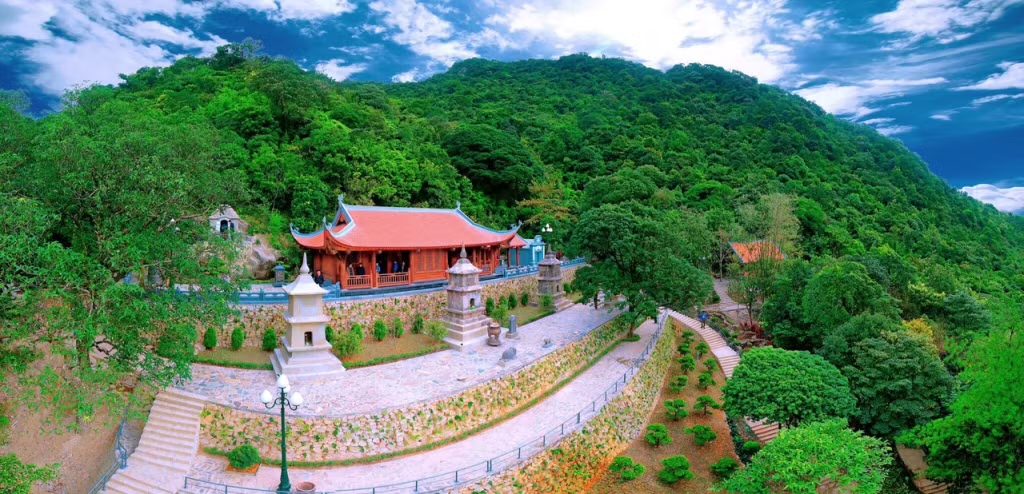
Hai Phong city has also taken proactive steps, beginning with elevating the scale and significance of the 2025 Con Son - Kiep Bac Autumn Festival, aimed at promoting the UNESCO-inscribed heritage while affirming the area’s position as a distinctive cultural and tourism destination at both regional and national levels. To enhance connectivity among the five heritage sites within its jurisdiction, Hai Phong is developing new thematic tourism products such as “One journey - Five destinations,” “Following the Footsteps of the Three Patriarchs of Truc Lam Zen,” and “Discovering the World Heritage of Con Son, Kiep Bac”.
Fully aware that honor and pride must go hand in hand with responsibility, the concerned localities continue to strengthen coordination and integration in order to shape a unified heritage space. Through synchronized measures for conservation and value enhancement, the Yen Tu - Vinh Nghiem - Con Son, Kiep Bac Complex is being safeguarded in accordance with the spirit of the World Heritage Convention and the principles of sustainable development, thereby contributing meaningfully to the global promotion of Vietnam’s cultural heritage, natural beauty, and human values.