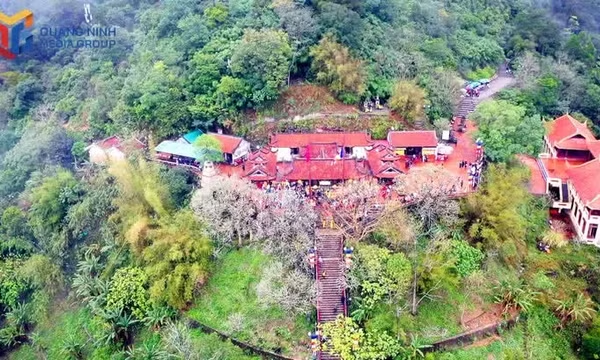
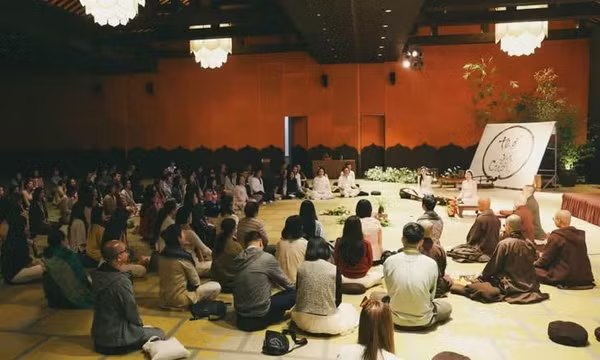
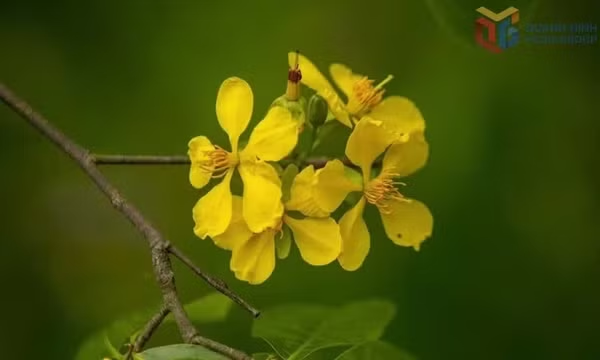
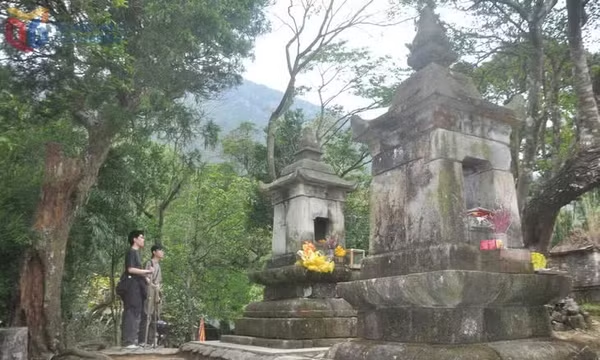
Historical records describe Yen Tu as the “fourth blessed land of Giao Chau”, the cradle of Vietnamese Buddhism and the birthplace of a Zen school bearing a distinct Vietnamese identity – the Truc Lam Yen Tu Zen school. It is also closely associated with the extraordinary life and career of King-Budda Tran Nhan Tong, who founded and became the First Patriarch of the Truc Lam Zen school. In folk belief, Yen Tu is a sacred place that everyone aspires to make a pilgrimage throughout their lives, as expressed in the saying: “A hundred years of cultivating virtue and practising Buddhism are incomplete without a pilgrimage to Yen Tu.”

Values that transcend time
Formed in the 13th century, Yen Tu has retained and increasingly promoted its cultural values over nearly eight centuries. July 12, 2025 marked a new milestone when the Yen Tu - Vinh Nghiem - Con Son, Kiep Bac Complex of Monuments and Landscapes was inscribed by UNESCO as a World Cultural Heritage Site. Within the complex, five major sites in Yen Tu - Hoa Yen Pagoda, Ngoa Van Hermitage, Thai Mieu, the Bach Dang stake field and Lan Pagoda - are regarded as core components of the heritage property.
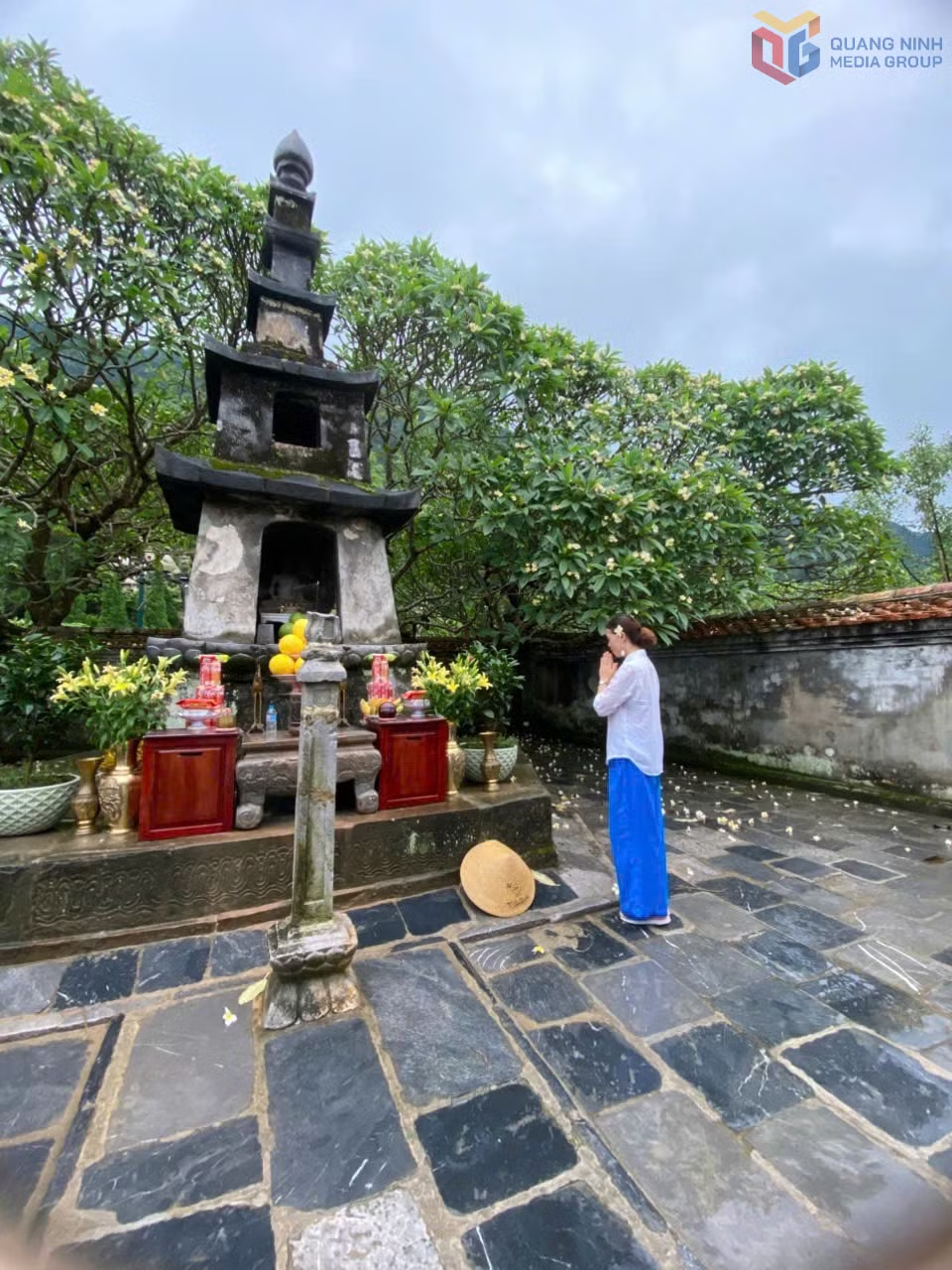
With its new status as a World Heritage Site, Yen Tu’s philosophy of the “three harmonies”, namely reconciliation, harmony and peace, has become more clearly recognised. According to the nomination dossier, the heritage complex was inscribed under criteria (iii) and (vi), recognising it as unique evidence of the combination of the state, religion and the people in shaping national identity. It is also recognised as a sacred landscape embodying harmony between people and nature, founded on the ethical values of peace, tolerance and compassion.
New momentum from the core heritage area
Vietnam is undergoing a strong shift from static conservation towards harnessing the economic value of heritage, with traditional values being renewed to become drivers of economic development and sources of national soft power. Beyond protection, heritage sites also require approaches suited to the new context.
Da Nang and Hue have introduced a “Heritage Passport”, which is being developed into the digital “Hue City Passport” application that allows heritage sites to “tell their stories”. Hanoi, meanwhile, offers the “Sacred Night” tour at Hoa Lo Prison Relic, the “Imperial Citadel” tour at the Thang Long Imperial Citadel and the “Essence of Education” tour at the Temple of Literature–Imperial Academy, all combining technology and interaction to recreate historical spaces. Real-scene performance programmes such as “Hoi An Memories” and “The Quintessence of Tonkin”, together with water puppetry and craft-village tours, are also typical examples of renewing traditional values.
For Quang Ninh’s Yen Tu, the new context has brought an inevitable shift from a mindset of simply “preserving” heritage to managing heritage resources.
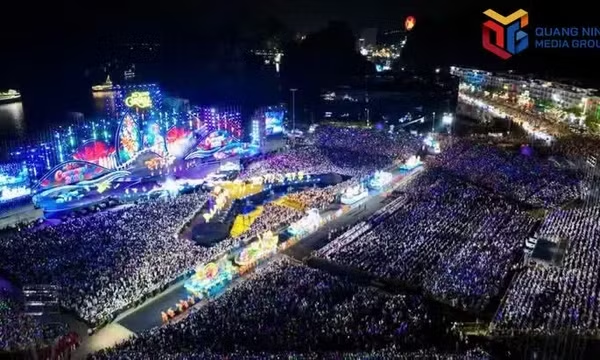
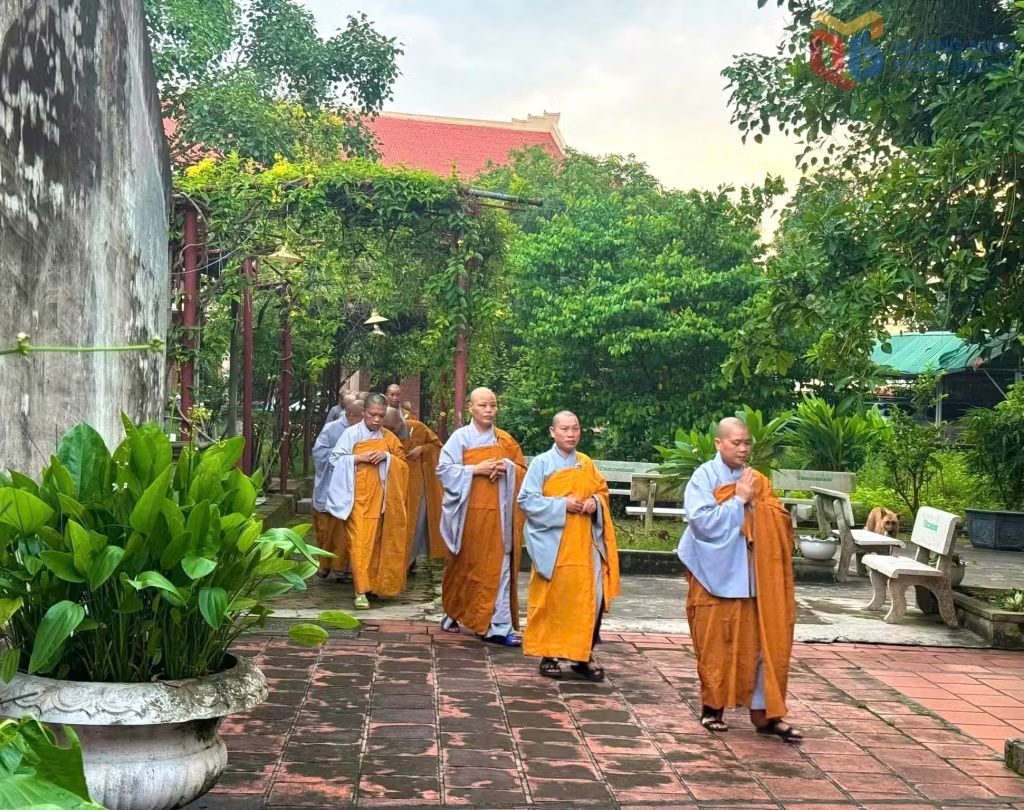
Following UNESCO’s recognition of the Yen Tu - Vinh Nghiem - Con Son, Kiep Bac Complex of Monuments and Landscapes as a World Cultural Heritage Site, the Yen Tu Autumn Festival, themed “Meditative Autumn Colours”, was held for the first time within the heritage area. Yen Tu ward, the grassroots-level administration where the heritage site is located, has increasingly made breakthroughs in promoting heritage values.

Yen Tu is the first commune-level locality in Vietnam to organise at least three national- and regional-level sporting events every year. Three running events associated with Yen Tu, namely the Yen Tu Mountain Climbing Race “Conquering Phu Van Peak”; the Yen Tu Ultra Trail “Exploring Heritage, Spreading Quintessence”; and the Yen Tu Marathon “Touching the Heritage Area”, have become Yen Tu brands since 2025, with innovations introduced each year to enhance their appeal.
At the same time, Quang Ninh authorities at various levels have also shaped the development concept of a “Yen Tu Heritage Urban Area”. Yen Tu ward itself is among the first commune-level localities nationwide to organise a scientific conference consulting leading domestic and international experts and scientists, contributing to refining the development orientation for the Yen Tu urban area under the approach: “Of Heritage - By Heritage - For Heritage - With Heritage - Through Heritage - As Heritage”.
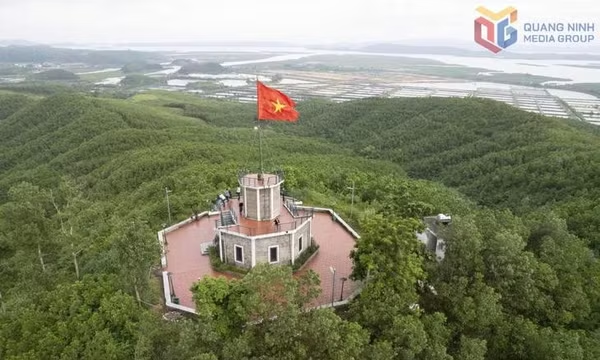
The “Sunrise at Dong Pagoda Peak” tour organised by Yen Tu ward is currently attracting strong interest from visitors from across the country, young people and those interested in experiential and spiritual tourism. Yen Tu ward is also contributing to the roadmap for proposing UNESCO recognition of King-Buddha Tran Nhan Tong as a World Cultural Celebrity in 2058, marking the 800th anniversary of his birth and the 750th anniversary of his death. These developments in Yen Tu brought around 1.65 million tourist arrivals to the area in the first six months of 2026, equal to the total for the whole of 2025.
Major opportunities are opening up for Yen Tu following UNESCO’s official inscription of the Yen Tu - Vinh Nghiem - Con Son, Kiep Bac Complex of Monuments and Landscapes as a World Cultural Heritage Site. This brings a new stature, new development space, stronger grassroots administration and expanded connections to strategic infrastructure. Quang Ninh’s forthcoming transition into a centrally governed city will also create new momentum for Yen Tu. This is an opportunity for Yen Tu to rise to a new level.
By Viet Hoa