Leaving behind the imperial palace, King Tran Nhan Tong renounced the throne and entered monastic life, determined to retreat to Yen Tu to practise Buddhism in 1299. Over 700 years have passed, yet his footsteps can still be traced along pilgrimage routes, ancient pagodas and moss-covered towers nestled amid the forests of Yen Tu. The Truc Lam Buddhist Zen he founded has also endured through the centuries and received international recognition when UNESCO inscribed the Yen Tu – Vinh Nghiem – Con Son and Kiep Bac Complex of Monuments and Landscapes as a World Cultural Heritage Site.
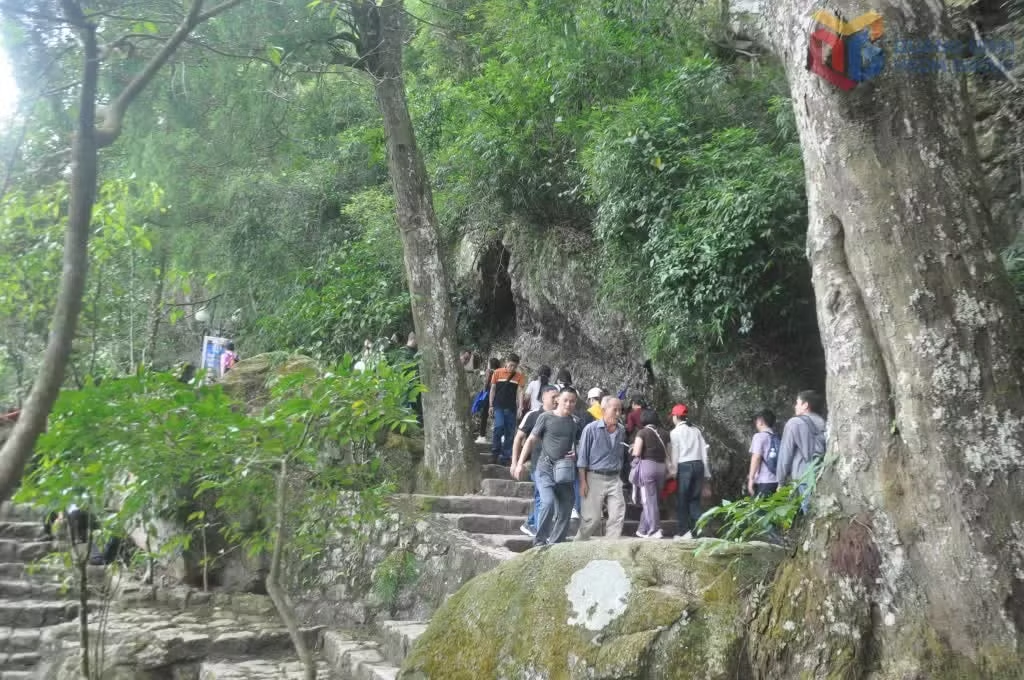
Buddha King Tran Nhan Tong was a king who attained enlightenment through Buddhist practice. Stories handed down through generations and associated with the system of pagodas leading to Yen Tu today recall the places where the Buddha King is believed to have passed and stopped during his spiritual journey. These sites are part of the heritage complex linked to his life and spiritual career, as well as the birth of Truc Lam Buddhism in the Yen Tu mountain range.
Legend has it that Suoi Tam Pagoda was where Buddha King Tran Nhan Tong stopped to bathe, symbolically cleansing himself of worldly attachments; Cam Thuc Pagoda was where he drank spring water instead of eating rice, demonstrating his determination to pursue Buddhist practice; and Giai Oan Pagoda was where loyal women jumped into the stream and died after failing to persuade him to return to the royal palace, highlighting his unwavering commitment to his spiritual path. Ngu Doi Waterfall and Thien Dinh Hermitage were places where he immersed himself in nature and practised meditation. Mot Mai Pagoda was where he devoted himself to reading and meditation. Duoc and Thung Hermitages were where he and royal physicians have prepared medicinal remedies and practised alchemy each spring. Lan and Hoa Yen Pagodas were places where he delivered Buddhist teachings. Van Tieu Pagoda was where he stayed and transmitted the Dharma seal to Zen Masters Phap Loa and Bao Sai. Ngoa Van Hermitage and Pagoda was where he chose to practise meditation and ultimately attain Buddhahood.
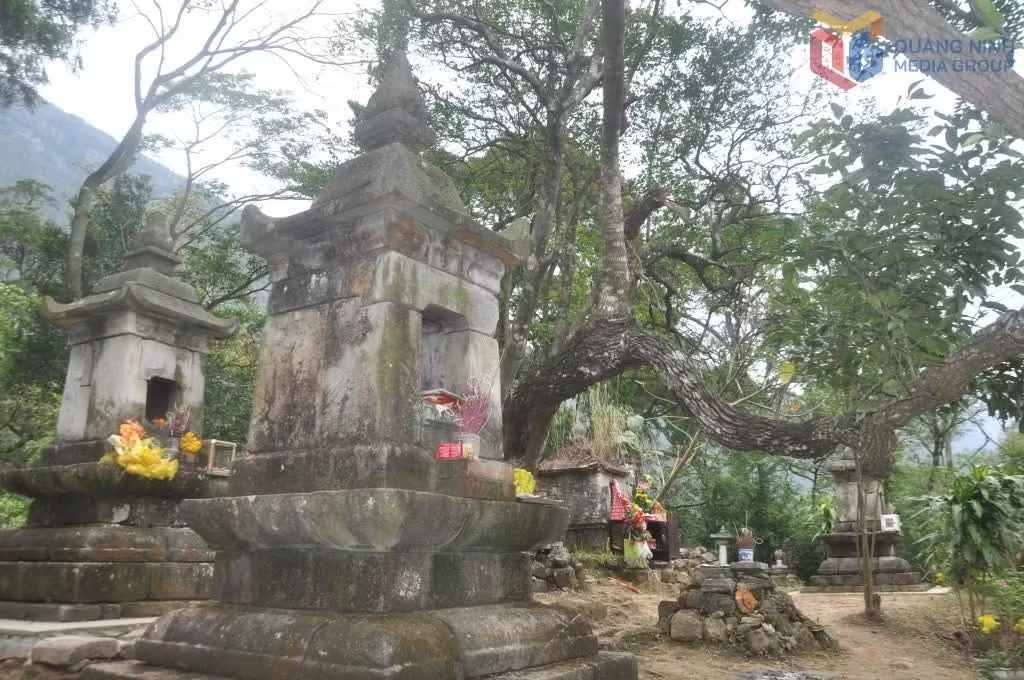
The tower gardens at Lan Pagoda, Hon Ngoc Tower Garden, Hoa Yen Pagoda and Vong Tien Cung Tower Garden at Van Tieu Pagoda are large complexes containing hundreds of towers and hermitages, serving as the resting places of Truc Lam Zen masters. Among them, Hue Quang Tower in the Hoa Yen Pagoda area, the Buddha King Tower at Ngoa Van Hermitage and Pagoda, and Quynh Lam Pagoda are places in Quang Ninh where relics of Buddha King Tran Nhan Tong are enshrined. Hue Quang Tower also features a marble statue of the Buddha King, which was recognised as a National Treasure in 2020.
Along the pilgrimage routes once travelled by the Buddha King, pine trees planted by Zen masters have now grown into ancient trees. At Yen Tu, Chinese red pines are mainly found at elevations of 400–600 metres, with a smaller number growing at around 750 metres.They are associated with major pagodas and burial towers and line the pilgrimage routes connecting different clusters of heritage sites. At Ngoa Van Hermitage and Pagoda, where the Buddha King entered nirvana, a pilgrimage route connecting the site with An Sinh, the ancestral homeland of the Tran dynasty, is also marked by ancient pine trees and resting spots along the way.
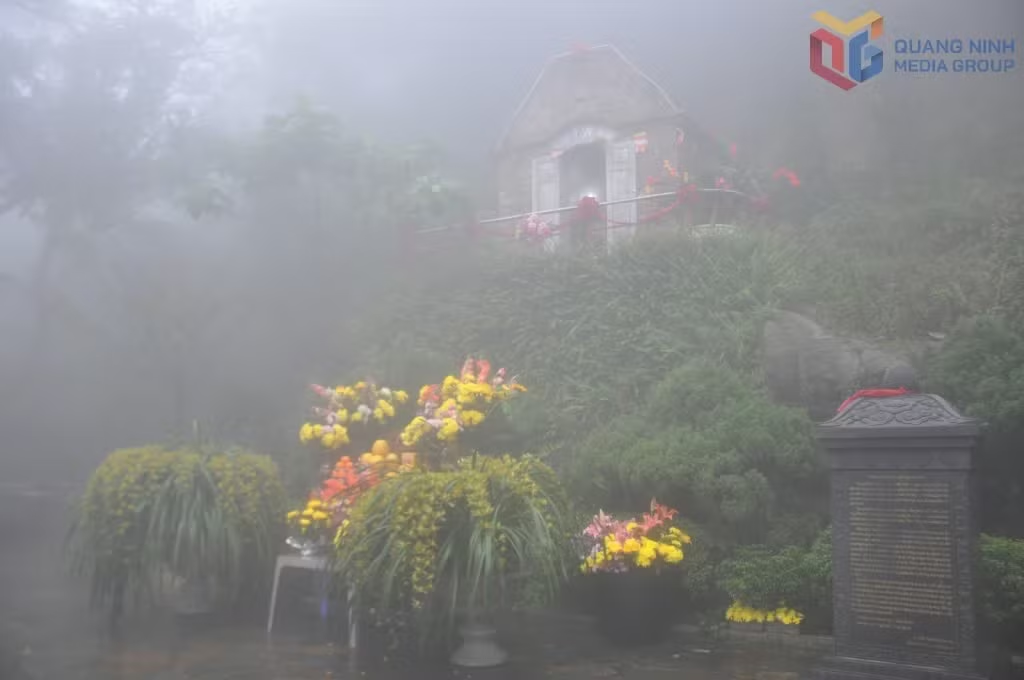
The Yen Tu – Vinh Nghiem – Con Son and Kiep Bac Complex of Monuments and Landscapes is a heritage space closely associated with the Tran dynasty and with the birth and development of the Truc Lam Buddhist tradition initiated by Buddha King Tran Nhan Tong. The complex has been inscribed by UNESCO as a World Cultural Heritage Site.
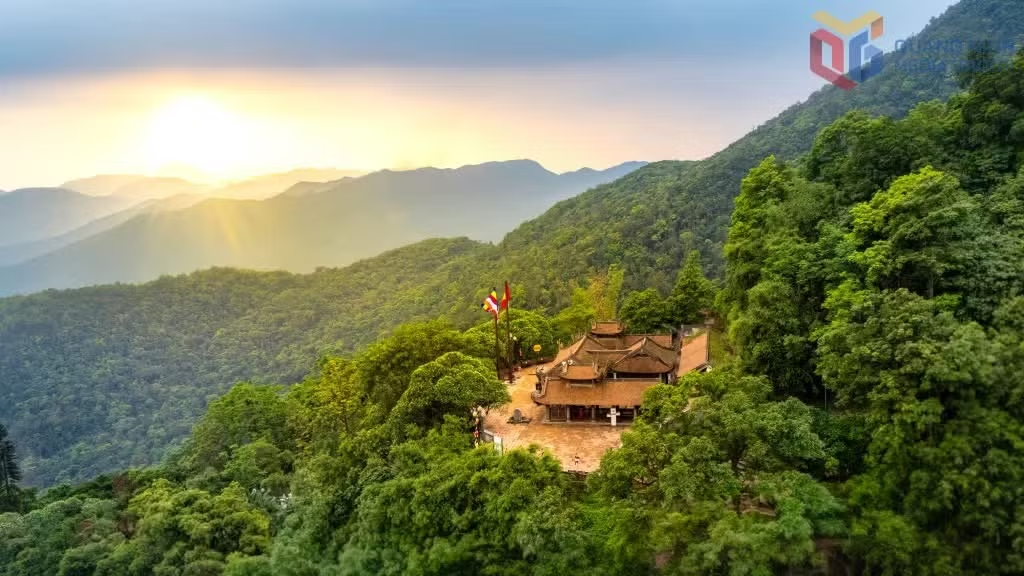
Following in the footsteps of those who came before, millions of visitors from across the country and beyond travel to Yen Tu each year to explore the heritage and pay their respects, gaining a deeper understanding and appreciation of the values of a Buddhist tradition that has accompanied the Vietnamese nation through the many ups and downs of history and continues to develop and spread its positive values in contemporary life.
By Phan Hang