Many people can spend hours admiring the shimmering beauty of a pearl necklace, yet few know the life-or-death ordeal an oyster must endure to produce those pearls. Nor do they see how much sweat and effort pearl farmers have poured into the sea to create such lustrous gems.
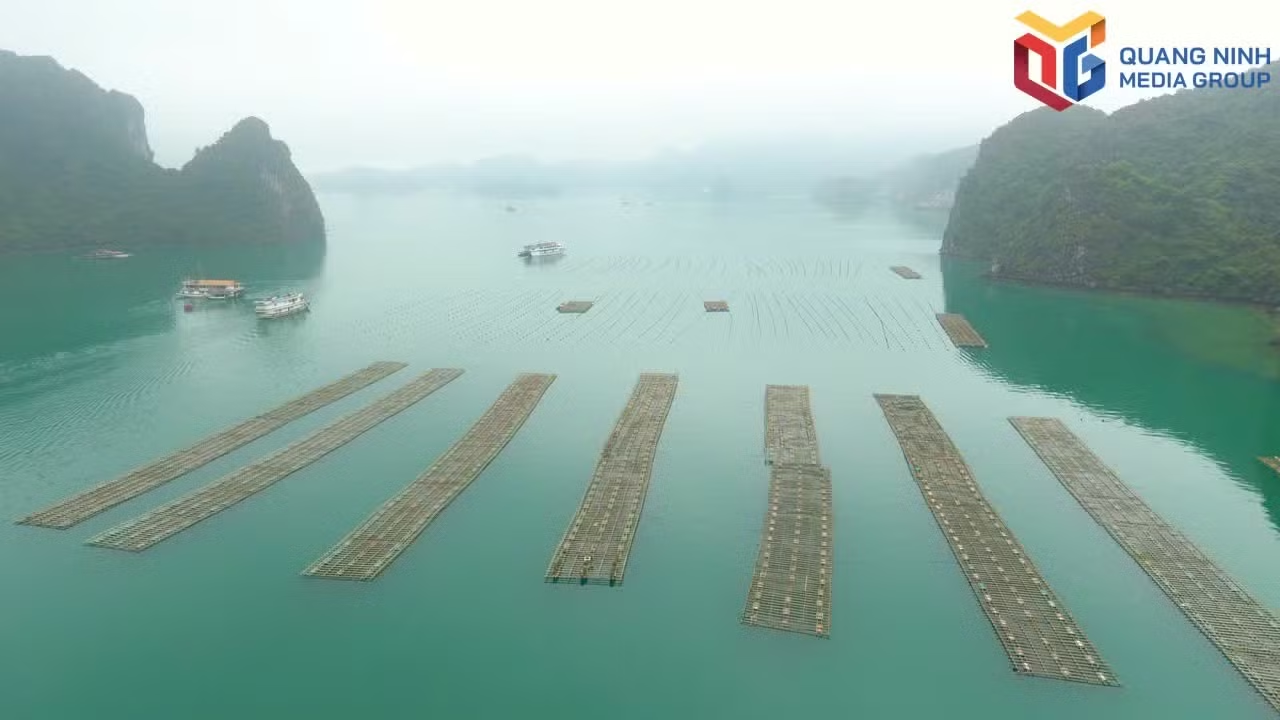
Quang Ninh is home to the waters of Ha Long and Bai Tu Long, as well as the Co To and Van Don special zones, with thousands of islands large and small. These island systems create calm, sheltered waters with relatively gentle currents, providing favourable conditions for pearl-farming rafts without the constant threat of damage from large waves.
Pearls are regarded as one of the sea’s precious products. Because natural saltwater pearls are extremely rare, pearl cultivation developed as an alternative. Emerging more than four decades ago in Van Don island district, now Van Don special zone, the Northeast region’s first cultured pearl industry took shape in rich fishing grounds with extensive tidal flats and vast, sheltered waters.
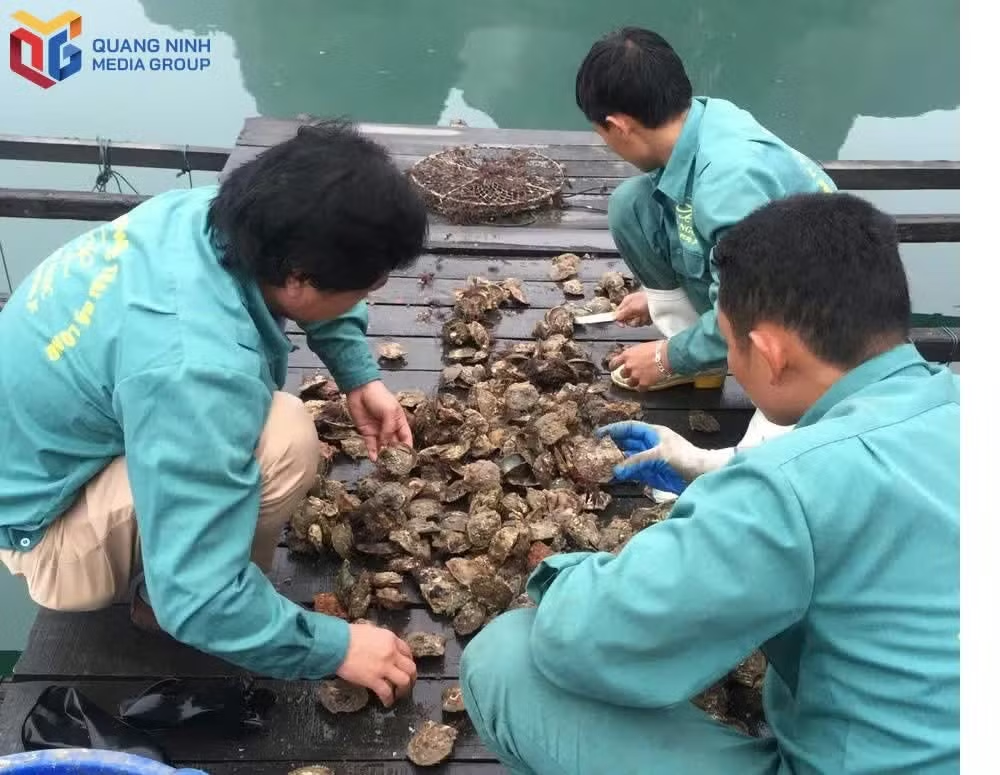
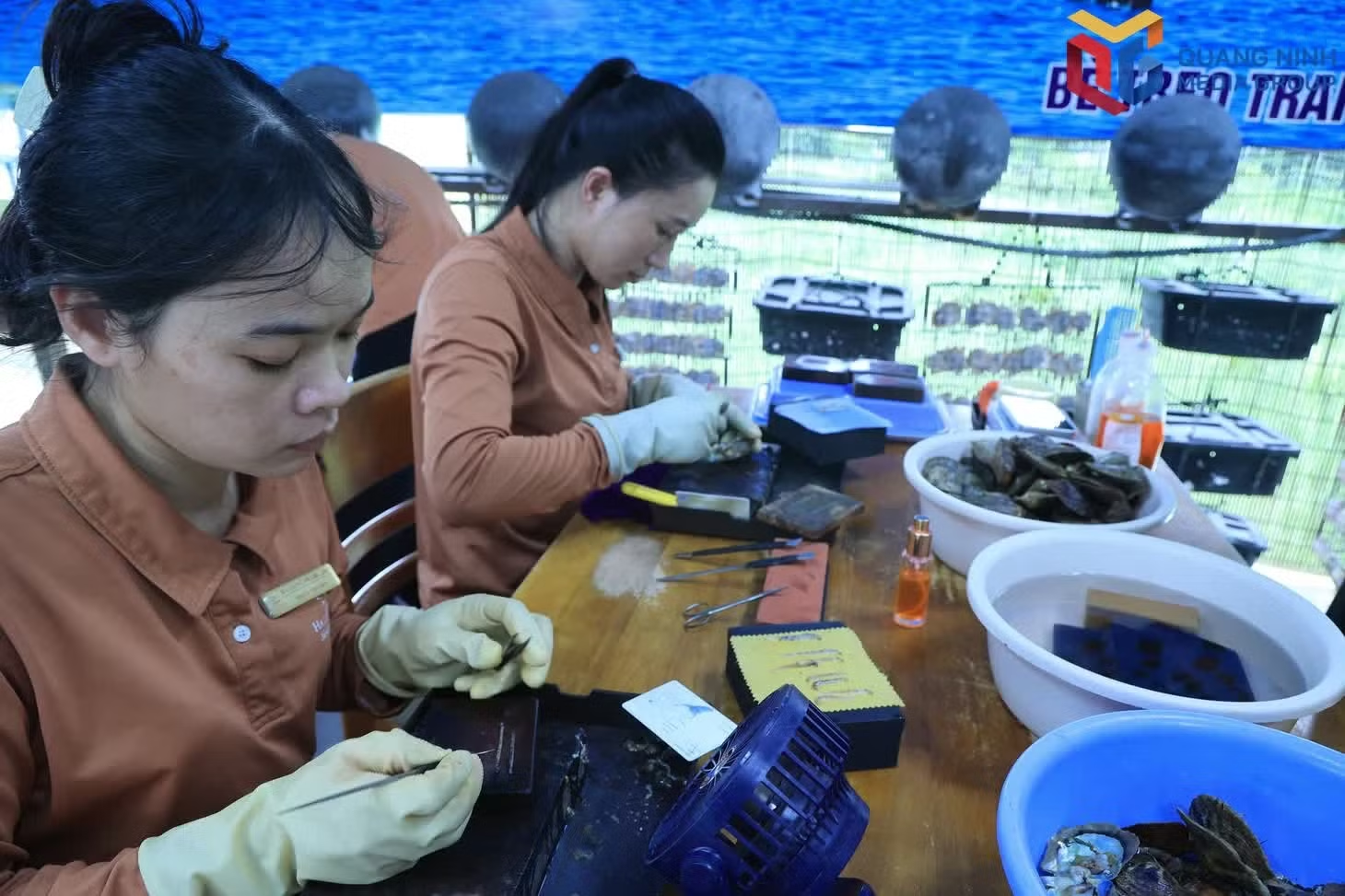
Pearl cultivation is a closed production process that combines strict scientific procedures with highly skilled craftsmanship. It begins at the oyster nursery, where healthy mother oysters are carefully selected. Only healthy oysters aged two to four years, uniform in size and free from disease, are chosen before being taken to the grafting table.
Under the deft hands of technicians, each oyster shell is gently opened to receive a piece of mantle tissue together with a round nucleus polished from natural shell. Nucleus implantation technicians are often compared to microsurgeons, as they need years of practice to make a precise incision in the oyster’s abdominal area and skilfully insert the tissue and nucleus into the pearl sac without harming the animal
Artisans then assess each pearl against international standards for nacre thickness, lustre, size, shape and natural colour, ranging from ivory white and lead grey to distinctive golden tones. Perfectly round, flawless pearls are often selected for one-of-a-kind rings or pendants. Pearls of matching size and colour are grouped into sets for stringing into necklaces.
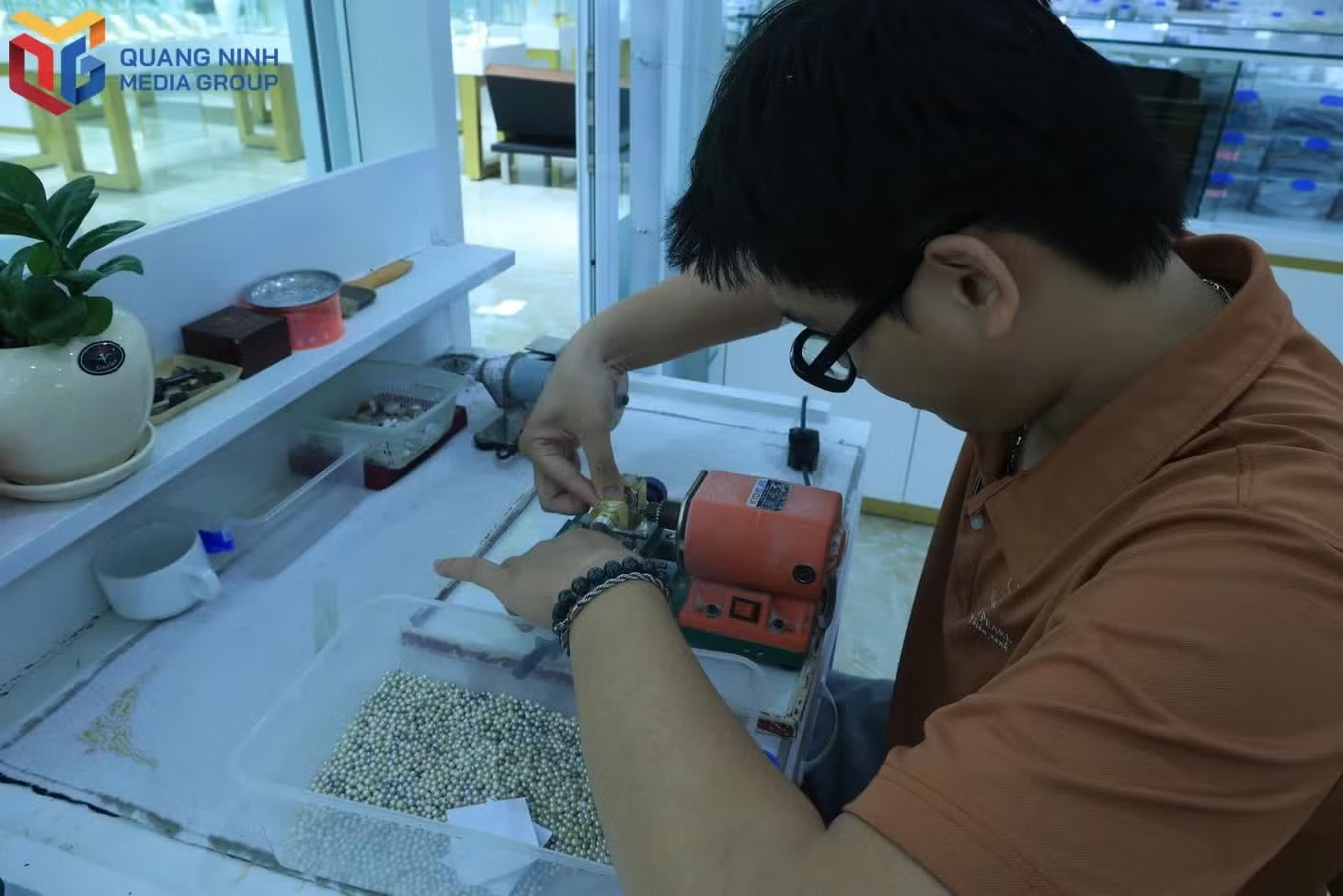
Looking back on its development, Quang Ninh’s pearl cultivation industry has gone through many ups and downs, from devastating storms that swept away entire farming operations to periods when low-value raw products were exported under foreign labels. Determined to establish the position of Vietnamese pearls, businesses proactively adopted Japanese technology, successfully developed artificial breeding processes for oyster seed, and built closed production chains from cultivation and harvesting to jewellery processin.
The efforts eventually paid off when pearl products from Quang Ninh’s waters were officially recognised as national five-star OCOP products and expanded into demanding export markets such as Japan, Europe and Northeast Asian countries.