Education officials from five Vietnamese provinces and cities and China's Guangxi Zhuang Autonomous Region agreed Tuesday to expand cooperation in digital education, artificial intelligence and workforce training, as the two sides marked a decade of annual education exchanges.
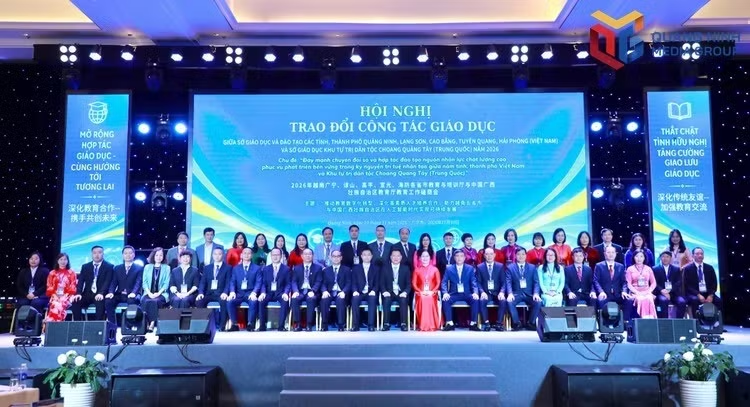
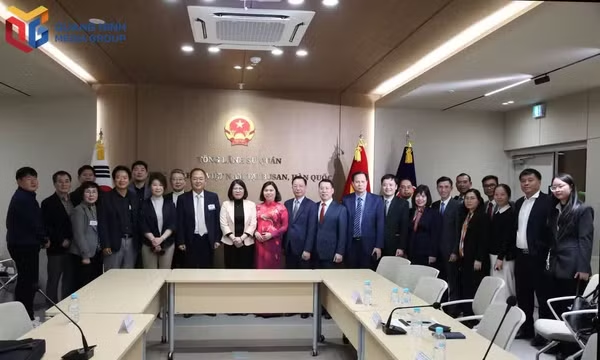
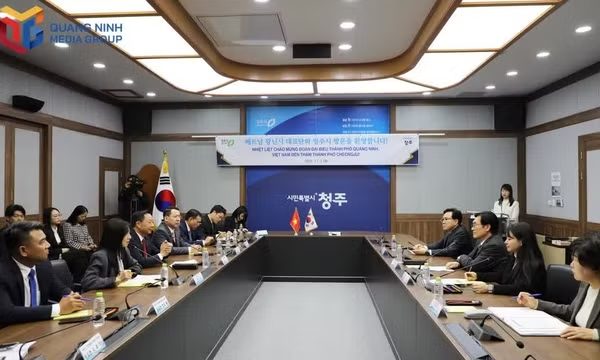
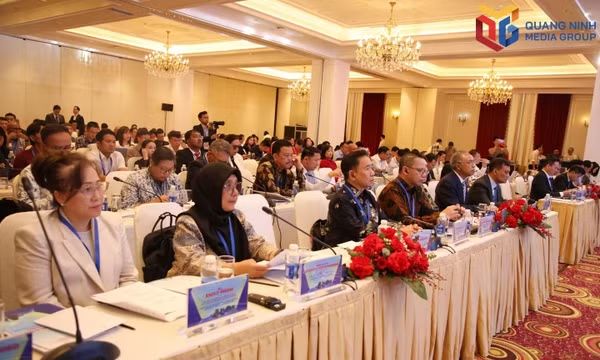
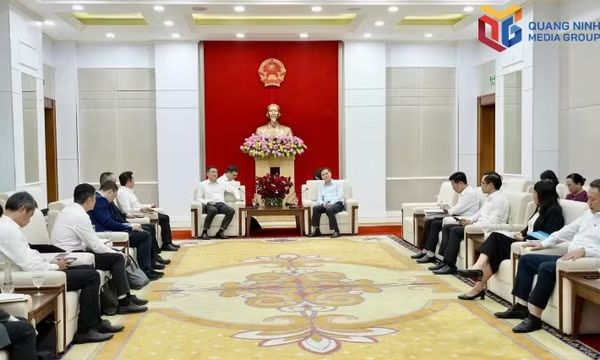
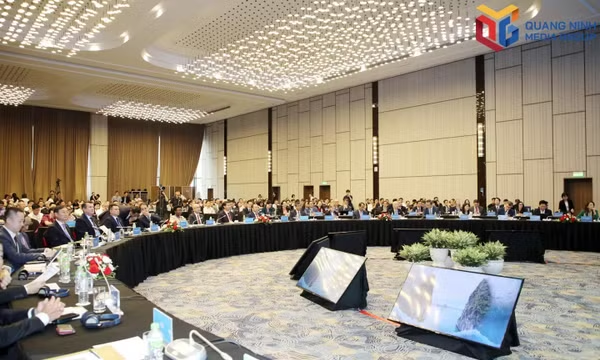
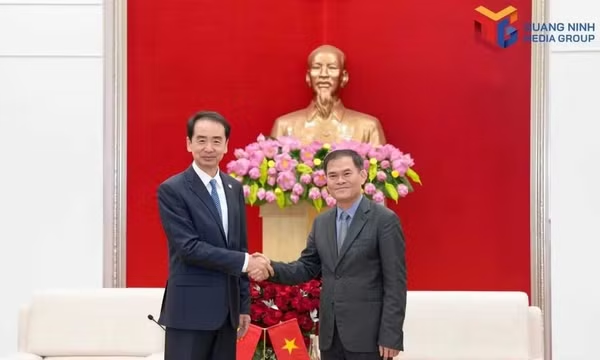
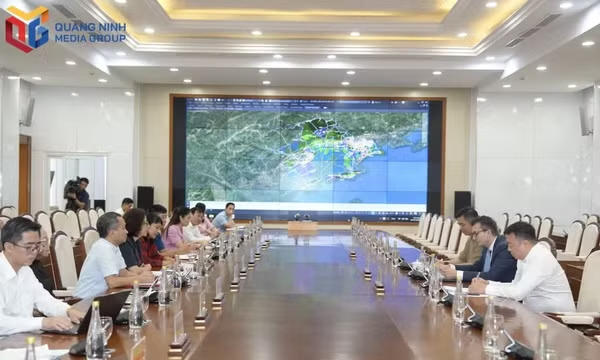
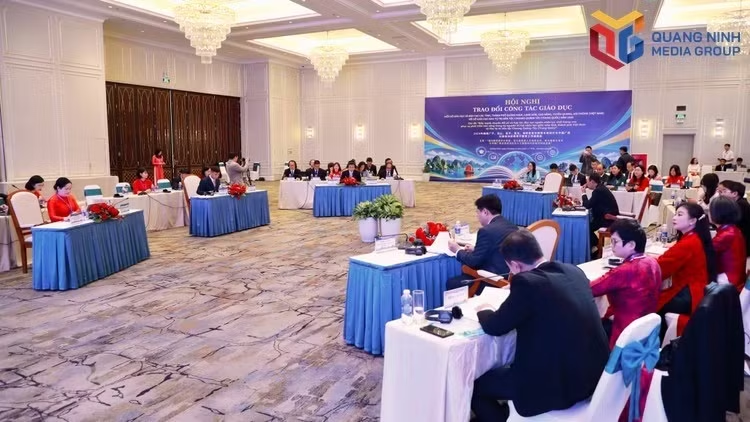
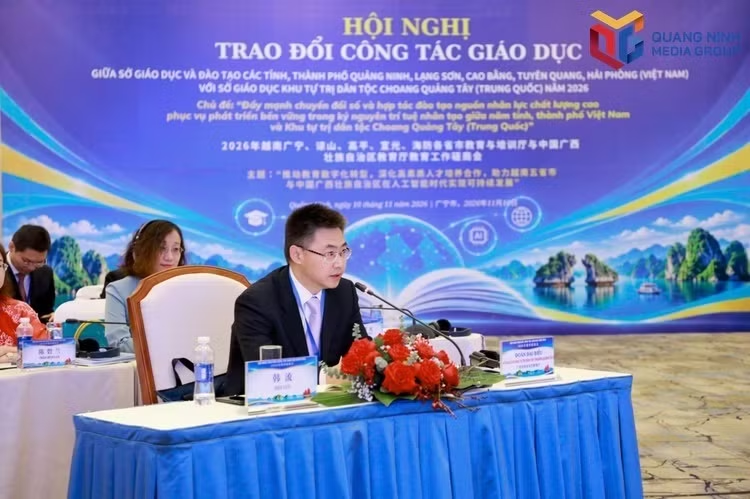
The agreement came at the 10th education cooperation conference in Quang Ninh, attended by representatives from Quang Ninh, Hai Phong, Lang Son, Cao Bang and Tuyen Quang, along with education officials and university representatives from Guangxi. Luo Yaoguang, a counselor at the Chinese Embassy in Vietnam, also attended.
This year's conference focused on digital transformation and developing a highly skilled workforce to support sustainable growth in the age of artificial intelligence.
The meeting also marked 10 years of annual education exchanges between the participating localities, building on commitments made at the 2026 Spring Meeting, the 17th Joint Working Committee Conference and last year's education cooperation conference.
Education exchanges and scholarships expand
Officials said educational cooperation between the two sides had grown since 2025, with more student exchanges, joint training programs and institutional partnerships.
Over the past year, Guangxi awarded 110 Chinese government scholarships to students from the five Vietnamese localities. Universities, colleges and medical institutions organized more than eight exchange activities and signed or renewed five cooperation agreements.
A joint undergraduate program between Guangxi Normal University and Thai Nguyen University in Vietnam, under which students study for two years at each institution, continued to move forward.
Guangxi Medical University and Guangxi University of Chinese Medicine also held seven specialized training sessions in medical technology, traditional medicine and artificial intelligence for more than 60 Vietnamese participants.
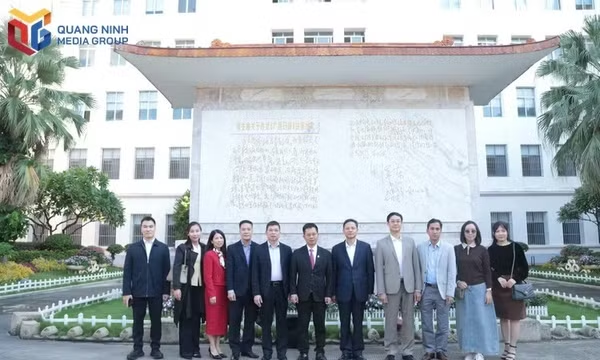
Youth exchanges continued through programs exploring the two countries' revolutionary histories. A memorial dedicated to Vietnamese schools at Guangxi Normal University welcomed 168 Vietnamese visitors for educational and cultural exchanges.
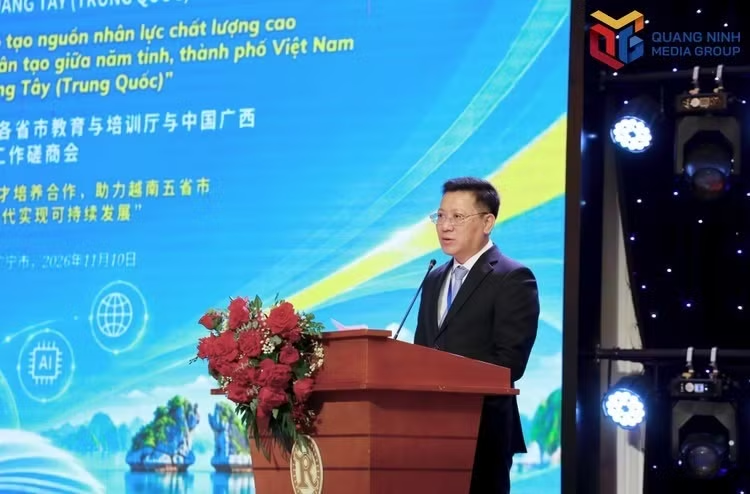
Quang Ninh reported progress in implementing agreements reached at the 2025 conference.
Fourteen students from the city received admission offers under Guangxi's ASEAN scholarship program. The city also sent a teacher and five students to a summer study camp in Nanning, Liuzhou, Guilin and Chongzuo, while an education official attended AI training in Fangchenggang and Nanning.
At the university level, Ha Long University worked with Guilin University of Technology on faculty and student exchanges and joint research. It also held a cultural exchange with students from Guilin University of Electronic Technology in August 2026.
Quang Ninh has also sought to improve access to education, opening an inclusive education support center in September and continuing investment in schools in border areas.
AI and digital skills take center stage
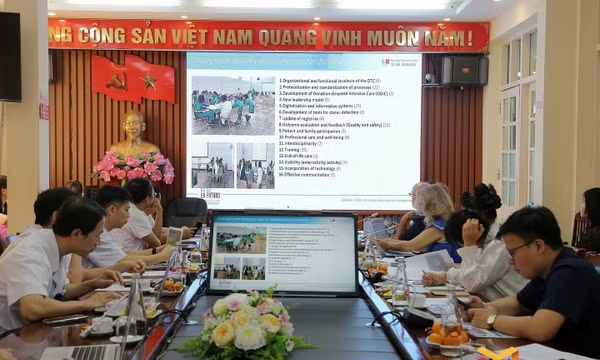
During the conference, delegates shared experiences in digital education management and discussed practical ways to deepen cooperation.
Quang Ninh education officials proposed three priorities: developing highly skilled workers in science and technology, expanding cooperation in AI and digital education, and strengthening partnerships among universities, vocational institutions and schools.
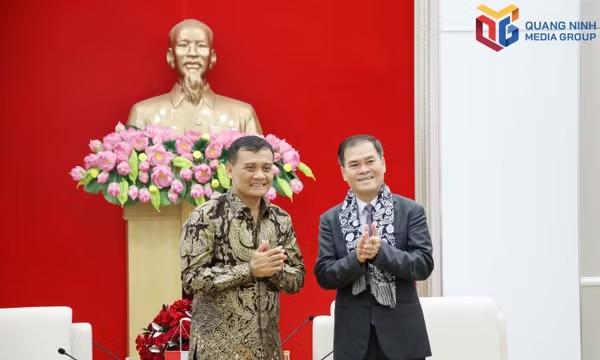
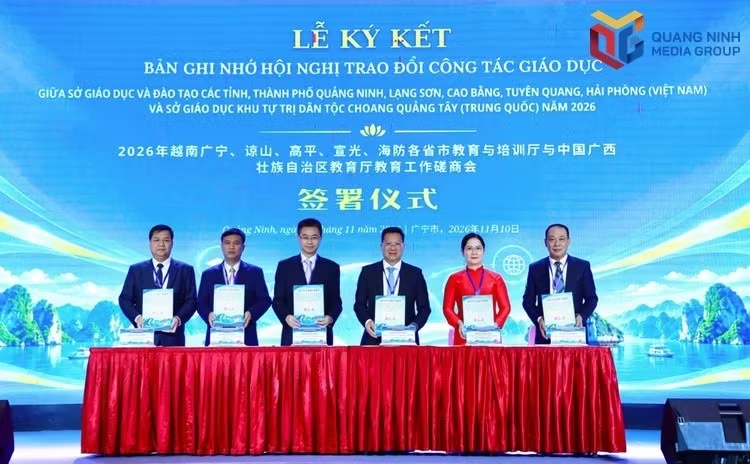
Education leaders from all six localities signed a memorandum of understanding outlining their plans for 2026.
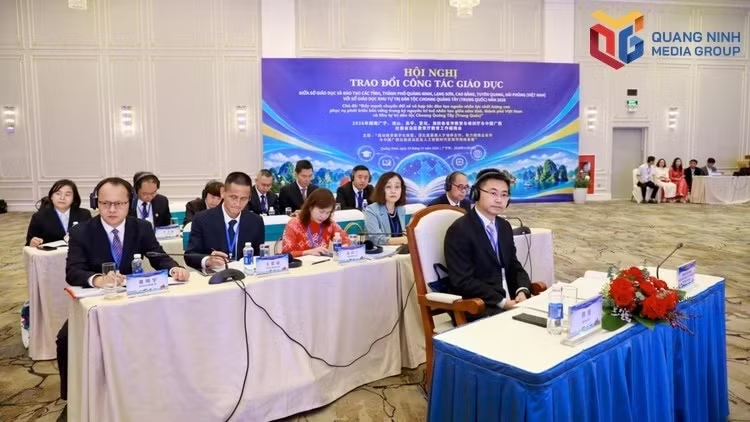
Under the agreement, the two sides will promote digital education and the use of AI in teaching and learning. Workforce training will focus on smart manufacturing, digital transformation, smart education, urban management, high-tech agriculture, cross-border trade, logistics and the digital economy.
The agreement also calls for joint scientific seminars, academic forums and short-term training courses.
Universities and vocational institutions will be encouraged to work more closely with technology companies, industrial parks and innovation centers, giving students opportunities for internships, research and technology transfer.
The two sides also plan to expand university partnerships through a "1+1+1" model linking a university outside Guangxi, a university in Guangxi and a Vietnamese university.
Other plans include joint undergraduate programs allowing students to split their studies between institutions, master's and doctoral training, and efforts toward mutual recognition of academic credits.
At the school level, cooperation will focus on smart classrooms, digital learning materials and the responsible use of AI, with attention to data security and digital ethics.
Schools in border areas will also be encouraged to establish partnerships and organize cultural and language exchanges.
Guangxi to offer 130 scholarships in 2027
Guangxi will provide 130 Chinese government scholarships in 2027 for students from the five Vietnamese provinces and cities to study at universities and other higher education institutions in the region.
Priority fields include artificial intelligence, digital technology, green energy, smart logistics and modern agriculture.
Vietnamese localities will also continue offering scholarships to students from Guangxi.
Quang Ninh will provide five master's scholarships at Ha Long University, while Lang Son will offer five master's scholarships at Vietnam National University, Hanoi.
Tuyen Quang will award two undergraduate scholarships to students from Baise, Guangxi, at the University of Social Sciences and Humanities under Vietnam National University, Hanoi.
Cao Bang will provide two undergraduate scholarships at Hanoi National University of Education.
Universities in Hai Phong will also offer undergraduate and postgraduate scholarships, along with short-term courses, to students from Guangxi institutions beginning in 2026.
Under the annual rotation arrangement, Guangxi's Education Department will host the next education cooperation conference in 2027.