In recent years, the Quang Ninh Garment Joint-stock Company is one of the leading companies in implementing the emulation movement of the province. It gained a golden prize of made in Viet nam product and services 2009; and also won the prestigious trademark 2011cup organized by the province (Jacket) in 2011. Furthermore, the company has been granted the certificate of product quality management system ISO-9001.
The company specializes in manufacturing garment products for foreign markets, namely: EU, US, Korea… but it also always bear in mind the domestic markets. As stated by Mr Ngo Tri Loc- deputy head of the company, “In development strategy of the company, domestic market is considered as a long-term, stable and sustainable market”
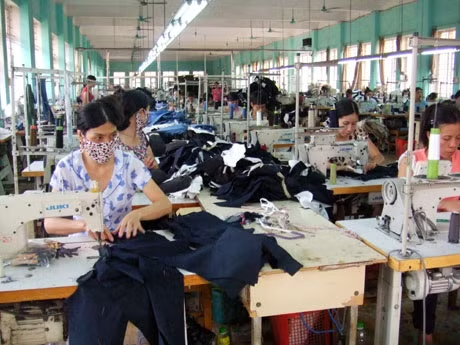
Firstly, the garment products must be researched and developed in accordance with different periods of time; providing diversified designs and styles and especially meeting the consumer’s need.
Secondly, the company must develop its resources to compete with imported goods and smuggled products.
Thirdly, the quality of domestic goods must be always strictly controlled to ensure that these products have the same technical specifications of the exported goods.
To date, the company has provided uniforms for 135 schools from cities to remote areas as well as schools in islands and border areas with the total revenue of VND 15 to20 billion per year. To meet the demands of domestic consumers, the company is equipped with many modern facilities, such as pressed iron and buttoning machines.
Mr Loc said that thanks to strict technical control, modern machines, production time is saved. In addition, the company offers preferential treatments for consumers in remote areas… As a result, the company has its prestige and reputation to the consumers inside and outside the province.
However, the company also faces many difficulties as garment products are widely smuggled in a large quantity and diversified styles and designs with low price. Additionally Quang Ninh has many districts in mountainous and islands areas. . Therefore, if there is a price stabilizing support fund, enterprises will be able to reduce their price to around 10 or 15%. As a result, the beneficiaries are local people, especially pupils in remote areas.
THANH HANG