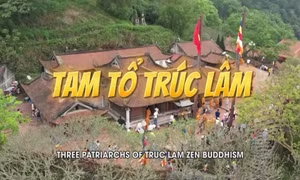
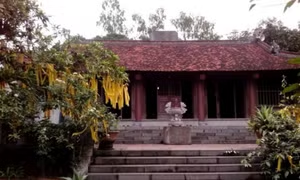
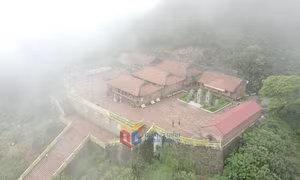
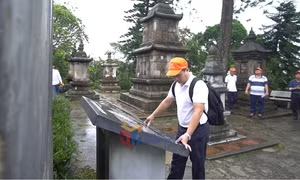
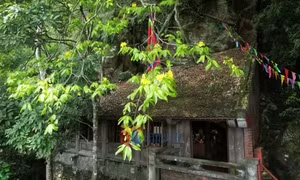
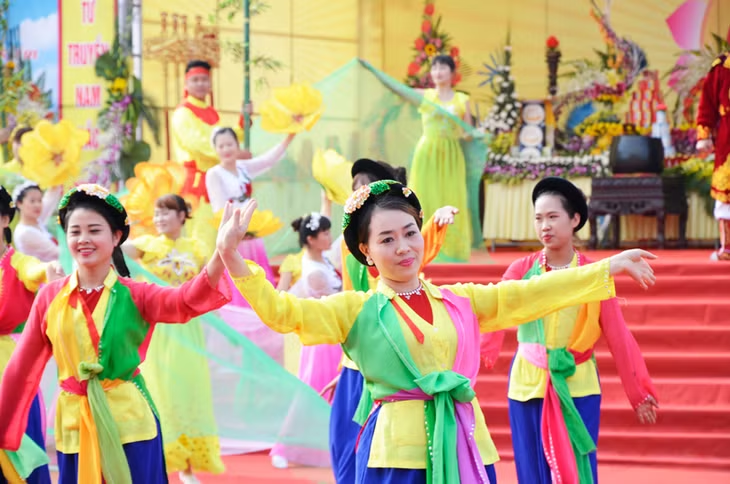
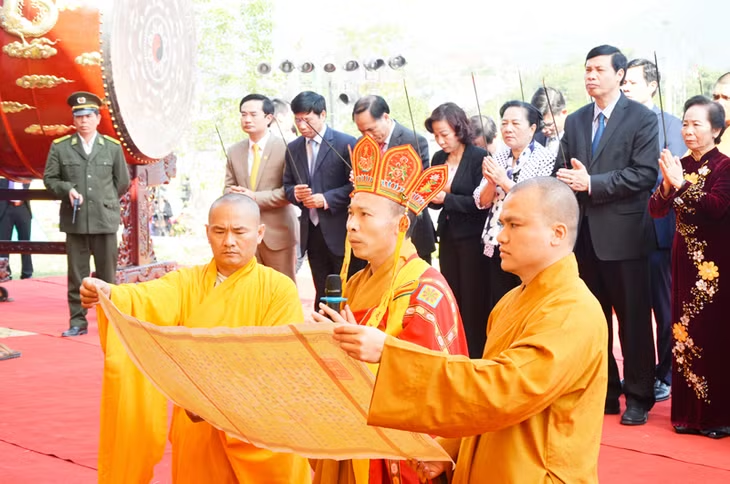
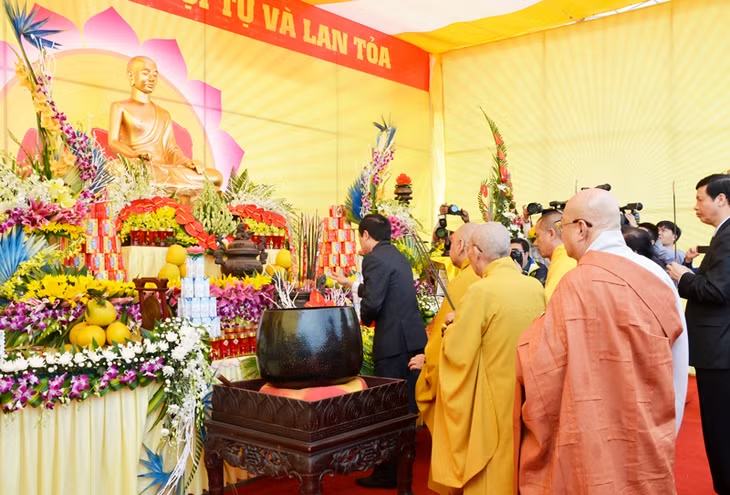
The Yen Tu Spring Festival 2017 officially kicked off on February 6, (the 10th day of the first lunar month), at Trinh pagoda at the Yen Tu historical site in Uong Bi city, Quang Ninh province.
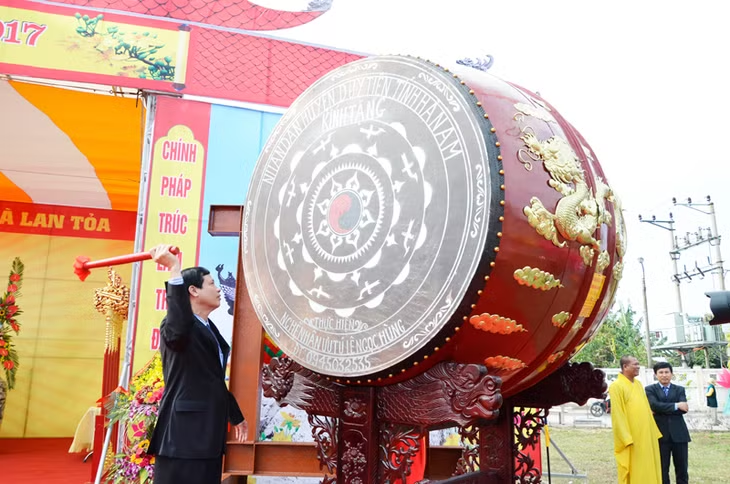
With a wide range of cultural activities, including traditional rituals and folk games, the opening ceremony of the festival drew thousands of visitors, Buddhist monks, nuns and followers across the country. According to the festival management board, the Yen Tu historical site welcomed over 20,000 visitors on the opening day, and around 285,000 visitors from the first day of the first month of the lunar year. The number of visitors to the site is expected to hit 2 million during this year’s festival.
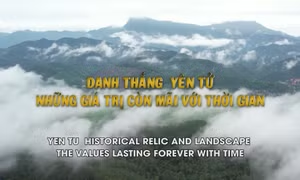
Yen Tu Mountain is located about 50 kilometres from Ha Long City. The area has a beautiful natural landscape and awe-inspiring scenery, surrounded by ancient pagodas and hermitages.
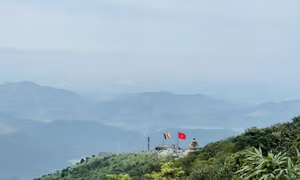
The pilgrimage route, which winds from the foot of the mountain to its pinnacle, is almost 30 kilometres. Dong Pagoda, which sits atop the mountain’s highest peak, is more than a kilometre above sea level.
In the 13th century, King-Monk Tran Nhan Tong (1258-1308), the third king of the Tran dynasty, abdicated the throne when he was 35 and spent the rest of his life on Yen Tu Mountain, practicing and propagating Buddhism. He founded the first Vietnamese School of Buddhism called “Thien Tong” or Truc Lam Yen Tu Zen on the 1,068m-high Yen Tu Mountain. The 20,000 ha site is considered the capital of Vietnamese Buddhism.
Besides numerous temples, it also preserves many old religious and cultural documents such as precious prayer-books and monks’ writings.
With its significant historical, cultural and natural values, Yen Tu was recognized as a Special National Relic Site in September 2012. It was also voted as one of the 10 most popular spiritual destinations in Vietnam by the Vietnam Records Organisation.
Article by Phan Hang