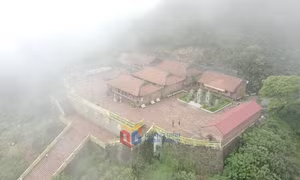
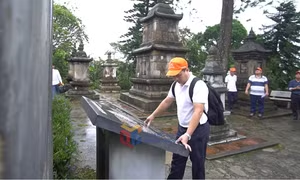
The roadmap of nominating Yen Tu as the world heritage site has been hastened by functional authorities. This is the first time Vietnam has piled up a nomination dossier for a relic site under the form of inter-regions, inter-provinces, and inter-relics. More than 70 relic sites listed in the dossier to nominate Yen Tu as the world heritage site are located in 3 provinces, namely Quang Ninh, Bac Giang, and Hai Duong. In Quang Ninh alone, the relic sites stretches from Dong Trieu District to Uong Bi City, including 14 relic sites dated back to Tran Dynasty in Dong Trieu which are considered vital elements.
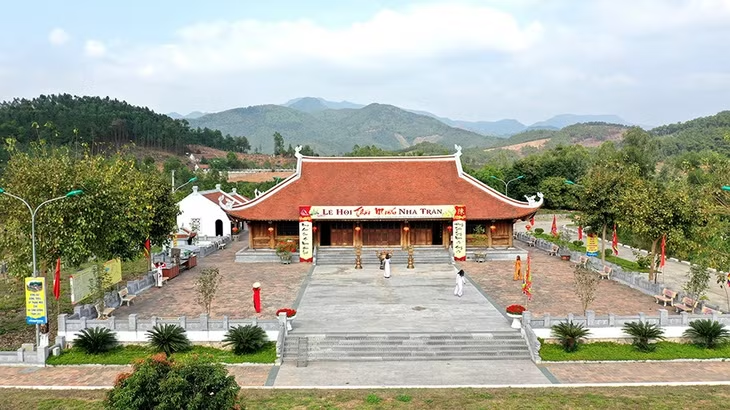
With a great number of relic sites, artifacts, festival, religious rituals… dated back to Tran Dynasty, Dong Trieu is said the sediment of the dynasty, not only in Quang Ninh but also in the country. Dong Trieu has an advantage that no land has as it was the hometown of kings who reigned Tran Dynasty and the place where King Tran Nhan Tong entered the nirvana.
Tran Dynasty’s 14 relics recognized as national special relic sites have been well preserved and their values have been well promoted. The way that Dong Trieu protects these relics over the last years (respecting the original status) is consistent with UNESCO’s regulations and point of view.
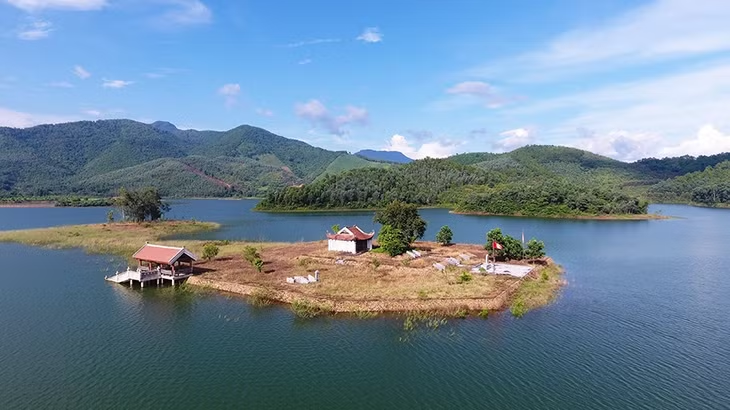
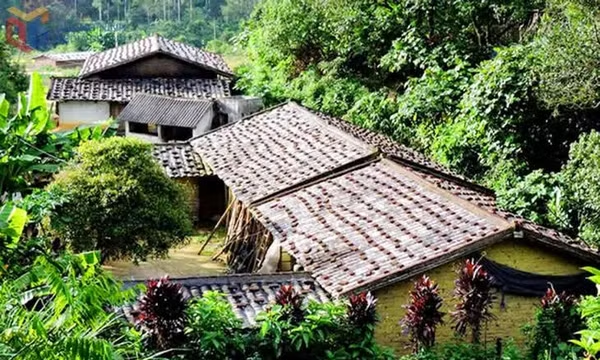
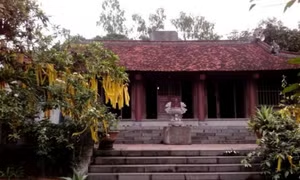
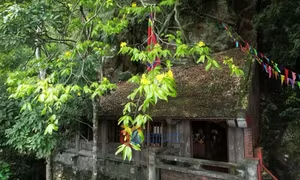
For example, the excavated foundation of Thai Shrine’s are buried again for underground preservation after defiing its values. Ho Thien Relic is upgraded in condition that new construction work does not overlap the ancient traces. The tomb of Kinh Tran Anh Tong, lying in the middle of Trai Loc Lake, is restored only by reinforcing gravels and pebbles. Ngoc Thanh Pagoda and Tu Phuc Tomb are basically maintained in their original postures….
These relic sites are a part of a picture of Tran Dynasty’s life, culture, and economy in Quang Ninh that generations have been studying and discovering. Moreover, the relics contributes to enriching Yen Tu’s values on the roadmap of turning Yen Tu into the world heritage.
Translated by Quynh Trang