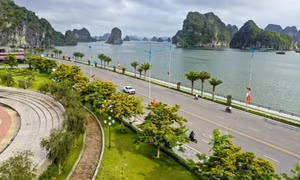
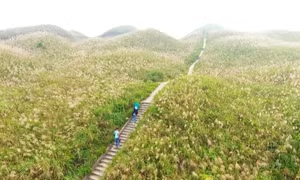
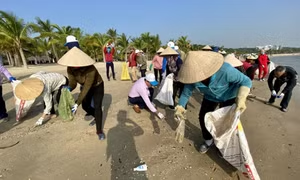
Bai Tu Long National Park covers an area of 15,783 ha with 3 main islands, namely Sau Island, Tra Ngo Island, and Ba Mun Island. It has the most diverse ecosystem in South East Asia with 6 basic forms, such as mangrove forests, tropical rain forests, coral reef, sea weed, tidal bed and lagoon, and caves. They are home to rare species with scientific importance, for example, tortoise, coral, abalone, yellow monkeys, sea turtles …

Notably, there are yellow deers on Ba Mun Island, the only herd in the Northeast of Vietnam. The island is said the largest natural wild animal preservation area in the Northeast and also home to the largest marine animal rescue center in the North.
Thanks to unique values, Bai Tu Long National Park was nominated as South East Asia Heritage in 2016. In 2017, it was recognized as ASEAN Heritage Garden by ASEAN Center for Biodiversity.
In order to preserve and promote potential and advantages of the park, Bai Tu Long National Park Management Board takes initiative in making scientific researches for effective measures. It also enhances propaganda activities, popularization, and web upgrading to provide more information about the values and the landscape of the park. Besides, it organizes training courses for fishermen on sustainable exploitation of marine resources in combination with eco-tourism.
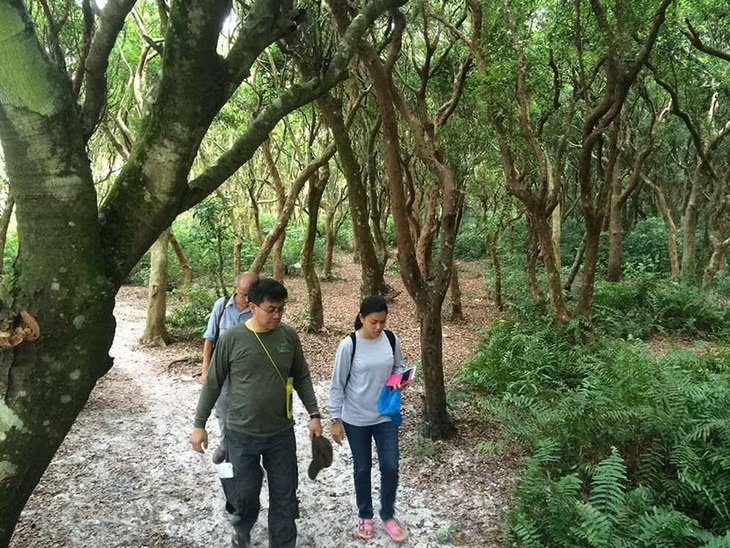
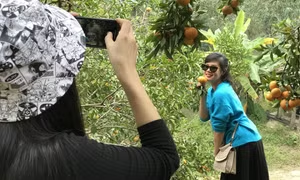
According to Bai Tu Long National Park Management Board, in 2019, Quang Ninh Provincial People’s Committee approved the project of eco-tourism development in the park by 2020 with orientation to 2030. Accordingly, allowed ecotourism activities in the park include adventure tourism; camping (experiencing forest and cave ecology), relaxation tourism on sea, community-based ecotourism, tourism in combination with education…
Quang Ninh is strongly developing tourism, services with the aim of turning the smoke-free industry into a driving force for provincial socio-economic development. The implementation of the project on Bai Tu Long National Park’s eco-tourism development by 2020 with orientation to 2030 will help expanding tourism space and boosting province’s tourism strength.
Translated by Quynh Trang