"Từ hè đường đến sân khấu" (From Street to Stage), a special programme of xam (blind buskers singing) performances will take place this month to celebrate Việt Nam Cultural Heritage Day which falls on November 23.
The traditional musical programme will be held on November 14 by the Xam Ha Thanh and Dinh Lang Viet groups with the aim to promote and preserve the values of xẩm singing as well as to help audiences learn more about this art form.
The shows will take place at the Ha Noi Cultural Exchange Centre at 50 Dao Duy Tu Street in Hoan Kiem District, presenting viewers with an overview of busking and its role in social life.
The performances will include the participation of many veteran artists, according to Dao Bach Linh, a young busker and head of the Xam Ha Thanh Club.
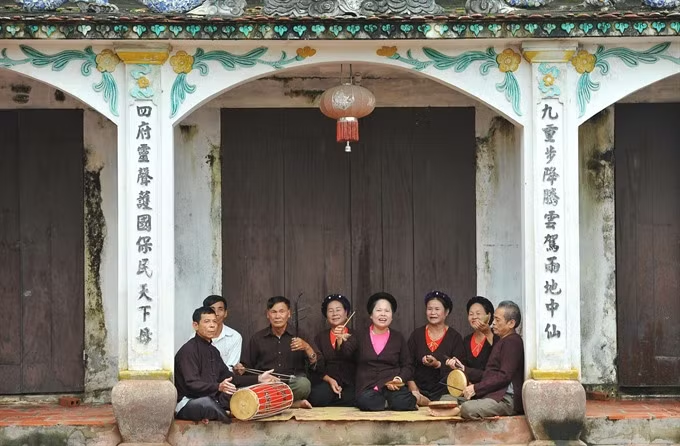
Linh, who is also one of the programme organisers, told Viet Nam News that an increasing number of fans of xẩm singing have inspired folk musicians to recover and preserve the art and encouraged more performances.
Xam singing, a centuries-old Vietnamese art form, has long been regarded as an important piece of the nation’s cultural heritage.
Legend has it that the singing was invented by Tran Quoc Dinh – a son of King Tran Thanh Tong, around 700 years ago, who was kind and had good relationships with the poor. He taught them how to play instrument and sing in order to overcome life’s hardships.
The singing is mainly found in the countryside, expressing optimism and love for the blind. The performances stem mostly from northern regions including the provinces of Ninh Binh, Nam Dinh, Hai Duong, Bac Giang and Ha Noi.
In the past, busking was performed during leisure after the harvest. The peasants used to invite troupes to perform in their village so that their families could enjoy the music, according to vietnam-beauty.com.
During wartime or times of strife, the singers were not able to earn enough locally, so they travelled to find better incomes. Many of them flocked to big cities, including Ha Noi.
Crowded trams, markets and street corners were turned into stages for buskers.
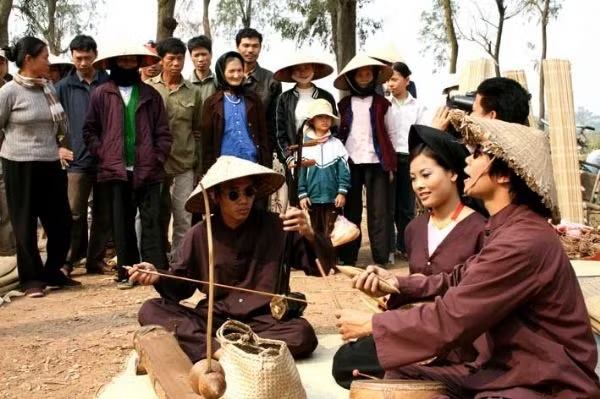
During a xẩm performance, one artist plays a drum, one plays the castanets, one plays a đàn nhị (bowed instrument with two strings), one plays a đàn bầu (monochord instrument) and all sing together. To thank and encourage the singers for their performance, the audience offers them money.
Source: VNS