In the past years, Mong Cai City has conducted synchronous measures to promote the values of cultural heritages in line with tourism development.
Visiting Mong Cai border city, tourists shouldn’t miss sacred Xa Tac Temple, Tra Co Communal House, Nam Tho Pagoda and Xuan Lan Pagoda, etc...
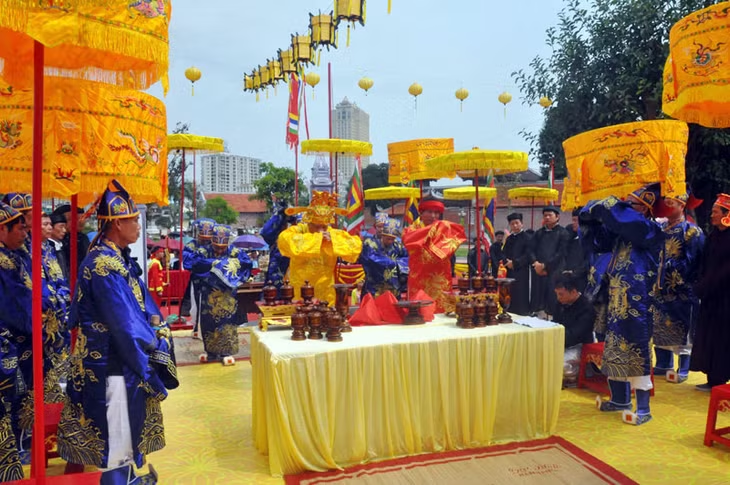
Xa Tac Temple, one of the oldest historical relics in Mong Cai, was classified by Quang Ninh Provincial People’s Committee as a historical relic site in 2005. Lying near the Vietnam – China border river junction, the communal house tells heroic national sovereignty defense stories and presents the unique religious features of the Vietnamese people. It is no doubt why Xa Tac has become a spiritual attraction to local people and visitors to Mong Cai.
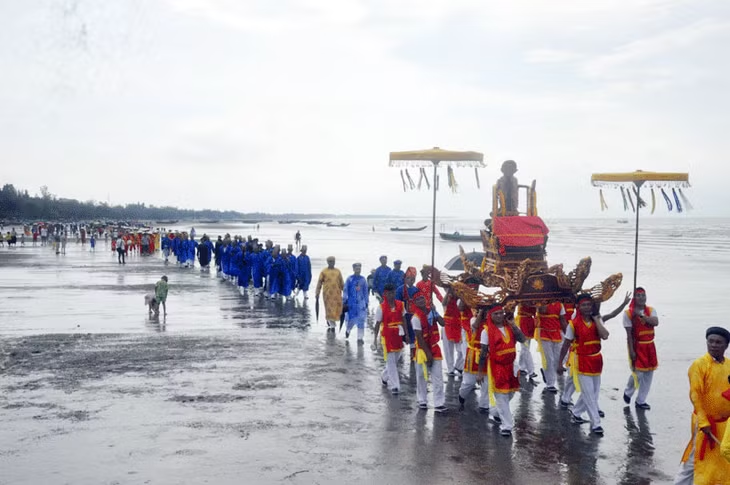
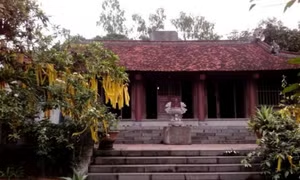
Tra Co Communal House was built in Post-Le dynasty, located at Nam Tho, Tra Co Ward. It bears the imprint of the Vietnamese architecture and is seen as one of the most sacred cultural landmarks at the border city. The Tra Co communal house festival was recovered since 1993 and has become an attractive rendez-vous for of both domestic and foreign tourists to enjoy and explore history, culture and architecture features of the temple.
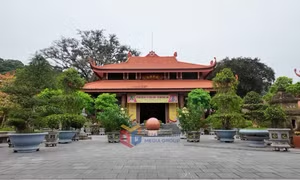
Also located at Nam Tho, Tra Co Ward, Nam Tho Pagoda was constructed in 16th century. Even some large-scale restorations have been undertaken, its significant features have been preserved. Specifically, the pagoda is also a place to treasure precious Buddhist sculptures which were meticulously carved and imbued with the Vietnam’s rich cultural identity.
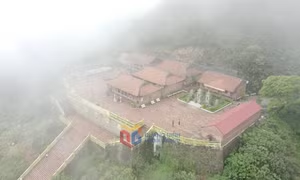
Xuan Lan Pagoda is located on a high land, overlooking a semi-circle lake and the snaking Ka Long River. For so long, the pagoda has been seen as a sacred but familiar place to local people.
According to the proposal on development of Mong Cai’s tourism products for the period of 2014-2020, with direction toward 2030, cultural and spiritual tourism is defined as attractive tourism product and plays an important role in drawing tourists to the city. In order to boost this special product, the city has especially concentrated on preservation and upholding cultural heritages’ values attached with tourism development.
By Dao Linh