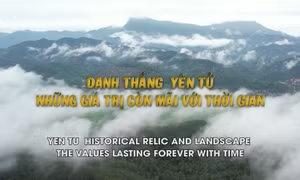
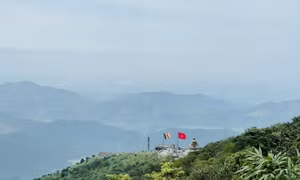
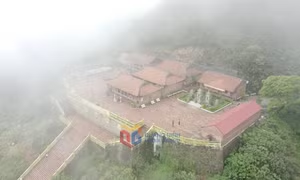
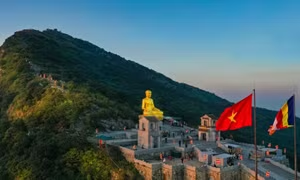
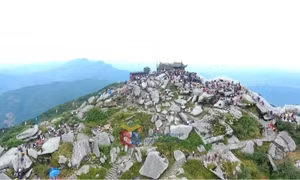
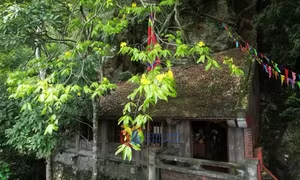
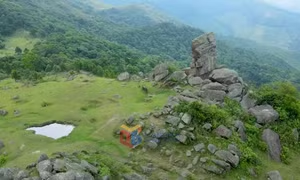
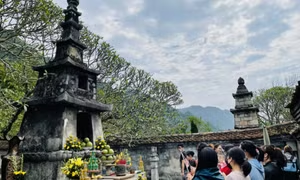
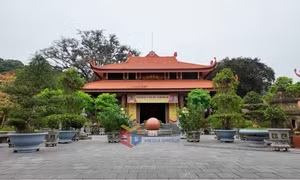
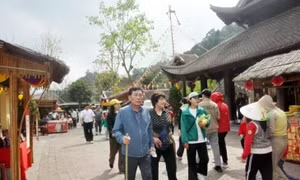
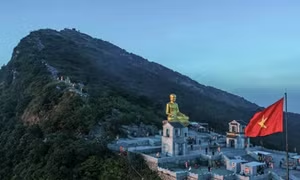
When spring comes, Yen Tu is shrouded in mist, and grasses, plants, pagodas, hermitages, and towers there are covered with a mysterious color. Sometimes, strong winds blow from somewhere to unveil mountain tops in clouds. That mysterious and sacred atmosphere forms the distinctive part of Yen Tu.
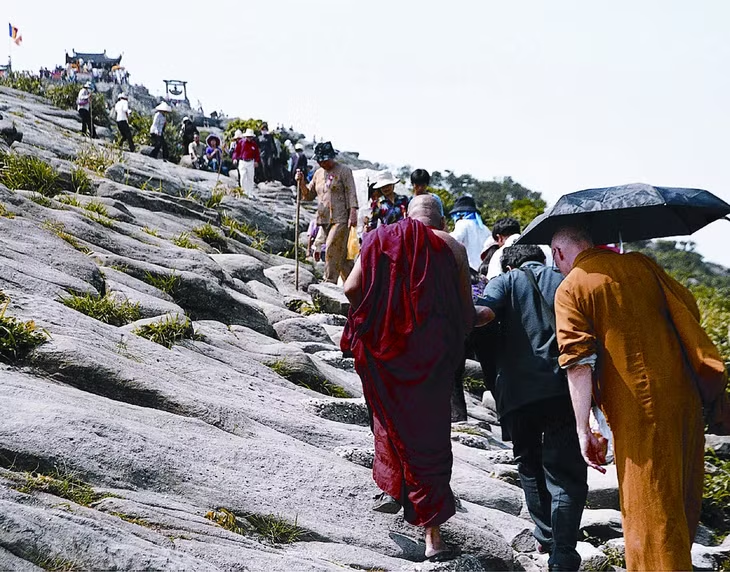
Nearly 1,000 years ago, historical books recorded Yen Tu as "the fourth land of happiness of Giao Chau" and Yen Tu Mountain later was named in the list of famous mountains that were written down in classic worship documents. That mystery and sacredness had attracted Vietnamese Buddhist followers to Yen Tu where they made grass-built hermitages and offered prayers to Buddha.
Before Christ, hermit An Ky Sinh came here and successfully pursued a religious life. Years later, generations of Vietnamese Buddhist monks, nuns, and followers continued flocking to Yen Tu to practice their faith, built pagodas and towers and other facilities. From the Tran Dynasty, Yen Tu had been invested to grow into a large-scale pagoda-tower complex.
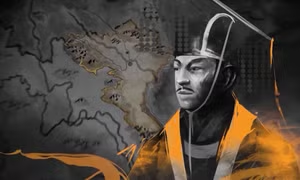
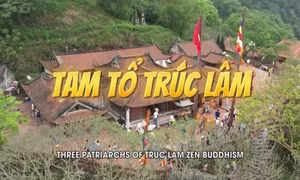
In 1299, Tran Nhan Tong introduced Truc Lam Zen Buddhism with a system of theories and actions linked with the secular life. He was considered as the first founder monk of Truc Lam Buddhism - the first and only pure Vietnamese sect of Vietnam. He was succeeded by Phap Loa and Huyen Quang and they were the three founders of Truc Lam today. Since then, Yen Tu became the kingdom of ideology of Truc Lam Buddhism. Through times, Yen Tu Mountain became a meeting place of high-esteemed Zen monks like Hien Quang under the Ly Dynasty, the three founders of Truc Lam under the Tran Dynasty, Chan Nguyen under the Le Dynasty, and Dam Thai nun under the Nguyen Dynasty…
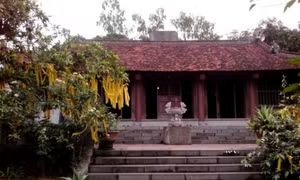
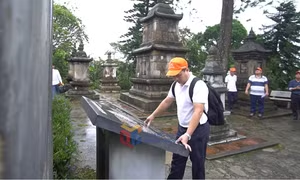
The development history of Truc Lam Zen Buddhism is associated closely with the formation and building of hundreds of shrines, hermitages, towers, tombs, steles, and statues. These architectural works were built and restored by monks, nuns, followers and the feudal regimes of the Ly, Tran, Le, and Nguyen Dynasties, reflecting strongly and clearly the development of architecture, fine arts, and sculpture featuring distinctively the talents and artistic creativity of the Vietnamese people.
Visitors often have different feelings about the landscapes in Yen Tu Mountain when they are here in different seasons. In winter or spring, all like wearing a silver grey blouse with ancient pines seemingly becoming dark-greener and tougher in the coldness of the high mountainous area. In summer, green lush trees and plants add striking colors to decorate forests and mountains lying next to old-age pagodas and towers. In autumn, trees carrying yellowish leaves make visitors feel they are lost in somewhere else.
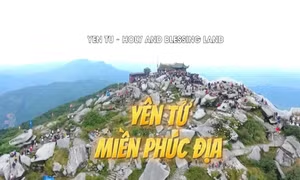
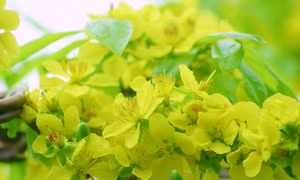
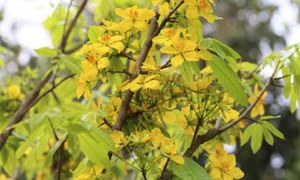
During the four seasons, the architectural complex of grandiose pagodas, towers, and hermitages lie peacefully in the poetic and mighty landscapes of Yen Tu. Yen Tu is even more attractive to visitors because of its fresh pine, bamboo and apricot forests. Roads and complexes of pagodas, hermitages, towers and steles are sometimes visible under clear skies and they sometimes become invisible when there are thick clouds. On the top of Yen Tu Mountain, visitors can see rivers, seas and mountains from afar. Ha Long Bay, which is dotted with thousands of islands and islets jutting out from the sea, is in the east. The Da Bac and Bach Dang Rivers flowing like a piece of flashing silver silk lie in the south. The fertile delta of the neighboring province is seen in the west while mountains and forests are found in the north.
Article by Phan Hang