In her 99 years old of rare wellness and brilliant mind, artist Dang Thi Tu, living in Trai Giua Hamlet, Dam Ha Commune, Dam Ha District is said a “walking dictionary” on “Nha to Singing and Dancing at communal house”. Each move and rhythm engraved in her heart is now preserved by the next generations.
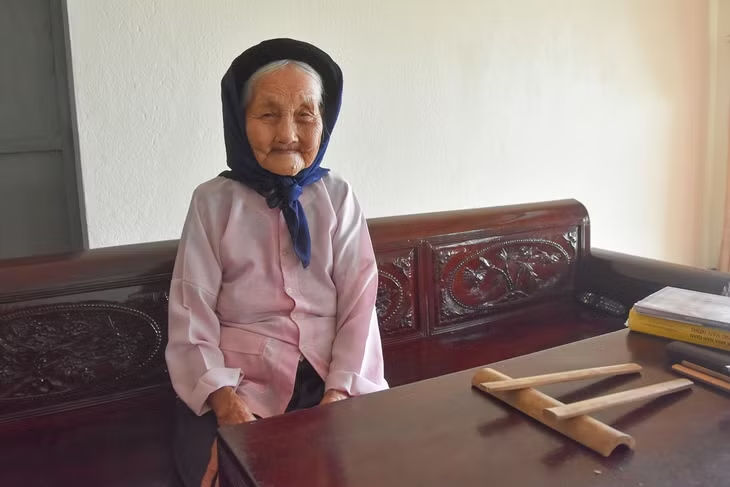
Artist Dang Thi Tu has been recognized as an artisan for 3 times (Folklore Artisan in 2009, Artisan of Excellence in 2015 and People’s Artisan in 2019). She is the first artist in Quang Ninh to be granted with People’s Artisan title by the President of the Socialist Republic of Vietnam.
According to Artist Dang Thi Tu’s words, in the period of Resistance War against the French, a woman in her village went to Van Ninh (Mong Cai nowadays) to learn Nha to Singing and Dancing. When she came back home, she taught her villagers what she had learned. Among those learners were artist Dang Thi Tu’s mother and aunts. Then little girl Dang Thi Tu in the old days learned from her mother and aunts. Her intelligence and good voice helped her quickly master the techniques of Nha to Singing and Dancing. She could sing 40 songs with 800 sentences with 9 different voice tones.
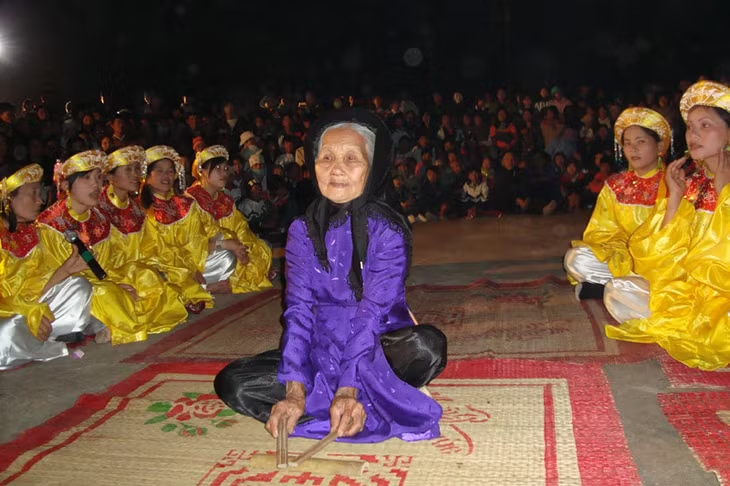
The more she learned, the more she fell in love with the musical genre. She performed at many festivals organized in every January in lunar calendar, for example, from communal festivals in Dam Ha, Trang Y, Phong Du, Cai Gia in her hometown, to festivals in neighboring districts of Tien Yen, Binh Lieu, Hai Ha…
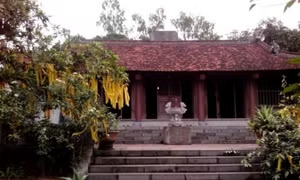
In comparison to “Ca tru” Singing, “Nha to” Singing and Dancing at communal house has different features. As for “Ca tru” Singing, the performers sit on mats or wood bed base. Meanwhile, “Nha to” Singing and Dancing take place in the yard of a communal house, which means more space and more spiritual colors. Singing goes along with dancing.
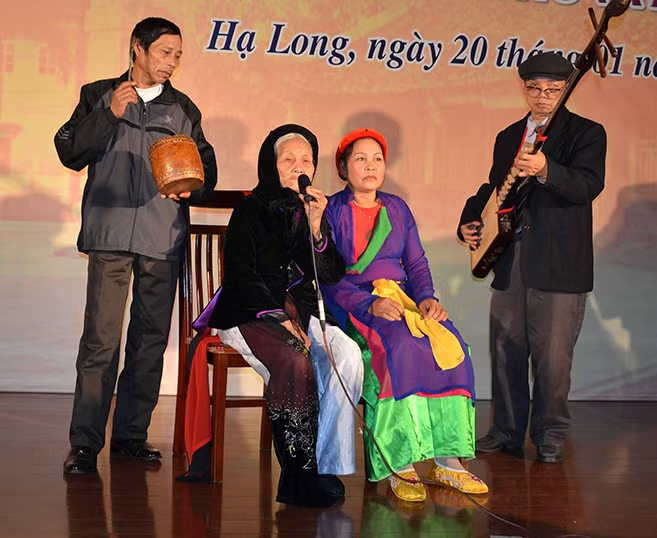
Artisan Dang Thi Tu emphasizes that “Nha to” Singing and Dancing at communal house in plays an important role in Dam Ha District’s people’s life as it is associated with locals’ belief, culture, and custom and an indispensable part of festivals organized at communal houses. Men are responsible for playing musical instruments while just women sing and dance.
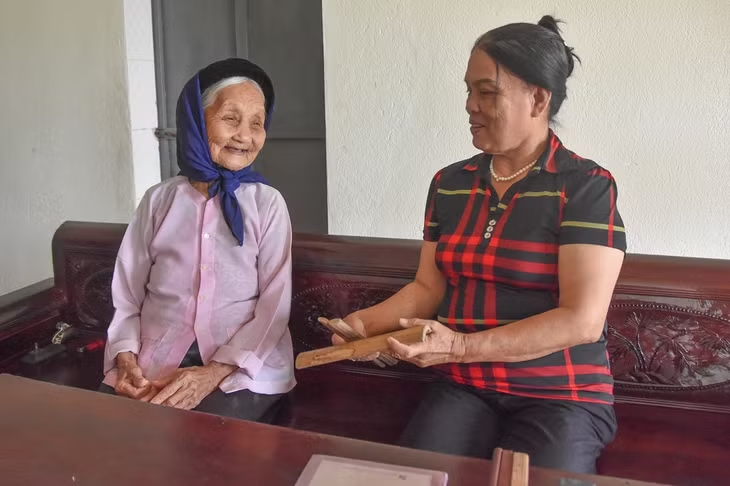
In 2009, Quang Ninh decided to restore traditional Dam Ha Communal House Festival, creating a springboard for long-term cultural preservation and promotion in the locality. Artist Dang Thi Tu was invited to give consultancy on the collection and restoration of ancient “Nha to” rhythms and dancing moves. She also became the teachers of hundreds of learners both inside and outside the district.
In 2015, the Ministry of Culture, Sports, and Tourism recognized Quang Ninh’s “Nha to” Singing and Dancing at communal house as intangible cultural heritage, re-affirming unique values of the musical genre.
Translated by Quynh Trang